To learn about all aspects related to Vertical Folding Partition Wall, you can consult our comprehensive guide on Vertical Folding Partition Wall Hub.
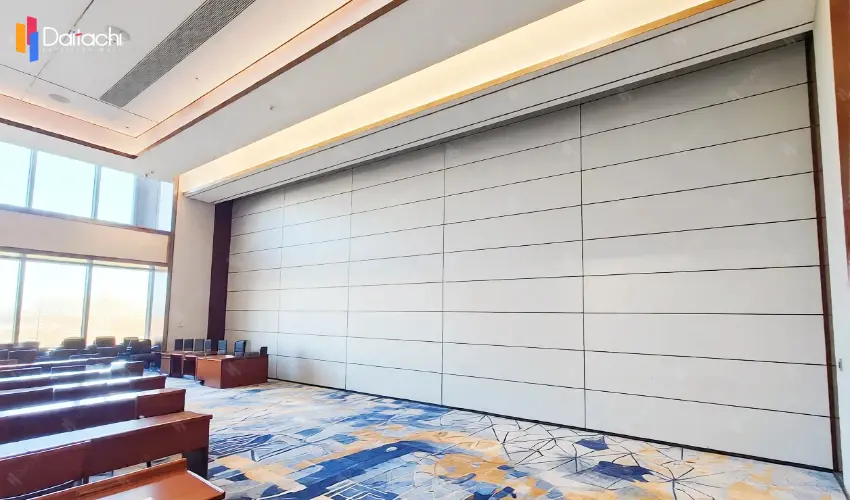
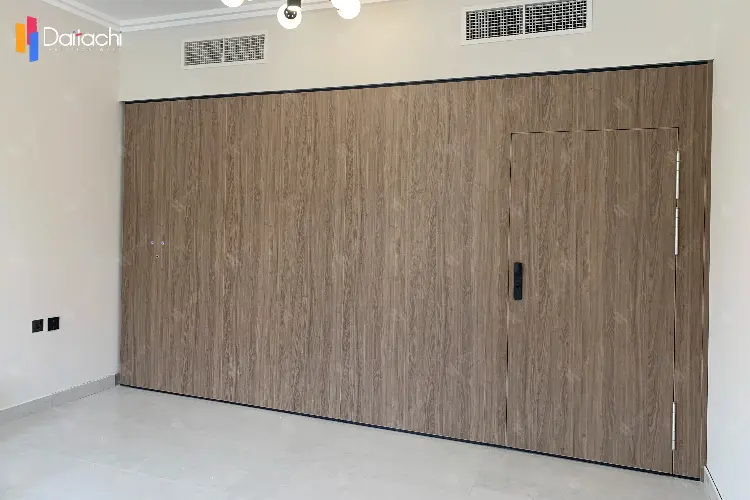
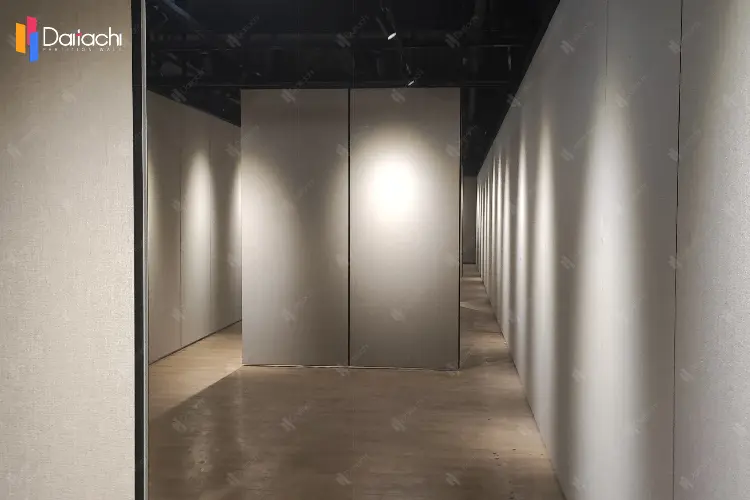
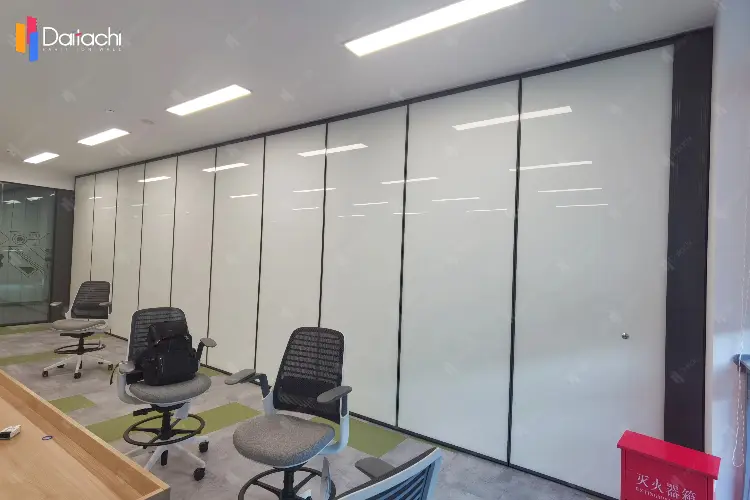
In modern architectural design, the efficient use of space and the creation of tranquil environments have become key priorities. Vertical folding partitions, known for their flexibility in spatial division, have become the ideal solution for a variety of settings, including conference rooms, theaters, libraries, and broadcasting studios. The latest generation of vertical retractable walls integrates composite acoustic structures, dynamic sealing systems, low-noise transmission mechanisms, modular connections, and intelligent drive technology. These innovations have resulted in breakthroughs in sound insulation and millimeter-level precision control, setting new technical standards for architectural partitions.
Vertical folding wall feature a multi-layered composite structure that effectively blocks and absorbs sound waves. The framework is constructed from aviation-grade aluminum alloy, eliminating "acoustic bridging" effects caused by structural gaps, while the anodized surface finish helps to reflect high-frequency sound waves.
The core layer incorporates high-density materials such as polyester fiber cotton and fiberglass acoustic wool, forming a dual-layer system. The outer layer absorbs mid-to-high-frequency noise, while the inner layer blocks low-frequency vibrations. An aluminum honeycomb core further enhances sound dissipation across the full frequency spectrum.
For specialized applications, surface finishes such as perforated acoustic panels or fabric upholstery are available. For environments requiring ultra-high noise reduction, a double-wall design can be implemented to meet stringent acoustic standards.
Sound leakage is a major cause of acoustic failure in partitions. The vertical partitions is equipped with a dynamic sealing system that uses adaptive pressure technology to ensure a perfect seal. The top section features a silicone air-bladder seal, which automatically inflates to form a precise seal when the wall is deployed. High-density sealing strips along the vertical edges and a retractable brush seal at the bottom effectively bridge gaps between the wall and the floor.
An integrated barometric pressure sensor ensures optimal soundproofing, even in environments with significant pressure fluctuations, such as airports and subway stations.
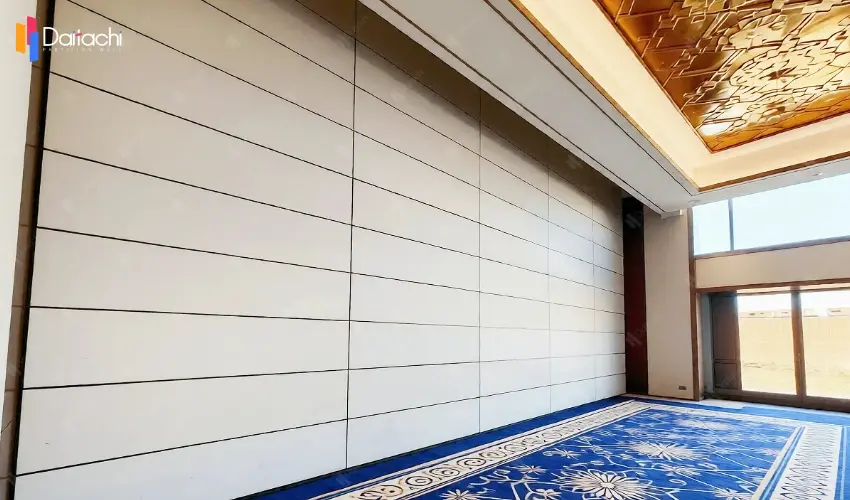
Traditional movable walls often suffer from operational noise and positioning errors. The latest generation of vertical lift walls addresses these issues with advancements in drive mechanisms, control systems, and vibration damping. A low-noise motor, paired with a gear transmission system, keeps operational noise below 35 dB — comparable to a soft whisper.
The transmission system employs synchronized control technology, using sensors to achieve millimeter-level positioning accuracy. When the wall approaches its final position, it decelerates gradually to prevent impact noise. Additionally, noise-absorbing rubber pads at the junctions between the guide rails and the wall panels minimize structure-borne noise by absorbing vibration energy.
To further reduce sound transmission, vertically folding operable walls uses a modular connection design, with elastic connectors between individual panels. Small gaps between modules are filled with acoustic foam to block solid-borne sound paths.
Key components, such as the drive units and guide rails, are modular and feature standardized interfaces, allowing for quick replacements and ensuring adaptability to various architectural settings. The system also supports synchronized control, allowing multiple wall panels to operate simultaneously, with positioning errors maintained within millimeter-level precision, striking a balance between flexibility and accuracy.
Vertical retractable walls combine innovative features such as composite acoustic structures, dynamic sealing systems, low-noise precision drives, and modular connections to deliver a solution that offers flexible space partitioning, superior acoustic performance, and millimeter-level precision control. These technological advancements solve the common issues of traditional partitions—such as poor sound insulation, excessive noise, and imprecise positioning—while leveraging intelligent technology to create quiet, efficient, and modern architectural spaces. This makes vertical lift walls the premier choice for architectural partitions in the future.
Related Articles: the Core of Sound Insulation in Vertical Lift Wall Systems
How Can Vertical Lifting Walls Improve Sound Insulation?