To learn about all aspects related to Vertical Folding Partition Wall, you can consult our comprehensive guide on Vertical Folding Partition Wall Hub.
The value of a superior vertical lift wall system lies not only in its smooth operation but also in its exceptional sound insulation. Ensuring excellent sound insulation while flexibly partitioning space is key to its quality. This is primarily due to the various professional acoustic materials filling the interior of the wall, which work synergistically through different physical principles to effectively block, absorb, and dissipate sound energy. Below are some of the core sound insulation filling materials commonly used in our vertical lift walls:
This is the most widely used and most efficient sound-absorbing material.
Working Principle: This material is filled with countless tiny fiber pores. When sound waves enter, air molecules vibrate within the pores and rub against the fibers, converting sound energy into a small amount of heat energy, thus absorbing the sound.
Product Features: Typically high-density, it has a significant absorption effect on mid-to-low frequency noise. It also has advantages such as fire resistance, moisture resistance, aging resistance, and stable performance, making it an ideal material for filling wall cavities.
A new type of environmentally friendly and safe sound-absorbing material.
Working Principle: Similar to glass wool, its three-dimensional mesh-like porous structure effectively absorbs and dissipates sound energy.
Product Features: Made of 100% polyester fiber, it does not release fiber dust, is human and environmentally friendly, and provides a better construction experience. It has good flexibility and resilience, and its fire resistance rating can reach B1. It has excellent absorption of high-frequency noise and a more comfortable feel.
Mainly used to enhance the overall sound insulation performance of walls.
Working Principle: This type of material typically has high density and high internal resistance. It does not primarily "absorb" sound, but rather suppresses the vibration of the wall panel itself by increasing the surface density of the wall and constraining the damping layer. When sound waves impact the wall and cause the wall panel to vibrate, the damping layer can quickly convert the vibration energy into heat energy, thereby preventing sound from propagating within the wall structure.
Application: Often used in combination with porous sound-absorbing cotton to form a composite structure of "sound absorption + sound insulation + damping," specifically designed to block different types of noise.
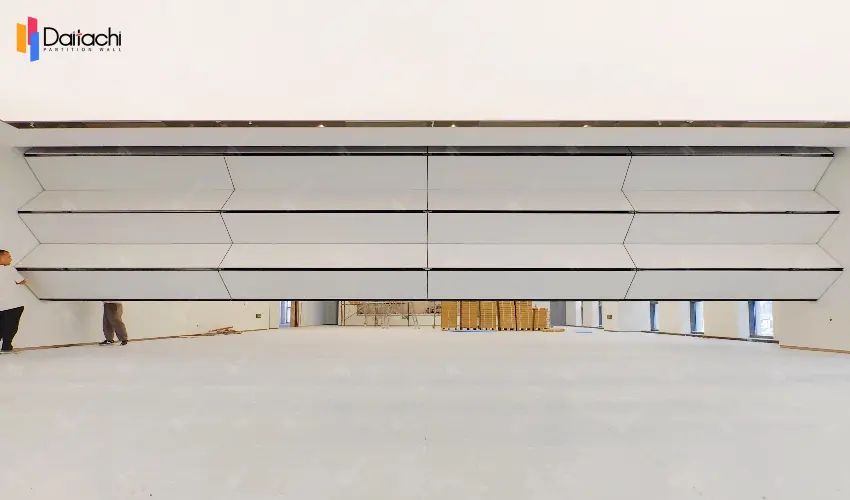
In actual product design, we don't simply use a single material. Instead, we design a scientifically sound composite filling structure based on the target sound insulation level (e.g., STC/Rw value) and application scenario. A typical optimization scheme is as follows:
Inner Layer: Laying damping sound insulation felt to suppress wall panel resonance.
Middle Layer: Filled with high-density glass wool or polyester fiber sound-absorbing cotton as the main sound absorption and anechoic layer.
Structural Layer: The composite core material and sealing structure of the wall itself constitute the first physical sound barrier.
Furthermore, strict edge sealing treatment (e.g., using magnetic sealing strips, elastic rubber sealing strips, etc.) and a scientific cavity structure design are equally important as high-quality sound insulation filling materials. Together, they form a complete sound insulation system, preventing "sound bridges" and sound leakage through gaps.
In our vertical lift wall sound insulation solutions, we always adhere to the following principles:
Scientific Material Selection: We will recommend the most suitable material combination based on the specific noise type of your space (e.g., conversation, music, low-frequency equipment noise) and sound insulation goals.
Environmentally Friendly and Safe: All filling materials meet national environmental protection and fire safety standards, ensuring a healthy and safe space.
Verifiable Performance: We can provide sound insulation effect estimates based on different construction plans and can arrange on-site acoustic effect demonstrations according to your requirements.
Choosing our vertical lift walls not only gives you flexible and versatile spatial layouts but also a tranquil fortress perfectly tailored to your needs. Feel free to contact our technical team anytime for detailed customized solutions.
Related Articles: How Can Vertical Lifting Walls Improve Sound Insulation?
Conceptual Analysis of Acoustic Performance Rated at RW62