To learn about all aspects related to Vertical Folding Partition Wall, you can consult our comprehensive guide on Vertical Folding Partition Wall Hub.
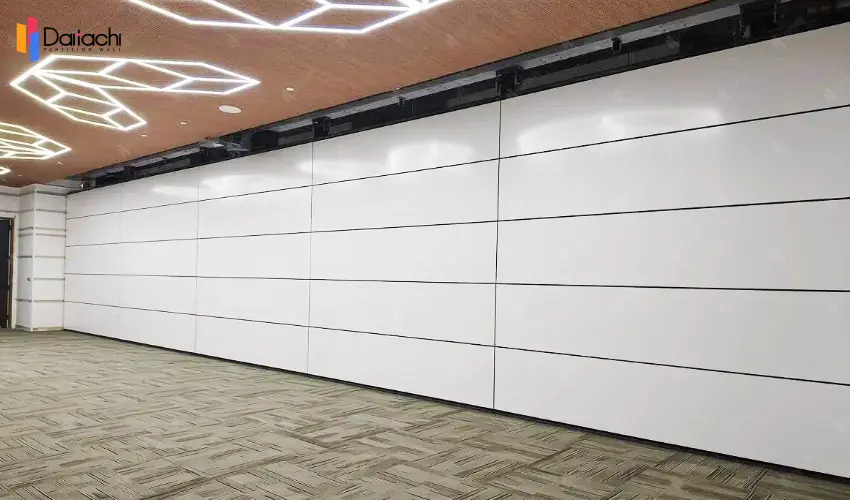
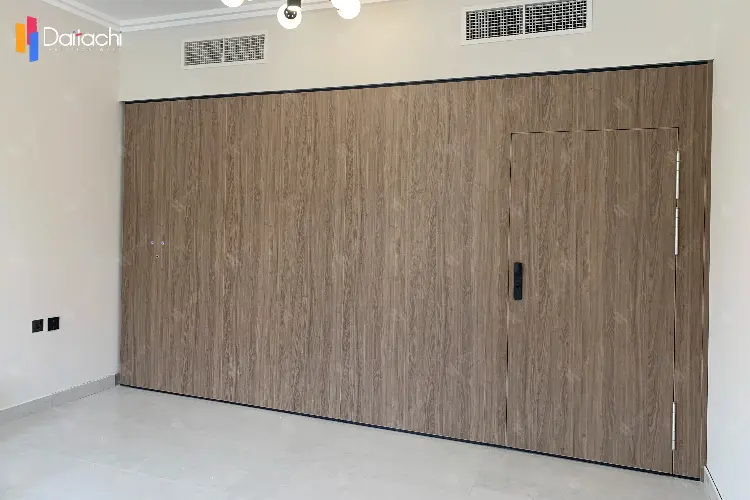
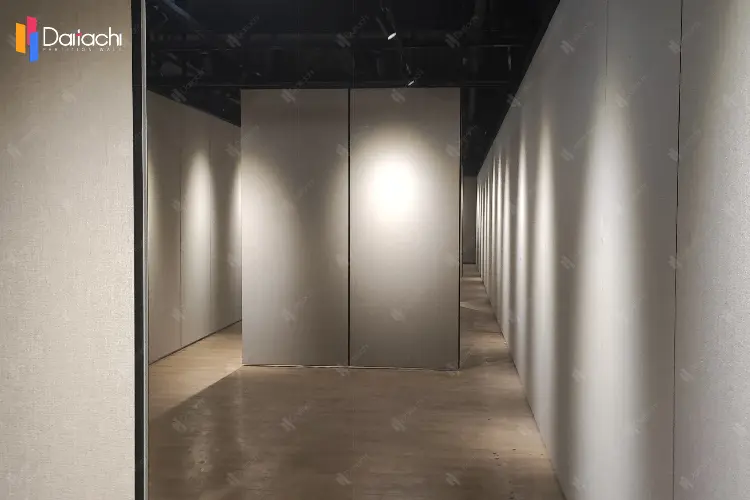
In modern architecture, effective space utilization and a serene environment are essential. Vertical retractable walls are increasingly used in spaces such as conference rooms, theaters, libraries, and studios due to their flexibility. The latest models integrate advanced composite acoustic structures, dynamic sealing systems, low-noise transmission mechanisms, modular connections, and intelligent drive technology, setting new standards for sound insulation and precision.
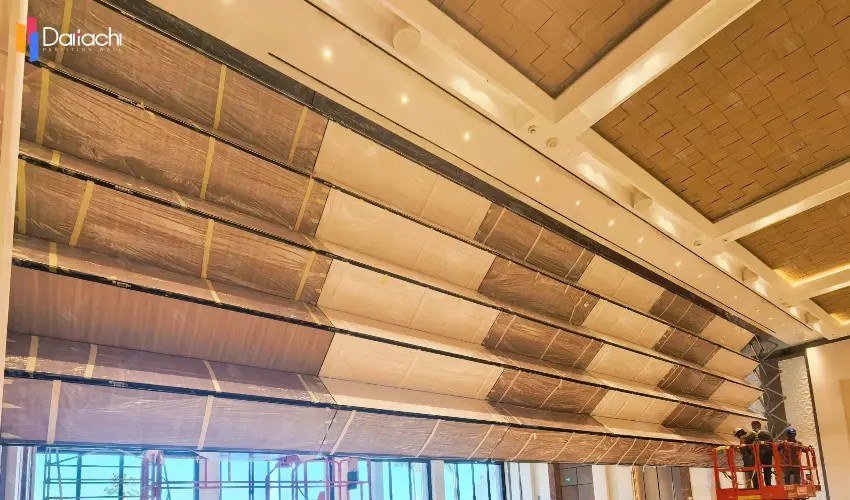
Vertical lift walls use a multi-layer composite structure to reduce noise across a wide frequency range. The framework is made of thickened aviation-grade aluminum alloy, eliminating "acoustic bridging" and reflecting high-frequency sound waves. The core features high-density polyester fiber cotton and fiberglass acoustic wool, absorbing mid-to-high-frequency noise and blocking low-frequency vibrations. Specialized finishes like perforated panels or fabric upholstery are available for higher acoustic standards, with a double-wall design achieving an STC of up to 62.
The dynamic sealing system prevents sound leakage, a major cause of acoustic failure. Silicone air-bladder seals automatically inflate to create a precision seal at the top, while high-density strips seal the vertical edges. The retractable brush seal at the bottom effectively bridges gaps between the wall and floor. A barometric pressure sensor ensures consistent sound insulation in high-pressure environments, while high-density rubber sealing rings at cable ports minimize acoustic leakage.
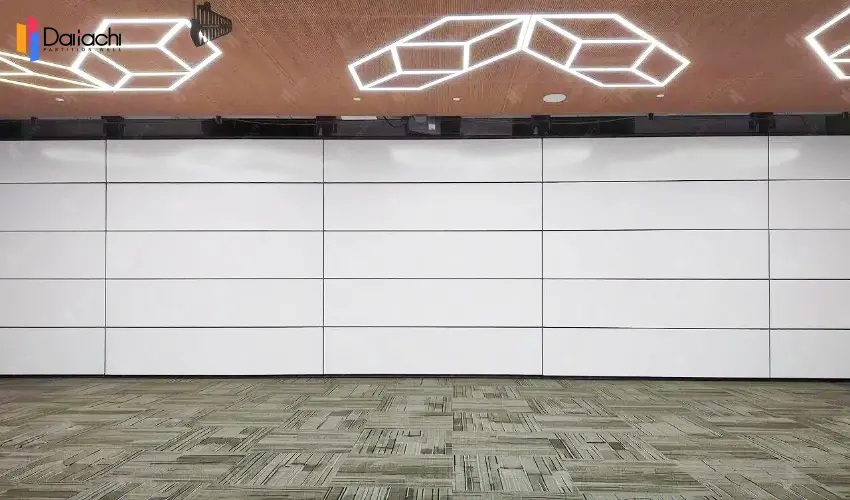
Traditional movable walls often suffer from operational noise and positioning errors. The new vertical lift walls overcome this with a low-noise motor and gear transmission, keeping noise under 35 dB. The system uses synchronous control with sensors for millimeter-level precision, gradually decelerating near the final position to eliminate impact noise. Noise-reducing rubber pads absorb vibration, further reducing structure-borne noise.
To prevent sound transmission, the modular connection design uses elastic connectors and acoustic foam to block solid-borne sound. Vibration-damping pads reduce ground-borne noise. The modular components, including drive units and guide rails, feature standardized interfaces for easy replacement, speeding up design processes. The system supports synchronized control, ensuring millimeter-level precision across multiple panels.
Vertical retractable interior wall integrate innovative technologies to offer superior soundproofing and precision control. These partitions address common issues in traditional solutions—poor sound insulation, noise, and imprecise positioning—by offering flexible, efficient, and quiet solutions for modern architectural needs. Vertical lift walls have become the leading choice for architectural partitions, setting new benchmarks for acoustic performance and operational accuracy.
Related Articles: Vertical-Lift Folding Walls: A Detailed Analysis of High-Level STC/RW Standards
the Core of Sound Insulation in Vertical Lift Wall Systems