To learn about all aspects related to Movable Partition Wall, you can consult our comprehensive guide on Movable Partition Walls Hub.
In the design of movable partition walls, veneer, as a core finishing material, is an ideal choice for non-glass partition systems due to its composite structure and long-term durability. This article will deeply analyze the "hardcore" nature of veneer from three perspectives: material composition, processing technology, and practical application scenarios.
Veneer is not a single material, but rather a combination of different functional materials through a multi-layer composite process. Its typical structure can be divided into three layers:
Base Layer (Core Support)
High-Density Fiberboard (HDF): Made from wood fibers pressed under high temperature and high pressure, it has a high density and uniform structure, offering excellent bending strength and nail holding capacity, making it an ideal base for load-bearing partition wall structures.
Moisture-Resistant Particleboard: Moisture-Resistant agents are added to the wood particles to form a dense, waterproof layer. It is suitable for environments with high humidity fluctuations (such as bathrooms and kitchen areas), effectively preventing deformation and cracking.
Lightweight Aluminum Honeycomb Panels: Made with aircraft-grade aluminum foil as the core, they are covered on both sides with metal or wood panels. They combine lightweight and high strength, and are often used in large vertical folding and lifting wall systems to reduce structural loads.
Decorative Layer (Aesthetic Expression)
Melamine-Impregnated Paper: Decorative paper is impregnated with melamine resin and then hot-pressed at high temperatures to create a wear- and corrosion-resistant surface layer. Hundreds of textures, including wood, stone, and fabric, can be simulated to meet diverse design needs.
PVC Film: PVC film is laminated to a substrate using a vacuum forming process to achieve special effects such as brushed metal and high-gloss mirrors. It also offers stain-resistant and easy-to-clean properties.
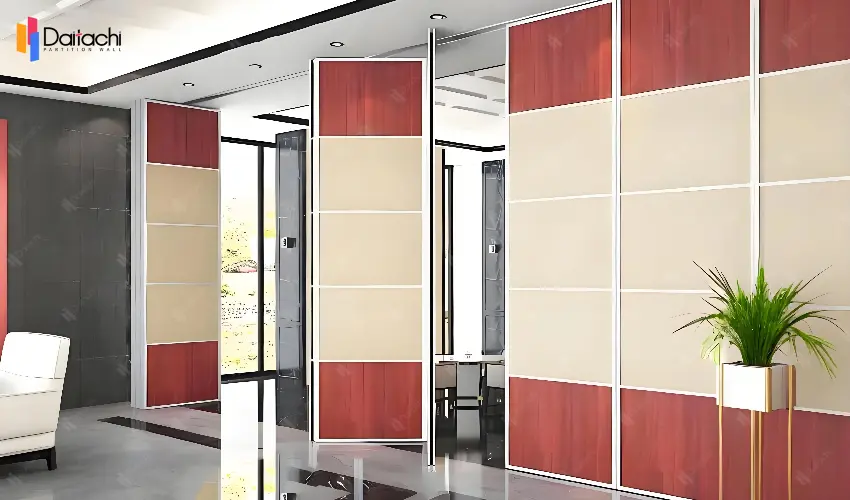
Wood Veneer: Thin slices of natural wood are dried, spliced, and laminated to the substrate, preserving the natural wood texture and feel. Suitable for high-end commercial spaces or cultural venues.
Functional Layer (Performance Enhancement)
Abrasion-Resistant Coating: Cured lacquer or ceramic coating is sprayed onto the decorative layer, creating a strong finish that resists scratches from hard objects such as keys and furniture casters.
Fire-Retardant Layer: The addition of inorganic flame retardants such as aluminum hydroxide ensures the veneer meets B1 fire protection standards, slowing the spread of fire and meeting public building safety regulations.
Antibacterial Coating: Using nano-silver ions or photocatalyst technology, it inhibits the growth of common bacteria such as Escherichia coli and Staphylococcus aureus, making it suitable for hygiene-sensitive environments such as healthcare and education.
Abrasion Resistance Testing: After laboratory testing simulating five years of high-frequency use, the veneer surface wear depth remained at a micrometer level, significantly superior to traditional latex paint and ordinary wallpaper.
Moisture Resistance: After 72 hours at 85% humidity and 30°C, the moisture-resistant particleboard substrate exhibits minimal water absorption and expansion, while ordinary density fiberboard easily expands and deforms after absorbing water, leading to cracking in partition wall joints.
Anti-Aging Testing: UV-accelerated aging tests show that the PVC film and melamine finish exhibit no fading or cracking after prolonged exposure, maintaining color retention at its original intensity, making it suitable for locations exposed to long-term natural light.
Base Density: High-density fiberboard or aluminum honeycomb panels are preferred to avoid the deformation problems of low-density panels.
Finishing: Special factory-cured coatings are more wear-resistant than ordinary spray paint, and PVC films are more moisture-resistant than paper finishes. Choose the right finish based on the application scenario.
Certifications: Verify that the product has passed international quality management system certifications, CE EU safety certification, and national environmental certifications to ensure that the material meets environmental and performance standards.
Veneer panels achieve the perfect balance of aesthetics and durability through a multi-layer composite structure and functional design. Whether it's a commercial space subject to frequent use or a medical setting with stringent hygiene requirements, veneer panels offer long-lasting solutions with scientifically-developed materials and processes. Daitachi is deeply researched in veneer panel styles and materials, and strives to provide customers with the highest quality and most professional guidance.
Related Articles: Veneer Treatments and Their Effects
What Are the Veneer Options for Vertical Lift Walls?
Discover the Secrets of Movable Partition Wall Veneers: A Complete Analysis of Their Pros and Cons
Related Product: Type 85 Manual Collapsible Partition Wall