To learn about all aspects related to Vertical Folding Partition Wall , you can consult our comprehensive guide on Vertical Folding Partition Wall Hub.
A key element in creating flexible reconfiguration of space within modern buildings and the impact on the environment that comes from the vertical lift folding wall extends way beyond performance in terms of energy efficiency as well as the smooth user experience that is demonstrated in their operation. This value permeates their entire lifecycle--encompassing material selection, manufacturing, transportation, installation, usage, and extending through to their eventual recycling and disposal.
This analysis delved into the structure that makes up this "green DNA" and the pathways that lead to its development, by examining the three main aspects: the technical principle implementation of material, recycling mechanisms.
The environmental benefits of vertical lift wall panels stem from the sustainable nature of the material utilized in their creation. These fundamental components like walls guides, rails for guiderails, and motors, must be in line with the following rules:
Renewable and Recyclable Materials
Recycled Metals: Making use of recycled metals (such like steel and aluminum) will significantly cut down on the use of energy associated with mining processes. In the case of aluminum, for instance, the power required for recycling aluminum is only 5percent of the energy required to make primary aluminum and it can be recycled indefinitely.
Lightweight design Affording heavy-duty, light material (such carbon fiber, and aluminum of aerospace quality) can help reduce the deadweight of the wall's structure and reduce the burden on the motors and, consequently, cutting down on energy use.
Low-VOC Materials
The glues and coatings used on the surface of wall panels should be chosen based on the non-toxic, VOC-free (Volatile Organic Compound) formulations to reduce indoor polluting. As an example, when compared to solvent-based paints and paints, water-based ones generally lower VOC emissions by more than 20%.
Eco-friendly Composite Materials
Non-combustible Aluminium-Plastic Composite Panels The panels have an inorganic mineral base and meet the Class A standard for fire resistance; they are a reliable and sustainable alternative to traditional composite aluminum panels.
Ultra-High Performance Concrete (UHPC) In order to improve the quality and the reactivity of the constituents the material is able to achieve extraordinary strength and endurance and reduces the quantity of materials needed and prolonging the product's lifespan.
The green features of the vertical fold lift wall can be realized by the use of low-carbon methods throughout the entire production and transportation lifecycle
Energy-Efficient Production Processes
Motor Technology: Utilizes low-energy-consumption motors or magnetic levitation drive systems to ensure operating noise remains below 30 decibels; compared to traditional motor technologies, energy consumption is reduced by 30% to 50%.
Gear Optimization uses high-precision gears with advanced lubricants in order to limit friction and use.
Green Logistics Systems
Modular Design: Splits walls into modular modules, which reduces quantity of transport and consumption of packaging components.
Transportation Route Optimization Utilizes IoT technology to determine the shortest routes to travel which reduces fuel consumption as well as carbon emission.
The Hydrogen or Electric Power Transportation Uses modern-energy vehicle for transporting cargo for zero emission operations.
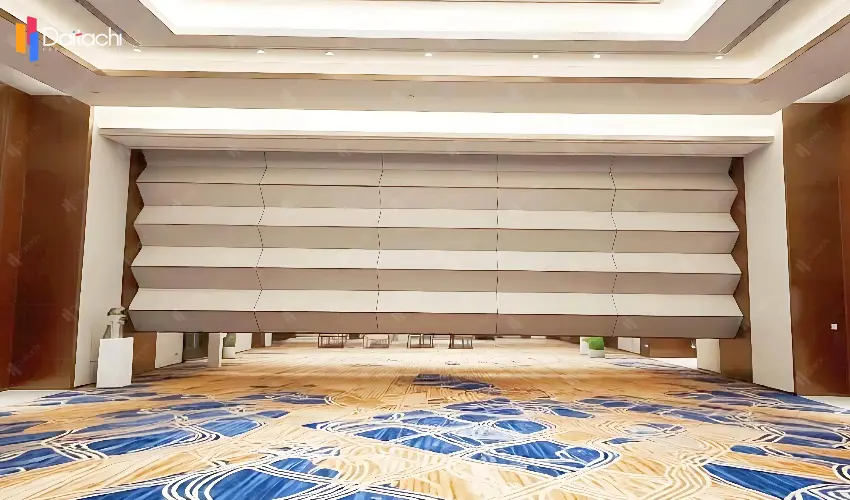
The ecological benefits of the vertically folding lift wall can be fully appreciated over the course of its use using the following ways:
Intelligent Energy-Saving Controls
Safety Guards: Integrates the use of infrared sensors or pressure sensors that automatically detect the surrounding environment and then dynamically modify the wall's layout in accordance with the actual situation.
Predictive algorithms Based on historic data and scheduling algorithms The system is able to pre-configure the surroundings (including lighting and HVAC configurations) thus reducing the need for energy.
Scheduling Integration The system syncs up with the meeting scheduling systems to deploy the wall automatically and dim the light before the beginning of a conference, decreasing manual interventions and lowering the energy usage.
The environmental friendliness of this vertical fold-up wall is assured by the extensive recycling process which facilitates the circulation of resources:
Dismountable and Modular Design
The wall is constructed using standard connectors, bolted and interfaces making it easy to disassemble and reconfigure without generating waste.
The tracks are buried in the floor or ceiling and are protected by cover plates, thus extending their lifespan and reducing frequency of replacing.
Professional Recycling Process
Assessment of Equipment: Recycling companies carry out on-site inspections of the wall's design as well as the specifications and conditions in order to establish its recycle value and cost.
Disassembly and sorting: Reusable parts (such as tracks and motors) are distinguished from non-reusable components (such damaged panels) in order to stop cross-contamination.
Eco-friendly processing: The non-recyclable components undergo non-harmful treatments (e.g. Metal smelting or shredding plastic) and recyclable parts can be cleaned, fixed and then remanufactured
Material Regeneration and Resource Recovery
Metal Recycling: Metals that have been recycled, such as steel and aluminum--are refined by smelting before being reconstituted into the raw materials needed for creation of wall systems that are new.
Composite Recycling of Material: Materials made of composite including aluminum composite panels are broken down and used as aggregates to make roads base material.
"Green DNA" of vertical folding lift walls "green genetic code" of vertically wall folding is manifested not only through the development of technology with isolated steps and more importantly, by synergistic coordination throughout all value chains, from sources of material to the recycling process at the end. In integrating renewable resources, low-carbon manufacturing, intelligent energy conservation as well as closed loop recycling they can achieve the "seamless" shift in spatial arrangements, in addition to "zero-waste" use of resources.
In the near future, as it becomes clear that the Internet of Things (IoT), AI, and materials science continue to merge vertically folding walls are likely to become a key device to achieve carbon-neutral goals in the built environment. They will be driving the design of spaces towards a future that's "green as well as intelligent" and environmentally sustainable.
Related Articles: In What Ways Do Vertical Lift Walls Contribute to Environmental Protection?
Vertical Lift Walls: How to Reduce Building Energy Consumption Through Space Reuse?