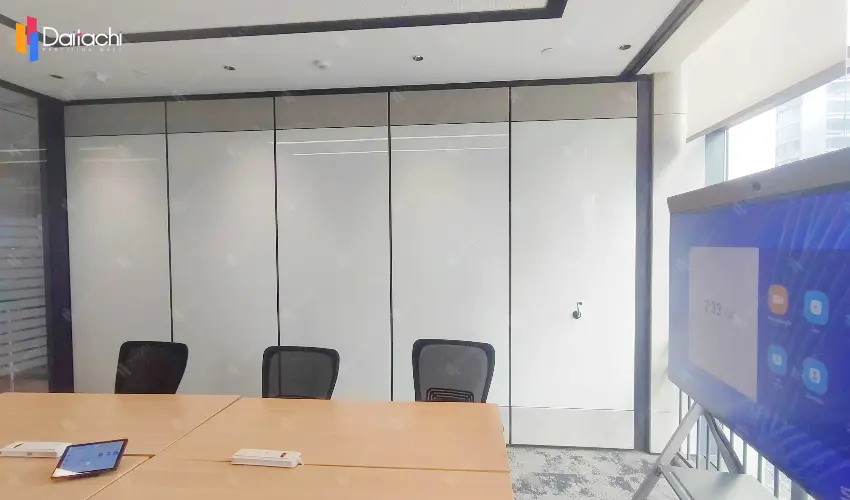
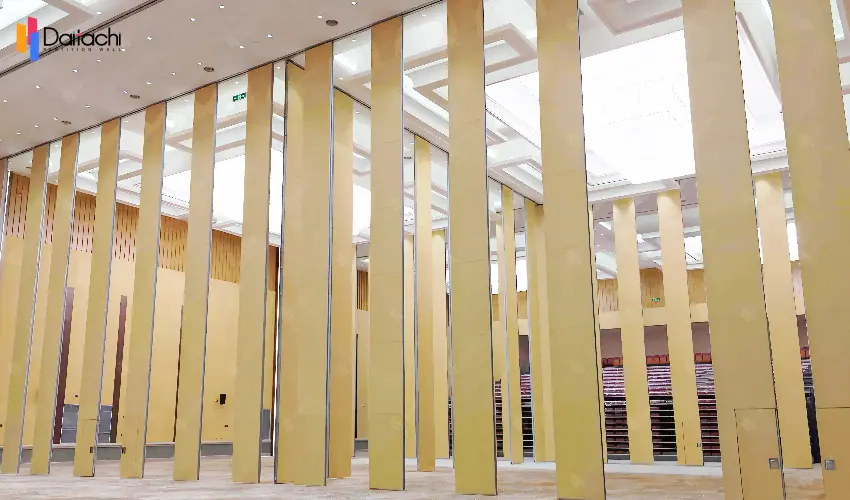
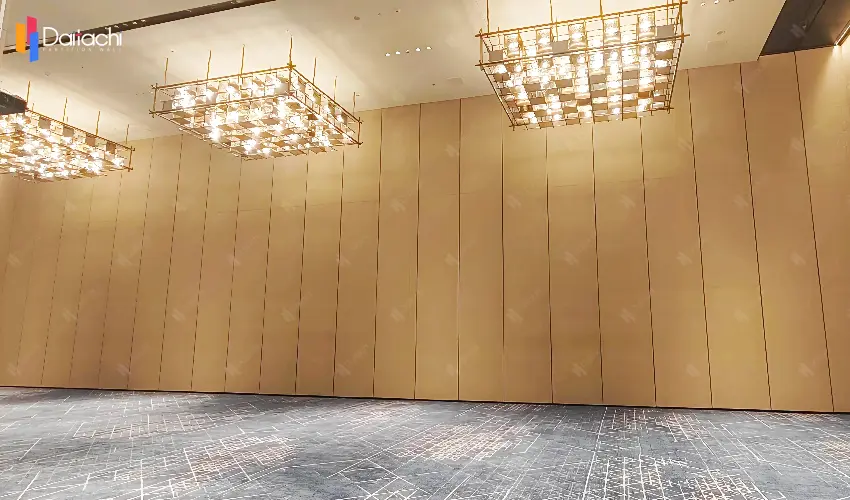
To learn about all aspects related to Vertical Folding Partition Wall, you can consult our comprehensive guide on Vertical Folding Partition Wall Hub.
Certification and Compliance:
Confirm that the product has passed relevant international safety certifications and domestic mandatory standards; verify compliance with fire safety codes.
Safety Protection Features:
Basic Protection: Overload protection, tilt alarms, limit switches, and emergency stop buttons.
Advanced Protection: Anti-pinch sensors, pneumatic pressure sensors, and anti-fall safety devices.
Emergency Protocols: Equipped with manual lowering mechanisms and backup power supplies to ensure the safe evacuation of personnel in the event of a power failure.
Structural Safety:
Evaluate the method of connection between the wall system and the building structure to ensure no loosening occurs over time; verify that structural calculation reports are provided to
demonstrate that the wall system's operation does not negatively impact the building's load-bearing capacity. IV. Service Capabilities: Full Lifecycle Support
Pre-sales Services:
Needs Analysis: Can the supplier dispatch a professional team to conduct an on-site survey and provide recommendations for spatial planning?
Solution Demonstration: Can the supplier showcase the operational effects of the wall system to help the client visualize and understand the proposed solution?
In-sales Services:
Installation and Commissioning: Is the installation handled by the supplier's professional team, and is on-site training provided?
Progress Management: Is a construction schedule provided to ensure the project is delivered on time?
After-sales Services:
Warranty Period: Prioritize suppliers offering a comprehensive system warranty of at least two years.
Response Speed: Is there a commitment to respond to technical issues or malfunctions within 24 hours?
Spare Parts Supply: Has a regional spare parts inventory been established to prevent prolonged downtime caused by a lack of components?
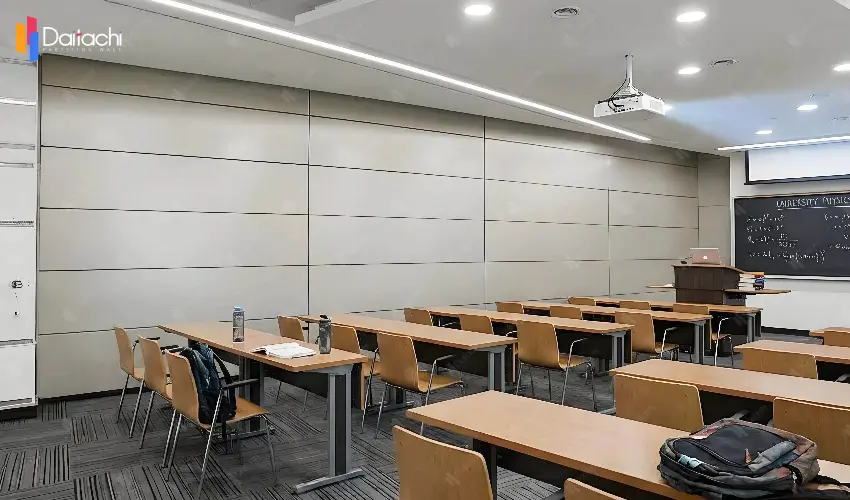
Initial Costs: Compare quotes from different suppliers, carefully distinguishing between line items such as equipment costs, installation fees, and transportation charges. Be wary of "low-price traps"—avoid cutting corners on initial costs only to face frequent repairs and maintenance issues later on.
Operating Costs: Prioritize energy-efficient drive systems to minimize long-term operational expenses. Inquire about the pricing and replacement frequency of consumable parts to calculate the total maintenance costs over the entire lifecycle of the system.
Related Articles: the Core of Sound Insulation in Vertical Lift Wall Systems
How to Choose a Reliable Supplier for Vertical Lift Wall Systems (part 1)