To learn about all aspects related to Movable Partition Wall, you can consult our comprehensive guide on Movable Partition Wall Hub.
Modern architecture is evolving from fixed structures toward more adaptable and multifunctional environments. Traditional walls provide permanent separation, but they often limit how spaces can be used when business needs, occupancy requirements, and user expectations change.
Today, architects, developers, and property owners are increasingly adopting sliding partition walls as an effective solution for creating flexible spaces that can easily adapt to different functions.
By allowing areas to be quickly divided, expanded, or reorganized, movable partition systems help buildings become more efficient, versatile, and future-ready.
A traditional building layout is usually designed for a specific purpose. A meeting room remains a meeting room, a conference hall remains a conference hall, and a large event space may stay unused when no event is scheduled.
However, modern businesses require spaces that can support multiple activities.
Movable partition walls provide the flexibility to:
Divide large areas into smaller functional rooms
Combine separate spaces into larger environments
Adjust layouts according to different activities
Support temporary or long-term space requirements
This ability allows buildings to move from a static layout model to a dynamic space management system.
Space is one of the most valuable assets in modern commercial buildings. Unused areas represent lost opportunities and increased operational costs.
With movable partition systems, organizations can maximize the value of existing spaces by creating multiple usage scenarios.
For example:
A conference hall can become several meeting rooms
A hotel ballroom can be divided for multiple events
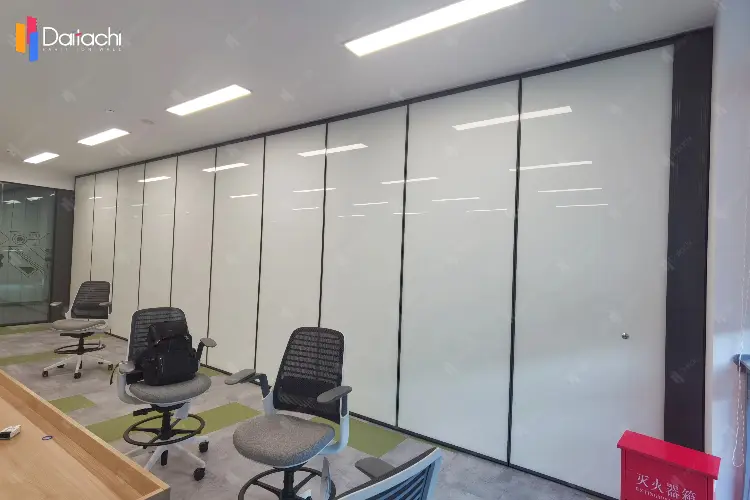
An office area can transform between collaborative and private working zones
Educational facilities can adjust classrooms according to different requirements
This flexibility improves space utilization while reducing the need for costly renovations.
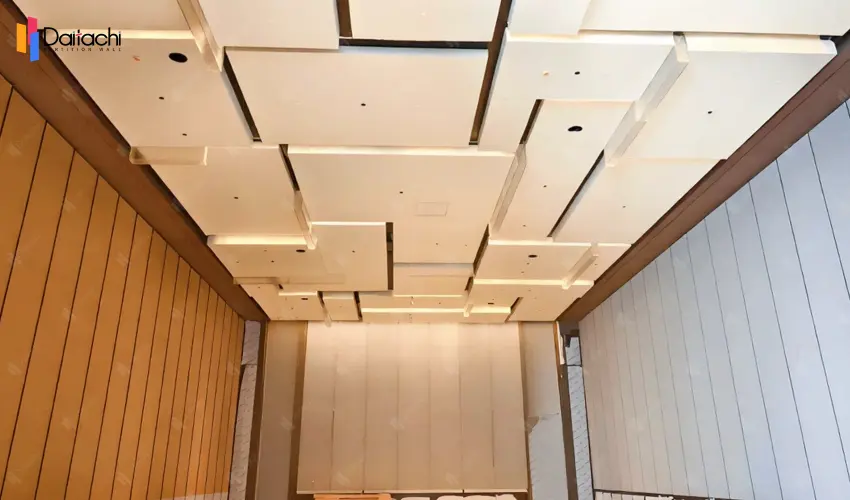
Open-plan architecture has become increasingly popular in offices and commercial environments because it creates visually open and collaborative spaces.
However, open layouts can also introduce challenges:
Limited privacy
Increased noise levels
Difficulty separating different activities
Movable partition walls provide a balanced approach by maintaining openness while allowing spaces to be separated whenever necessary.
Instead of choosing between open design and private areas, modern buildings can achieve both through flexible partition solutions.
Movable partition walls are widely used across different industries, including:
Office Buildings
Companies can create flexible work environments that support meetings, teamwork, training sessions, and private discussions.
Hotels and Conference Centers
Large event spaces can be quickly adjusted to accommodate different group sizes and functions.
Educational Facilities
Schools and training centers can optimize classrooms, lecture halls, and activity spaces.
Commercial and Exhibition Spaces
Retail and exhibition venues can easily modify layouts based on events and customer needs.
In modern architecture, movable partition walls are no longer simply a way to divide rooms. They have become an important part of space planning strategies.
They help buildings achieve:
Greater flexibility
Better space efficiency
Improved user experience
Long-term adaptability
As architectural trends continue to evolve, flexible space solutions will play an increasingly important role in creating smarter and more efficient buildings.
Q1: What are movable partition walls used for?
Movable partition walls are used to divide, combine, and reorganize interior spaces without permanent construction changes. They are commonly found in offices, hotels, conference centers, and educational facilities.
Q2: Can movable partition walls improve space efficiency?
Yes. They allow one space to serve multiple purposes, helping organizations reduce unused areas and maximize operational efficiency.
Q3: Are movable partition walls suitable for modern architecture?
Yes. They support current architectural trends focused on flexibility, sustainability, and adaptable building design.
Movable partition walls are transforming modern architecture by creating spaces that can adapt to changing needs.
As buildings become more multifunctional, flexible partition systems provide an intelligent way to improve space utilization, enhance functionality, and support future growth.
The future of architecture is not only about designing beautiful spaces but also about creating environments that can continuously evolve.
Related Articles: Multi-Functional Space Partition System Planning Guide | Operable Walls
From Construction to Application: How Flexible Partition Systems Realize the Implementation of Space