To learn about all aspects related to Movable Partition Wall, you can consult our comprehensive guide on Movable Partition Walls Hub.
If acoustic design addresses "how sound is expressed in space," then flexible partition wall systems address "how space is used."
In modern architecture, movable partition systems have become one of the key technological means to realize multifunctional spaces.
Space is no longer fixed, but reconfigurable. Traditional architecture emphasizes the fixed nature of functional zoning, while modern space emphasizes "changeability." The same space can serve different functions at different times, which places higher demands on architecture.
Movable partition systems have developed precisely to meet this need, achieving rapid reconfiguration of space through track systems and modular walls.
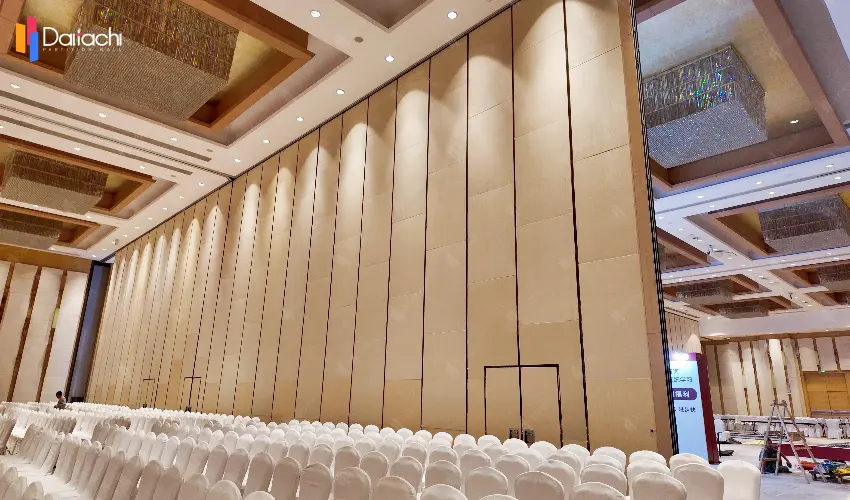
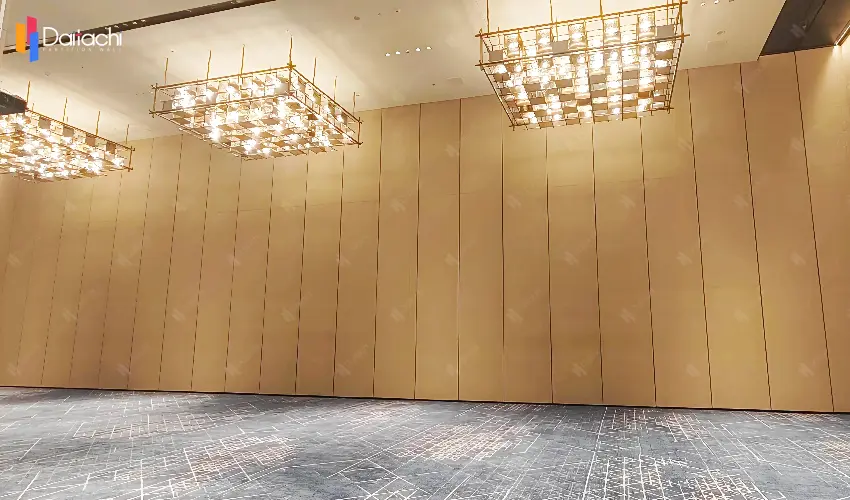
Large conference spaces can be divided into multiple independent meeting rooms.
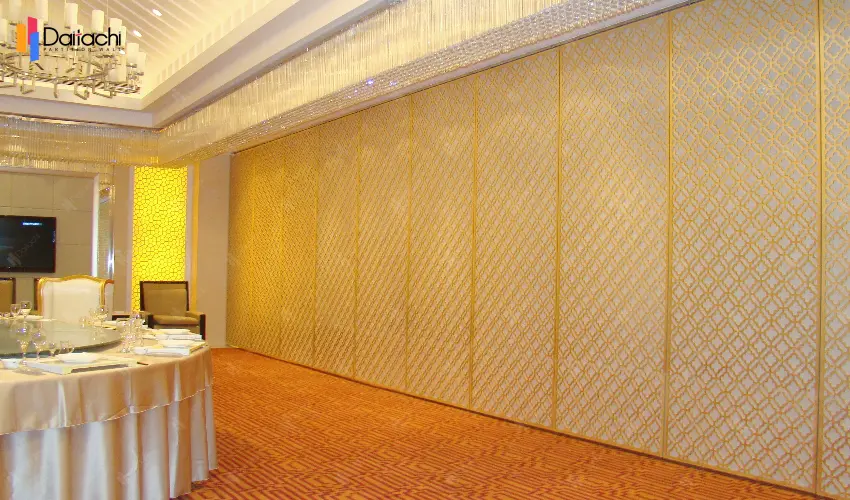
Hotel banquet halls can adjust their usable area according to size.
Educational spaces can be flexibly partitioned according to courses.
More than just partitions, they are performance systems.
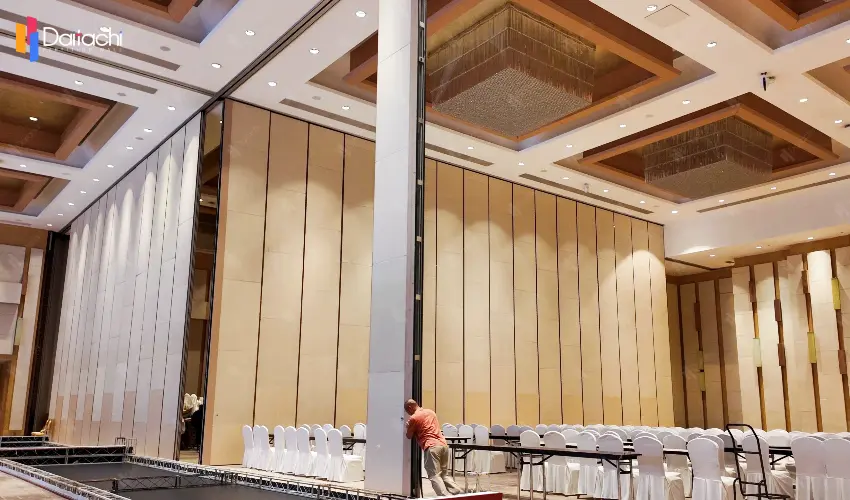
Firstly, sound insulation. Through multi-layered structural design and sealing systems, partitions can achieve acoustic effects close to fixed walls when closed.
Secondly, structural stability. Frequent opening and closing requires the system to possess long-term durability and track precision.
Finally, there's the issue of spatial integration. An excellent partition system can visually and stylistically blend into the overall interior design without appearing jarring.
In actual projects, the effectiveness of movable partitions depends not only on the product itself but also on the coordination between the initial design and construction.
If acoustic design, electromechanical layout, and the partition system are not planned in sync, problems such as sound leakage, resonance, or inconvenience often arise.
Therefore, mature projects typically adopt an integrated approach of "design-acoustics-partitioning" to ensure consistent spatial performance from the source.
Whether in office or commercial spaces, the demand for "variability" is constantly increasing. The significance of movable partition systems lies not only in technical solutions but also in embodying a spatial operational mindset.
Related Articles: What Is the Internal Structure of a Movable Partition Wall?