To learn about all aspects related to Movable Partition Walls, you can consult our comprehensive guide on Movable Partition Walls Hub.
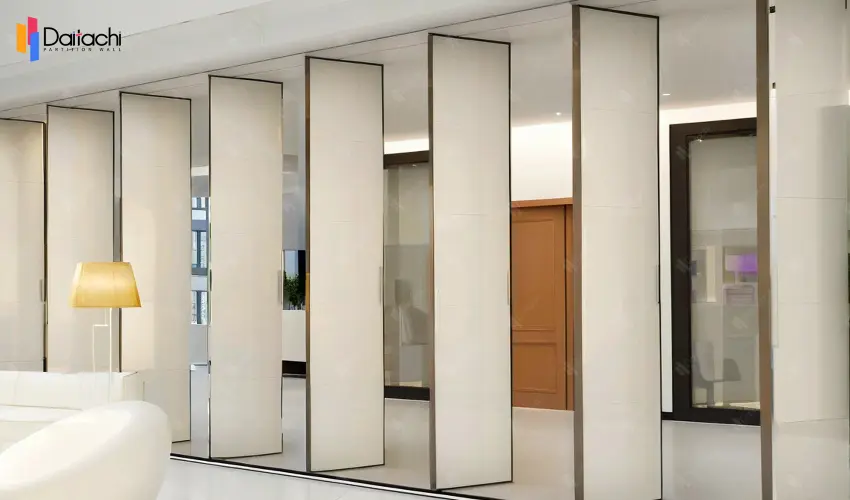
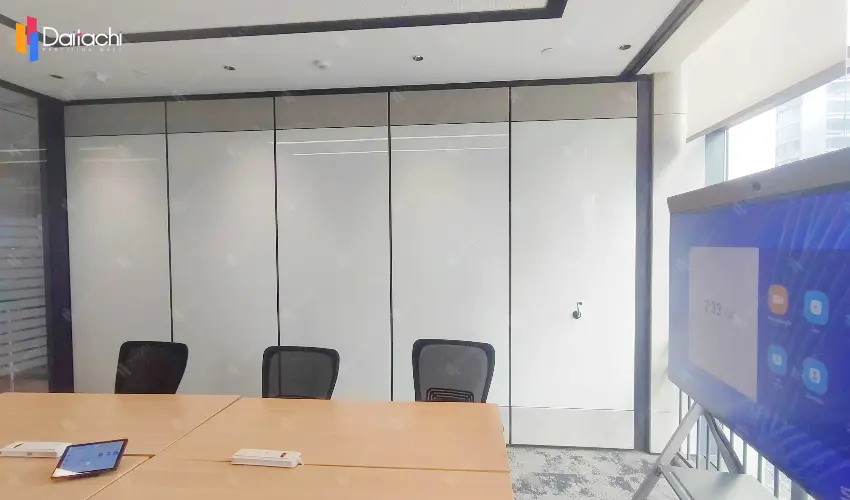
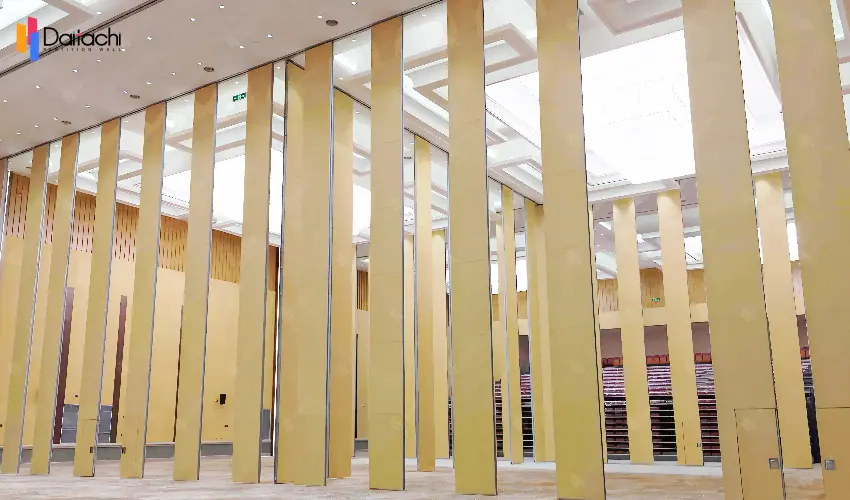
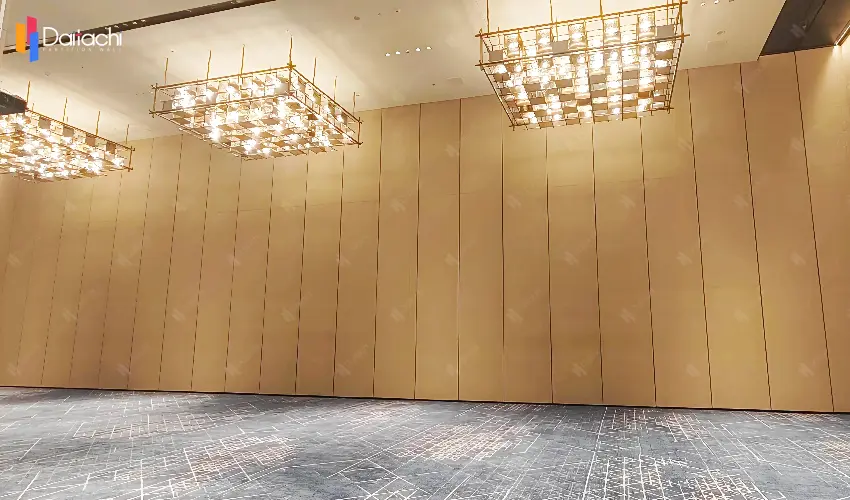
The internal structure of a sliding folding partition wall typically consists of a frame, panels, sound insulation filling layer, track system, transmission device, and sealing components. The following is a detailed explanation:
The frame of the movable partition wall is the core support of the entire structure. It usually uses high-strength aluminum alloy material, such as 6063 T6 aluminum alloy frame. This material has the characteristics of light weight, high strength, and corrosion resistance, ensuring the stability and durability of the partition wall. The frame thickness specifications are diverse, commonly including 65mm, 85mm, and 100mm. Different frame thicknesses are suitable for different scenarios and needs. For example, the 65mm movable screen uses an aluminum alloy frame on all sides, with a thickness of 65mm, making it lightweight and easy to operate; the 100mm movable partition focuses on sound insulation performance, with a relatively heavier panel weight, stable sliding operation, and is suitable for places with high sound insulation requirements.
The panel materials of movable partition walls are diverse and can be selected according to actual needs and decorative styles. Common panel materials include melamine board, fireproof board, color steel plate, and gypsum board. Melamine board has the characteristics of wear resistance, corrosion resistance, and easy cleaning; fireproof board has good fire resistance and can meet the fire safety requirements of public places; color steel plate has rich colors and strong decorative properties; gypsum board has good sound insulation and heat insulation properties. These panel materials are tightly combined with the aluminum alloy frame through bolts, hinges, and other connecting parts to form a whole.
To improve the sound insulation effect of the movable partition wall, sound insulation materials are usually filled inside. Common sound insulation materials include PAR sound-absorbing glass fiber and high-density sound insulation cotton. These sound insulation materials are not only easy to install, have excellent durability and moisture resistance, but can also effectively absorb and block the transmission of sound, allowing the sound insulation coefficient of the partition wall to reach a very high decibel level, creating a quiet and private space environment for users.
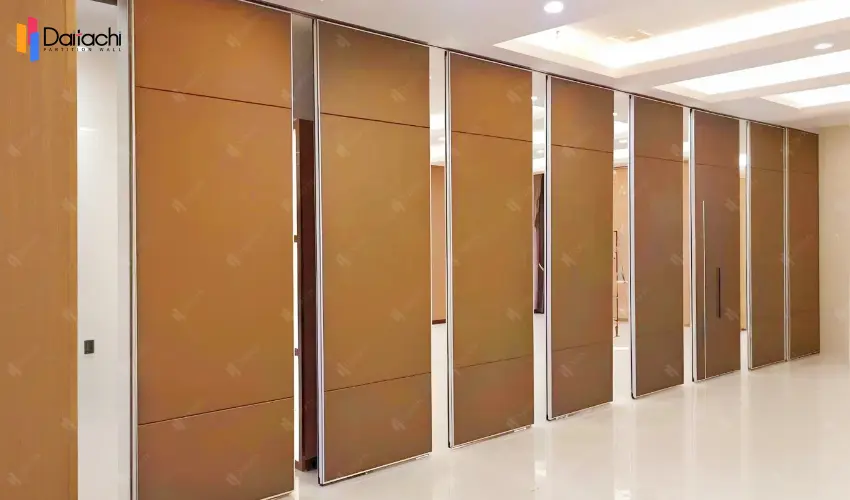
The track system is a key component that enables the flexible movement of the movable partition wall. Movable partition walls typically utilize ceiling tracks for a trackless suspension design. This design is not only aesthetically pleasing but also avoids the problem of floor tracks accumulating dust and being difficult to clean. The tracks are generally made of high-strength metal materials to ensure they can withstand the weight of the partition wall and frequent movement. The track design is also very sophisticated, supporting 90-degree to 360-degree turns, allowing the partition wall to be flexibly adjusted according to the spatial layout.
The drive mechanism is the power source for the lifting and movement functions of the movable partition wall. For electric movable partition walls, the drive mechanism usually includes a motor, gearbox, chain, and gears. The motor adjusts the speed and torque through the gearbox, and then drives the chain or gears to achieve the lifting or movement of the partition wall. The design of the drive mechanism needs to consider factors such as smooth operation, noise control, and service life to ensure that the movable partition wall can operate stably for a long time.
To ensure the sealing performance of the movable partition wall in the closed state, it is also equipped with sealing components. These components usually include sealing strips and sealing brushes, which are installed on the edges and gaps of the partition wall to effectively prevent air, dust, and sound leakage. When the partition wall is closed, the sealing components fit tightly together, forming a closed space and improving the sound insulation, heat insulation, and dustproof effects of the partition wall.
Related Articles: Movable Partition Wall Series: in-depth Analysis of Models 65, 85, and 105
Exploring Superior Internal Structure: Why Our Movable Partitions Exceed Expectations?