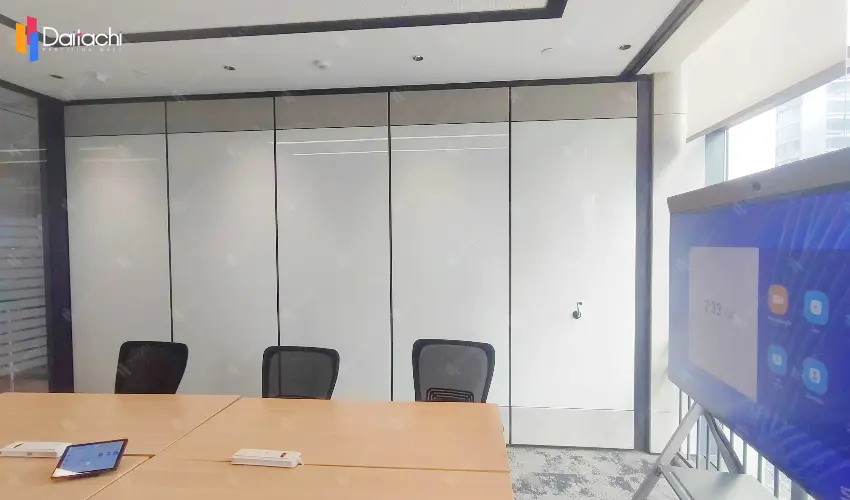
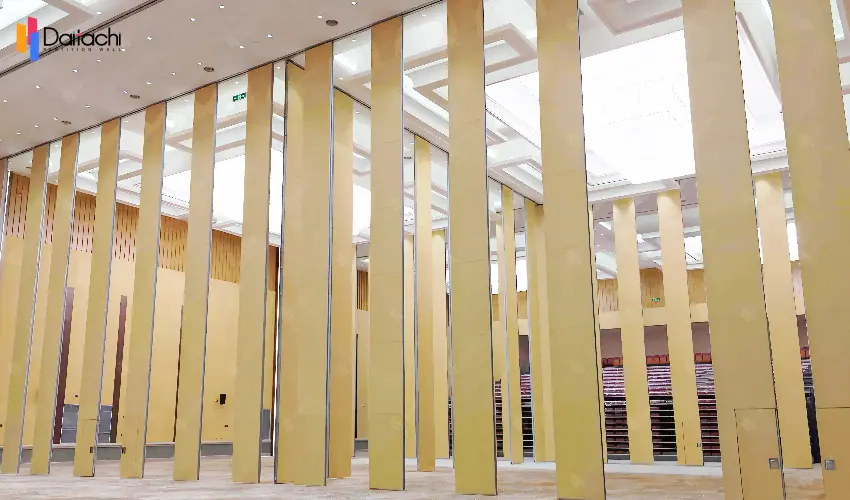
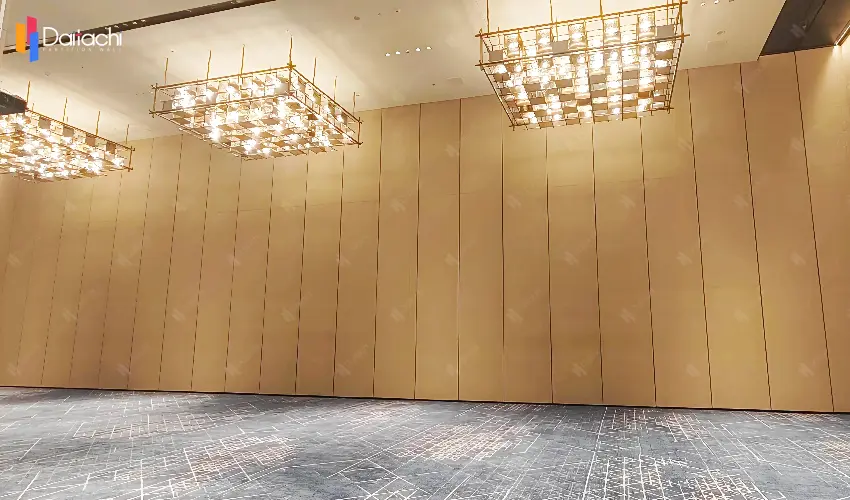
To learn about all aspects related to Vertical Folding Partition Wall, you can consult our comprehensive guide on Vertical Folding Partition Wall Hub.
In the present world of rapid urbanization and the fact that space resources are ever-increasingly scarce, effectively utilizing small space and meeting different demands has become a major problem in a variety of plans for space planning. Vertically folding lift-up walls due to their unique designs, superior performance as well as their high flexibility is slowly becoming the norm for the future of space planning. Five dimensions below provide the reasons why vertically folding wall lift-ups are the best solution for the coming years.
Future urban environments will be more compact, requiring increased flexibility for space usage within commercial and office spaces as well as residential spaces.
Thanks to its vertical lifting and folding design, the vertical folding partition enables "one-touch" space reconfiguration and rapid partitioning: when the spatial layout needs adjustment, the partition can be lowered to divide the area into distinct functional zones—such as meeting rooms or private spaces for discussions.
Quick Opening: If there is a need for an open space and the wall is needed, it can be collapsed, seamlessly joining the room and increasing general openness.
The "flexible" design completely removes any limitations associated with the traditional wall and allows all the space available to be dynamically adjusted to requirements and perfectly adapting to the future of high density, multi-functional scenario.
The future of architecture and design will put more emphasis on the environment and sustainable. The vertically walls that fold and lift are a reflection of the green values of both its material and design
Environmentally Friendly materials: Recycling frame metals that are pollution-free as well as high-polymer composite panels that lessen the environmental impact of our products;
Energy-saving and Noise Reduction: Materials for sound insulation and sealed designs help reduce power consumption, while at the same time minimizing disturbance to noise making for a more healthy and relaxing indoor atmosphere.
Long-Lifespan Designs: Modular design and wear-resistant material extends their service lives, which reduces resource use from replacements frequently.
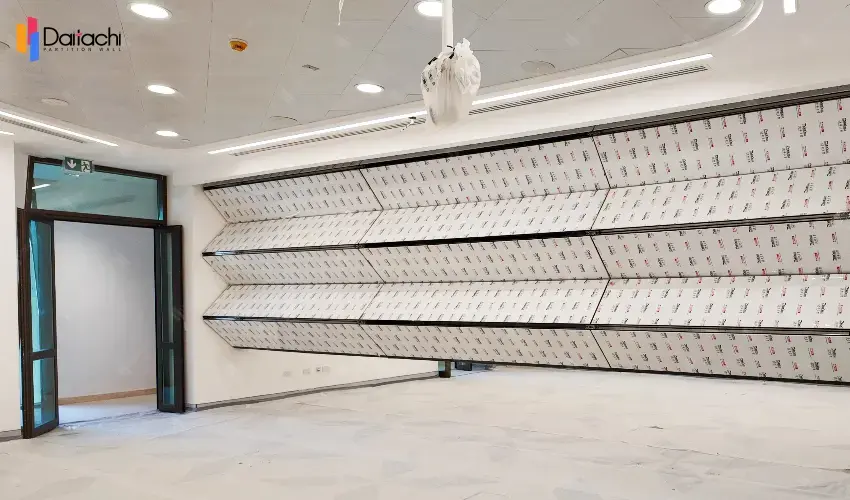
Future areas must meet the demands of higher frequency usage, which makes security and reliability essential. Vertical folding and lifting wall unit will ensure long-term stability operation by incorporating the following attributes:
Multiple security: Safeguards such as air pressure sensors and overload protection devices as well as an emergency brake system guarantee safe operation.
The waterproof, water-proof, and resistant to corrosion: The specially treated panels provide excellent protection against flames in addition to being mold-proof and water-proof and able to withstand humid or varying environments.
Structures that are impact-resistant reinforced metal frame and high-strength connectors withstand daily wear and collisions, which reduce the cost of maintenance.
The future of space design will put an emphasis on personalization as well as aesthetics. Vertical Wall Unit that folds and lifts provides highly personalized solutions:
Different colors and materials from matte metal to wood grain finish Custom shades and textures can be supported effortlessly integrating into traditional decoration styles.
Hidden track designs: Tracks can be positioned in the floor or ceiling or even the floor, and then become "invisible" as walls are pulled back while maintaining a tidy and visually pleasing area.
Integration of brand elements supports personalization of printing patterns, logos and more. This allows businesses to design distinctive spatial images.
In comparison to permanent walls or temporary partitions vertically folding or lifting walls provide substantial cost savings for the long-term:
Reduced Renovation Costs: There is no demolition or rebuilding is needed; the functional aspects can be easily adjusted by moving the wall's height.
Reduces Space Not Utilized: Flexible division of space prevents the waste of space due to incongruous design layouts.
A Low-maintenance Investment: Materials that last and a modular design cut down the frequency of maintenance, making sure that you are able to enjoy for long-term usage.
Vertical raising and folding walls change the way that futuristic spaces are utilized with five main benefits: flexibility in space as well as environmental sustainability, safety and long-term durability, personalization of the aesthetic and efficiency. This isn't just an innovation in functionality, but an important insight into how we will live our lives in the near future..
Let Baker's vertically folding walls become the basis for your space transformation and with us we can create an efficient, more sustainable and more sustainable future!
Related Articles: Future Design Trends of Vertical Lifting Walls
From "Fixed" to "Flexible": How Lift Walls Are Redefining Future Office Spaces