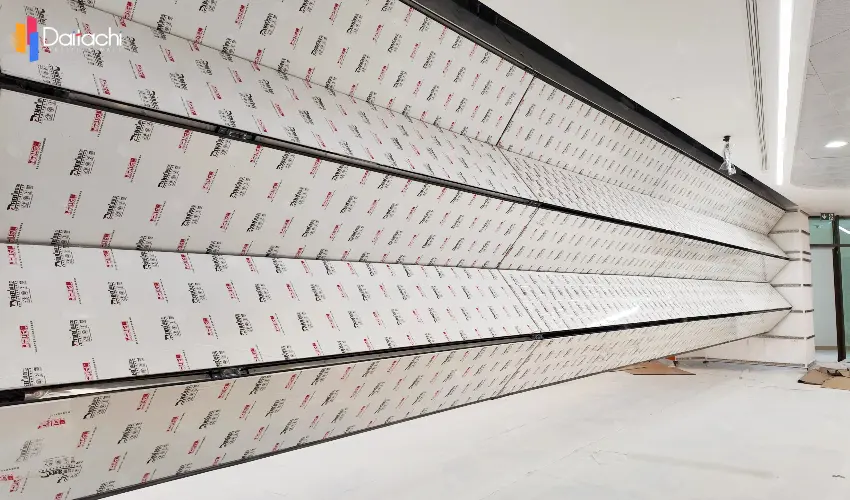
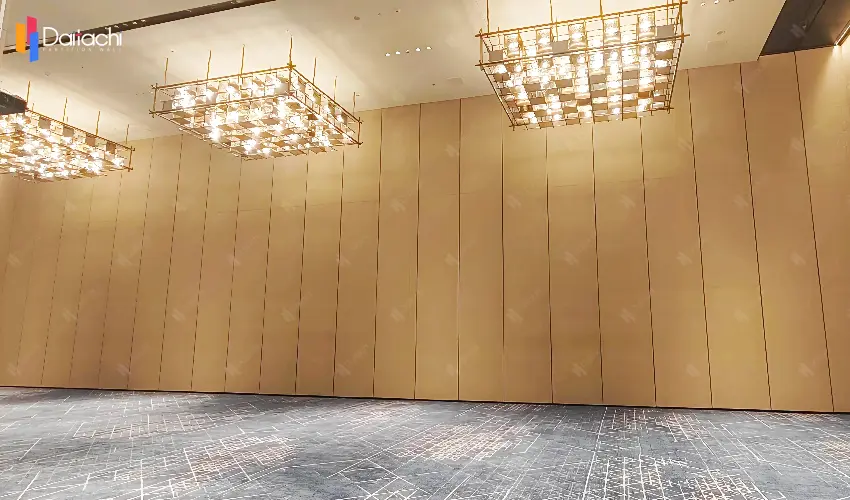
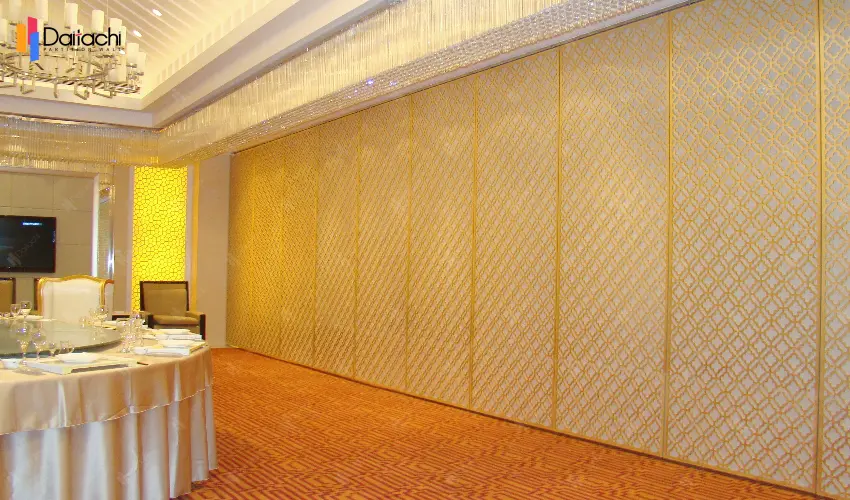
To learn about all aspects related to Vertical Folding Partition Wall Hub, you can consult our comprehensive guide on Vertical Folding Partition Wall Hub.
In traditional office models, fixed walls serve as the primary means of spatial division; however, their rigid structures often result in low space utilization and limited functionality, making it difficult to adapt to the rapidly evolving needs of modern enterprises. Driven by technological advancements and innovations in office philosophy, partition wall systems—distinguished by their flexibility, efficiency, and smart capabilities—have emerged as a core element in the design of future office spaces.
This article explores, through the three dimensions of spatial reconfiguration, functional integration, and technological empowerment, how partition systems are driving the transformation of office environments toward becoming more "dynamic, human-centric, and sustainable."
Traditional office spaces utilize fixed walls to delineate functional areas—such as private offices, conference rooms, and open workstations—yet this static layout suffers from two major drawbacks:
Low Space Utilization: Fixed zoning often leaves certain areas idle for extended periods (e.g., conference rooms during non-meeting hours), resulting in a waste of resources.
Poor Adaptability: When changes occur in team size or business models, spatial reconfiguration typically requires costly and time-consuming demolition and reconstruction work.
Lift walls address these issues by introducing "variable boundaries":
Rapid Scene Switching: Electrically operated lift walls can merge or divide spaces within seconds, thereby significantly enhancing space utilization efficiency.
Modular Combinations: Lift walls can be paired with movable furniture to create flexible, "ready-to-use" spatial configurations.
Increased Spatial Density: Through dynamic partitioning, a single physical space can accommodate a greater variety of functions.
Estimates suggest that office spaces incorporating lift walls can achieve a 30% to 50% improvement in space utilization, thereby helping to reduce corporate leasing costs to a significant degree.
Elevating walls do more than merely redefine spatial boundaries; through integrated technologies, they evolve into multifunctional complexes, driving the transformation of office spaces toward a more "human-centric and intelligent" future:
1. Acoustics and Privacy Protection: Balancing Openness with Privacy
Cinema-Grade Soundproofing: Baker’s high-end elevating walls feature a multi-layer composite structure (comprising gypsum board, rock wool, and a damping layer) that achieves a sound insulation rating of RW62. This ensures that private meetings remain free from external disturbances while simultaneously preventing sound leakage that could disrupt open-plan areas.
2. Green Energy Management: Promoting Sustainable Office Practices
Material Recycling: Elevating walls typically employ a modular design; upon disassembly, 90% of the materials can be recycled and reused, thereby significantly reducing the generation of construction waste.
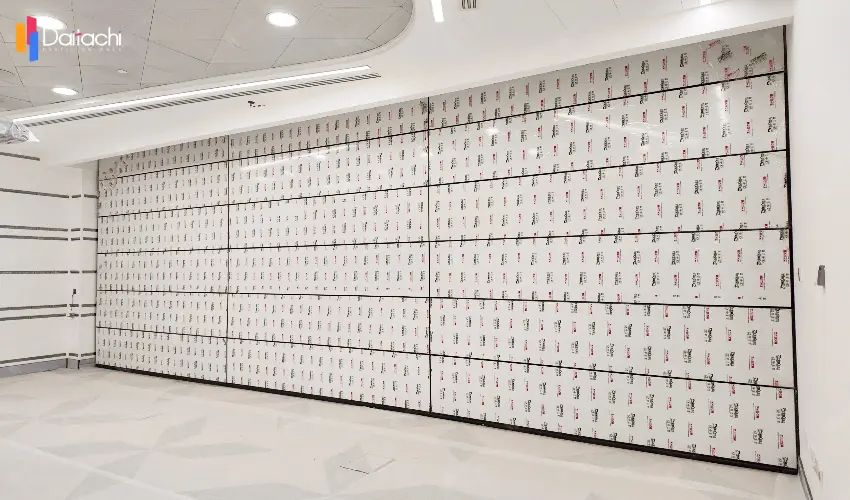
The evolution of elevating walls is inextricably linked to the support of technologies such as the Internet of Things (IoT) and Artificial Intelligence (AI). Their intelligent capabilities are manifested in the following aspects:
1. Automated Control: Enhancing Operational Efficiency
Intelligent Elevation: The walls can be automatically raised or lowered via side-mounted buttons or touch-screen controls.
Flexible Zoning: Elevating walls can automatically adjust the spatial layout to suit specific meetings, dynamically partitioning the space based on the requirements of the actual scenario.
2. Safety Performance: Ensuring User Security
Air Pressure Sensors: Air pressure sensors are installed at the base of the wall system. If the wall encounters an obstruction while descending, it will automatically halt its descent and retract upward for three seconds; subsequent operation requires manual reactivation.
As technology continues to iterate and user demands evolve, elevating walls are poised to advance in the following directions:
Lighter Weight, Higher Strength: By incorporating advanced materials—such as carbon fiber and aerospace-grade aluminum—the walls will become lighter in weight while simultaneously offering enhanced load-bearing capacity.
Fully Adaptive Scenarios: Through AI-driven learning of employee behavioral patterns, the walls will automatically adjust spatial layouts and environmental parameters to deliver a "seamless and unobtrusive" service experience.
The rise of elevating walls marks a pivotal shift in office space design—moving from an "architecture-centric" paradigm toward a truly "human-centric" approach. Through spatial reconfiguration, functional integration, and technological enablement, it has not only enhanced spatial efficiency and the employee experience but also driven the evolution of the office model toward a future that is flexible, intelligent, and sustainable.
Related Articles: Future Design Trends of Vertical Lifting Walls
Vertical Folding Lift-Up Walls: The Ideal Choice for Future Spaces