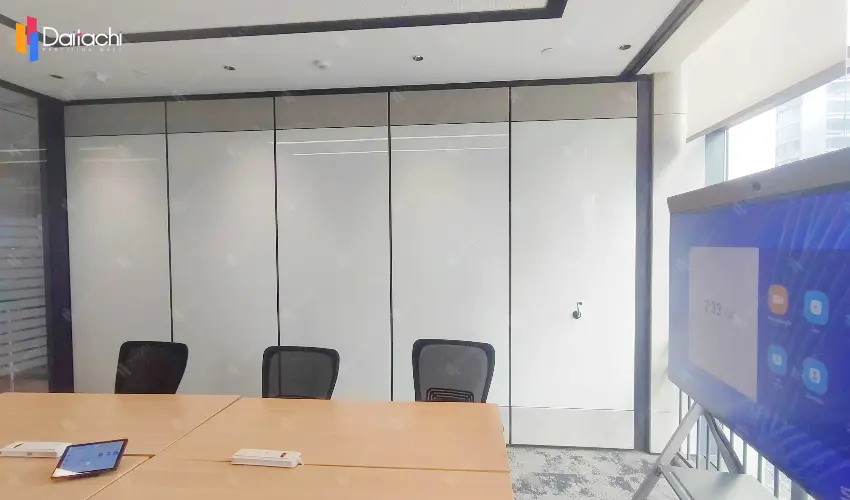
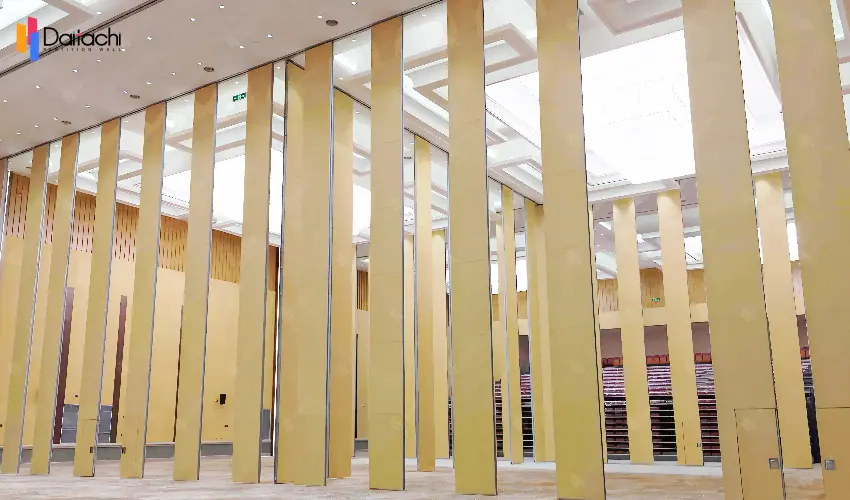
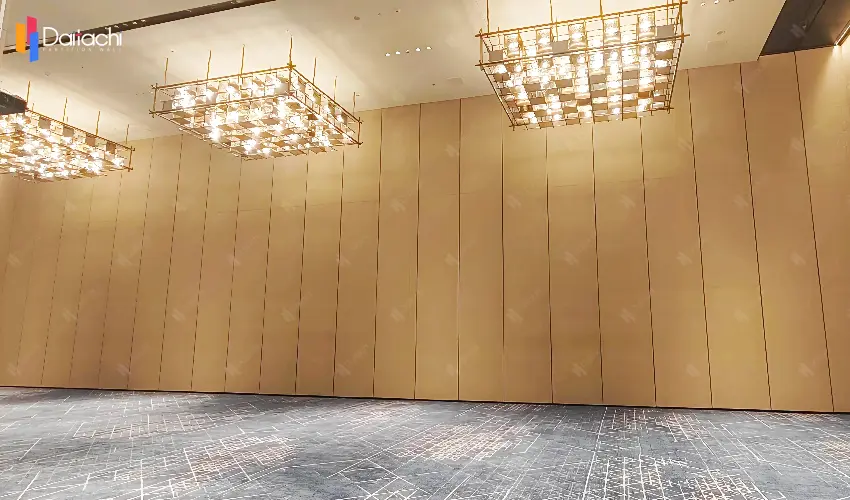
To learn about all aspects related to Vertical Folding Partition Walls, you can consult our comprehensive guide on Vertical Folding Partition Walls Hub.
Modern architectural design, folding retractable walls, due to their flexibility in space division as well as efficient use of space they have emerged as the perfect choice for environments like conference rooms, labs and gymnasiums. The mechanical sound and the issues with positioning deviation of traditional systems for lifting often place people in the middle of "efficiency and knowledge." In this article, we will explore how the drive mechanism of vertically folding walls can achieve quiet operation as well as millimeter-level precision control thanks to technological advancement.
The quiet operation of the vertically folding walls is due to the extensive improvement of the noise-generating elements in the system of drive. Its drive technology achieves quiet operation by utilizing three main technology paths:
Low-Noise Motor, and Reduction Mechanism: A high-voltage electric motor using its FOC (Field-Oriented Control) algorithm allows for precisely controlled motor speed, torque and location by exact control of the waveform of current. Utilizing the most efficient current can improve efficiency of motors while reducing operating noise to less than 35dB(A) and close to the level of ambient noise in the library.
Distributed Propulsion as Well as Flexible Transmission: In contrast to traditional single-point drives of the past, contemporary lifting walls have the concept of distributing numerous drive units. The drive can be controlled synchronously by several sets of micro servo motors. Each motor has a flex coupling, which is able to effectively absorb vibration and impacts, thus reducing the noise that is generated from the rigid transmission.
Acoustic Structure Optimization: The housing of the drive utilizes a 3-layer composite sound-absorbing design: the outer layer is composed of a damping steel plate, while the middle layer is stuffed with sound-absorbing glass fiber while the inside layer is covered with sound-absorbing polyester panels. The design is able to reduce the internal sound of the drive mechanism by 20dB in propagation. This ensures that operational noise in the cabin stays at <=45dB(A) which is sufficient to meet the demands of situations that are sensitive for medical laboratory environments.
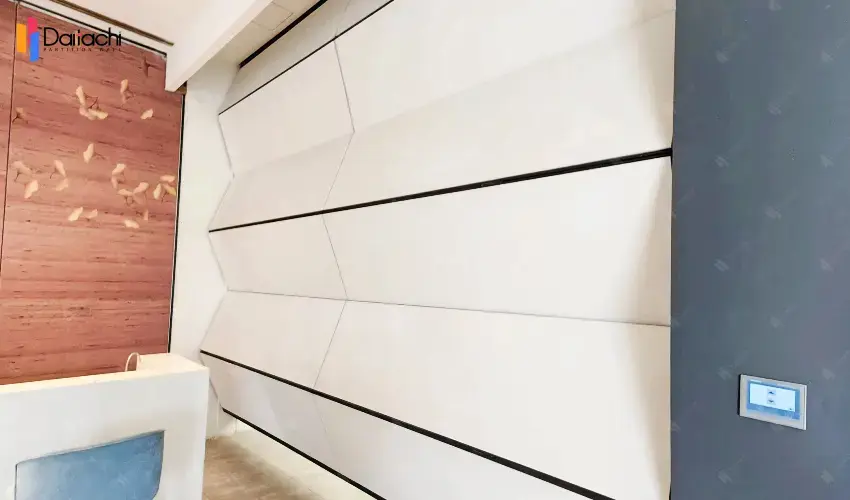
The exact control of the vertical folding wall depends on the joint working of precision sensors as well as smart algorithms. This control mechanism, which has an Borsen magnetostrictive displacement sensor at its basis, is able to achieve three important technological advancements.
Non-contact Absolute measurement
The magnetostrictive sensor determines the displacement using the time it takes to propagate tension waves in torsional direction. Non-contact measurement reduces friction and wear, thereby increasing the life span of. In a hydraulic press of 1000 tons the slider was controlled synchronously This technology was used to regulate the position of the lift point in the range of +-0.02mm and increased the qualifying rate from 82 percent to 99.8 percent.
Multiple-axis Synchronous Control Algorithm
In order to meet the requirement for multi-wall connection in large areas The system uses the "virtual axis and load balancer" management strategy.
Virtual Axis Control: In the process of creating a reference path with a mathematical representation of a physical every drive unit adjusts the deviations instantly greatly improving load balance and the ability to automatically extend/retract.
Control of load balancing based on curvatures of displacement that the current is fed back by sensor. The output torque of every drive unit can be constantly adjusted in order to reduce the possibility of structural deformation.
Adaptive Environmental Compensation
By integrating a temperature compensation module with a vibration reduction algorithm, it will automatically correct any positioning variations caused by environmental conditions. In the temperature range ranging from between -20 and 60 The system can adjust variables in real-time by using data from the temperature sensor to guarantee the position precision of the wall even in the most extreme conditions.
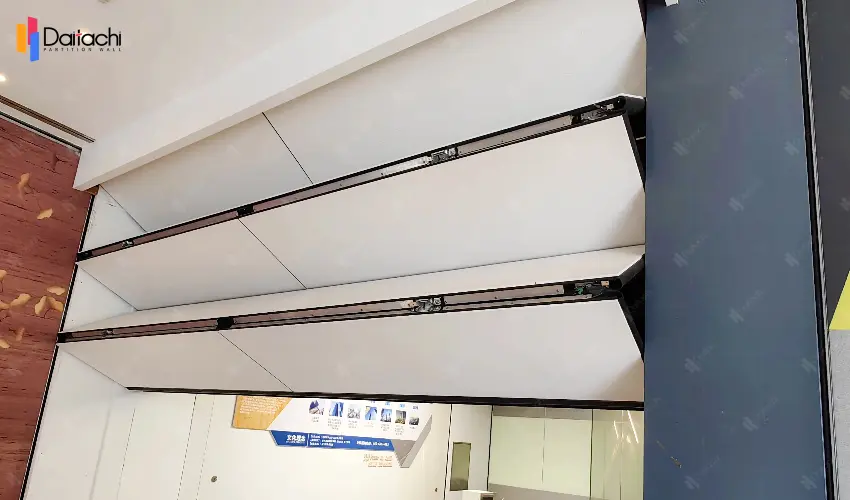
The sector is currently undergoing a major upgrade with three primary directions:
Energy Recovery Technology is a method of converting the potential energy from lifting to electrical energy by the use of regenerative brakes. This reduces consumption of energy by 20 percent.
AI-based Predictive Control Neural network models based on data from the past are able to anticipate changes in load 0.5 seconds ahead.
Wireless deployment using LoRa Wireless Sensor Networks for cutting down on wiring expenses while increasing the reliability of your system.
The drive mechanism for vertically folding lift walls redefines the effectiveness and efficiency of the process of space division with the effective integration of material science along with control theory along with information technology. From the smallest improvements in silent motors, to macro-level control of synchronization across multiple axes, each technological advancement is pushing architecture in a more intelligent and more centered approach. In the modern age of architecture, which aims for the ultimate use of space This isn't just an achievement for the technology, but also a flawless version that is a perfect interpretation of the "space as an solution"concept.
Related Articles: The Core of Sound Insulation in Vertical Lift Wall Systems
How Can Vertical Lifting Walls Improve Sound Insulation?