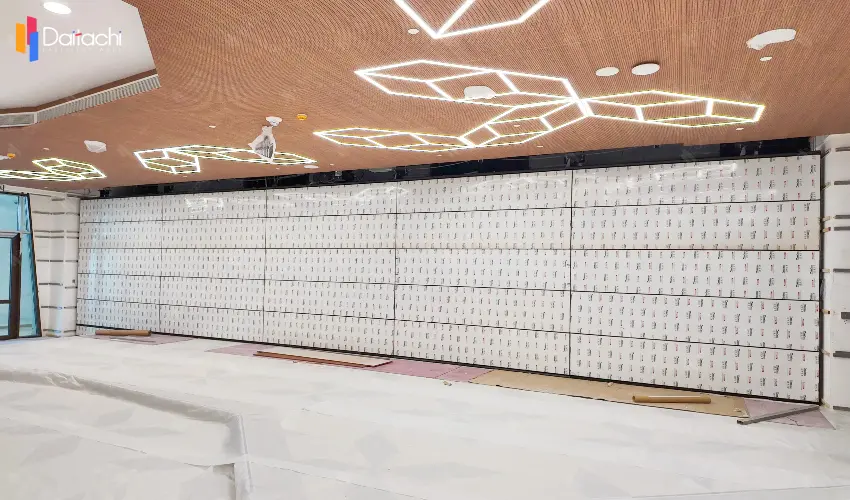
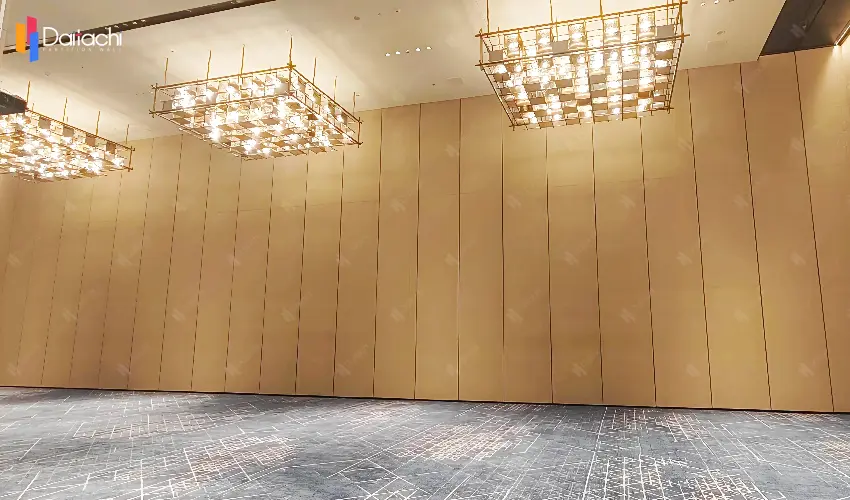
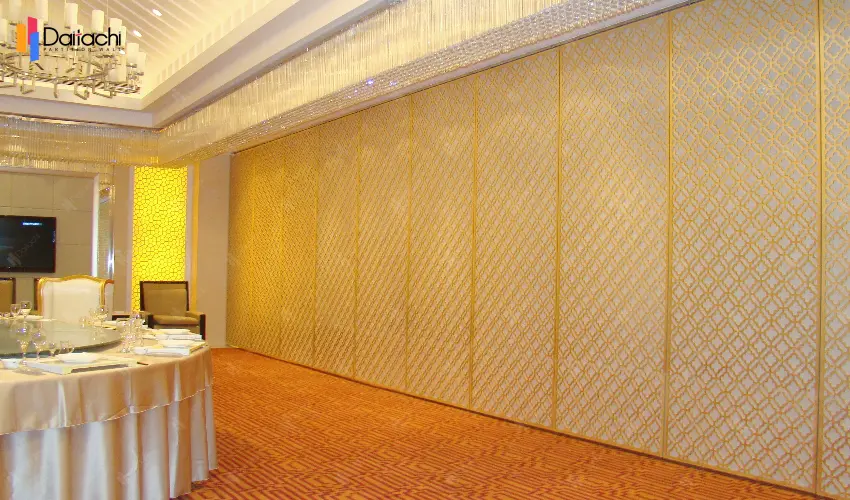
To learn about all aspects related to Vertical Folding Partition Wall, you can consult our comprehensive guide on
Vertical Folding Partition Wall Hub.
In traditional office or residential environments, space transitions are often accompanied by mechanical noise, waiting times, or abrupt environmental changes that may interrupt user experience.
However, vertical folding lifting walls, utilizing integrated technology and human-centered design, transform spatial adjustment into a seamless and fluid experience.
The focus of architectural design is shifting from simple space planning toward experience design, and seamless operation is becoming an important indicator of intelligent spaces.
The seamless performance of vertical folding lifting walls relies on concealed mechanical structures, optimized drive systems, and intelligent control technologies, allowing movement to become a natural background activity within the space.
1. Silent Drive Technology: Reducing Mechanical Noise
Low-Noise Motor:Advanced motor systems reduce operational noise and provide smooth movement during opening and closing.
Optimized Reduction Gears:High-precision transmission components minimize friction and improve operational stability.
Soundproof Housing:The motor and transmission components are protected with sound-reducing materials to limit noise transmission.
2. Intelligent Folding Structure: Eliminating Physical Resistance
Hinge Damping Design:Advanced hinge systems regulate movement speed during extension and retraction, preventing sudden acceleration.
Lightweight Materials:High-strength lightweight materials reduce overall system weight and energy consumption.
Dynamic Balancing System:Counterbalance mechanisms maintain smooth operation by compensating for weight distribution changes.
Data Verification:Field testing confirms stable movement speed and controlled acceleration for a smooth user experience.
3. Wireless and Embedded Design: Concealing System Presence
Wireless Power Supply:Hidden wiring reduces visible components and improves visual cleanliness.
Hidden Tracks:Ceiling-integrated tracks with matching cover plates create a seamless architectural appearance.
Integrated Panels:Customized finishes allow the wall system to blend naturally with surrounding interiors.
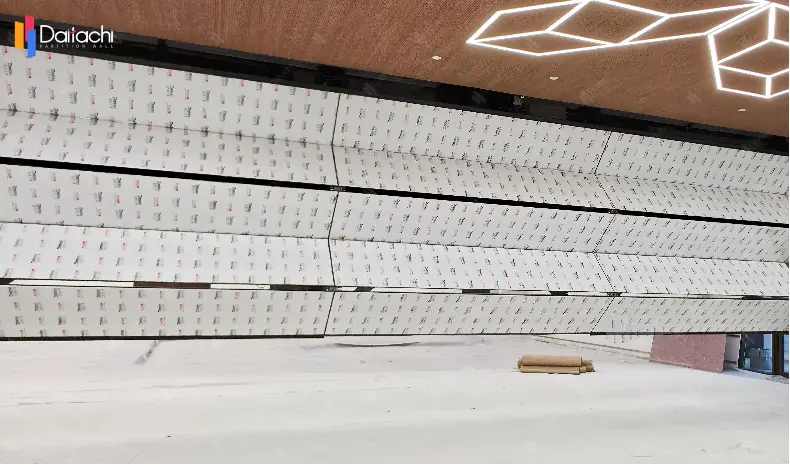
The seamless experience created by vertical folding lifting walls provides significant value across different environments by changing the way spaces are organized and used.
1. Office Environment: From Fixed Workstations to Flexible Collaboration
Dynamic meeting areas can automatically adapt according to capacity requirements, expanding or reducing space for different collaboration scenarios.
2. Residential Environment: From Single-Purpose Rooms to Multifunctional Spaces
Living areas can transform into private spaces when needed and return to open layouts during daily activities, improving space efficiency.
3. Commercial Environment: From Static Display to Immersive Experience
Retail and exhibition spaces can dynamically adjust layouts and integrate digital systems to create flexible and engaging environments.
The seamless experience provided by vertical folding lifting wallstransforms space from a static physical structure into an adaptive environment supported by concealed mechanisms and intelligent control.