To learn about all aspects related to Vertical Folding Partition Wall, you can consult our comprehensive guide on Vertical Folding Partition Wall Hub.
Vertical lift-up folding walls achieve invisible storage and minimalist aesthetics without the need for ground tracks through innovative structural design, drive systems, and material applications. Their core technologies can be summarized in four aspects: space concealment, structural optimization, drive integration, and aesthetic details. The following analysis covers the technical principles and practical examples:
Top Rail + Vertical Guiding System
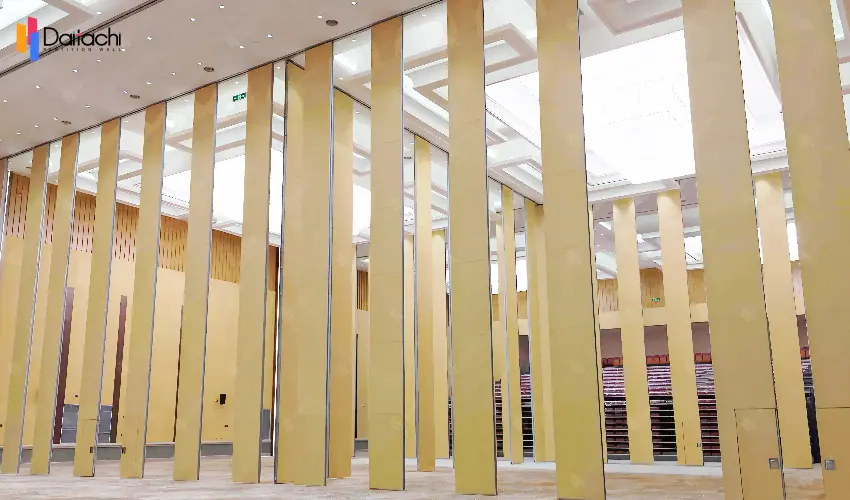
Technical Principle: The traditional ground track is moved to the ceiling. The wall's lifting and lowering is guided by a top sliding rail or roller assembly. Simultaneously, vertical guide rods (such as high-precision steel cables) are integrated inside the wall to ensure smooth and stable movement.
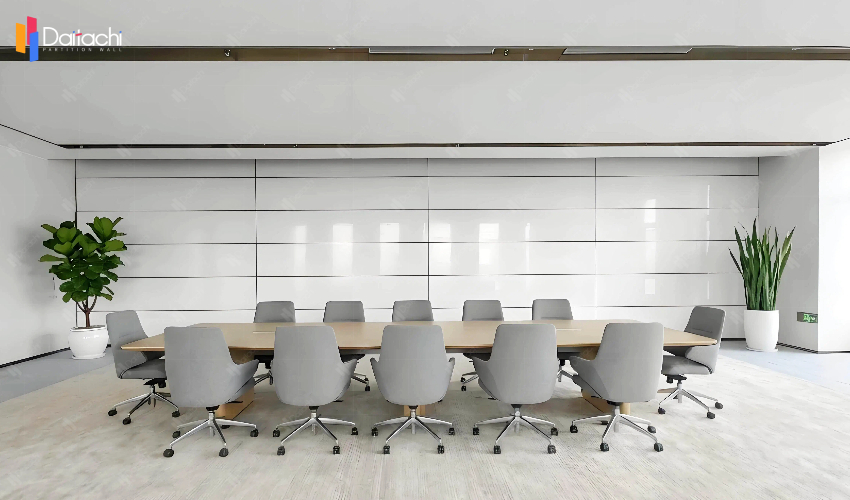
Aesthetic Advantages: Because there are no ground tracks, the integrity of the floor space is maintained, making it suitable for minimalist styles or scenarios requiring flexible layouts (such as open-plan offices and showrooms).
Case Study: Baker's vertical lift-up wall uses a top rail design combined with an aluminum alloy scissor-type folding mechanism embedded in the wall to achieve smooth lifting and lowering of a 6-meter-high wall without occupying floor space.
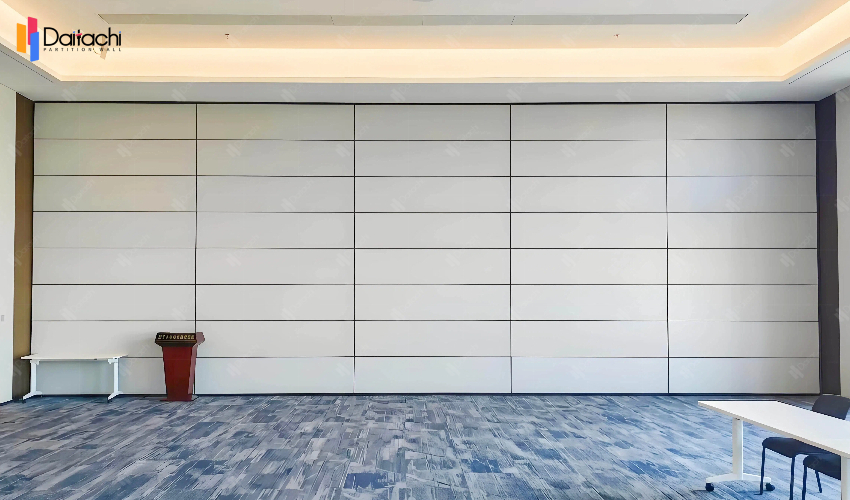
Concealed Side Hinges
Technical Principle: The hinges of the folding wall are no longer exposed but embedded in the wall structure. A precise mechanical structure controls the folding angle, ensuring a smooth, one-piece surface after folding.
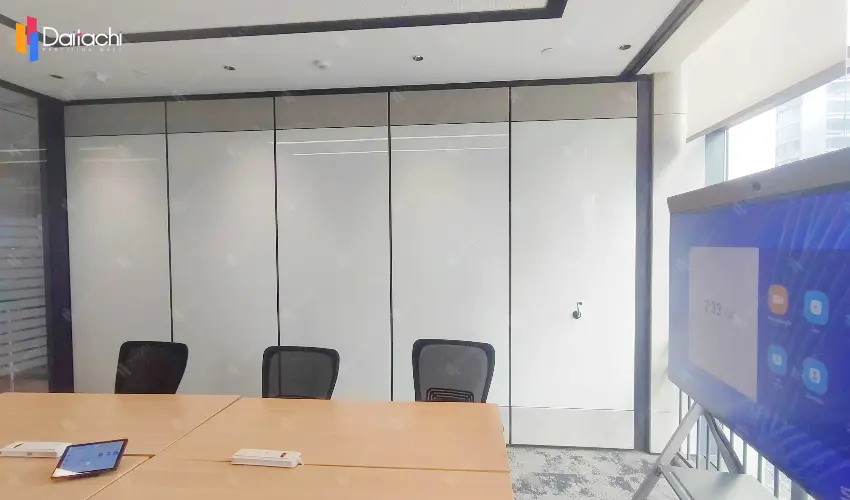
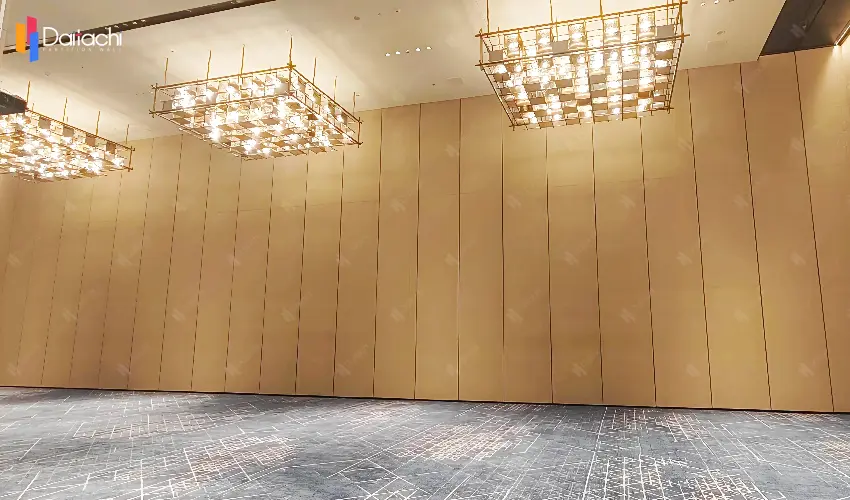
Aesthetic Advantages: With no protruding components, the wall presents a minimalist "one-piece wall" effect, seamlessly integrating with interior décor.
Example: Baker's folding wall uses concealed hydraulic hinges, allowing it to be completely hidden in ceiling or side wall recesses after folding.
Customizable Surface Materials
Options: Supports wood veneer, metal, or fabric upholstery to match interior design styles, seamlessly integrating with fixed walls when folded.
Hidden Function Integration
Technology: Concealed light strips can be embedded in the wall, with no visible holes or devices on the surface.
Case Study: Baker's vertical folding wall integrates a wireless button module and touchscreen, concealed with a magnetic cover to maintain a clean and aesthetically pleasing wall surface.
Related Articles: How Vertical Lift-Up Folding Walls Achieve "Invisible Storage" and Minimalist Aesthetics (Part 2)