To learn about all aspects related to Vertical Folding Partition Wall, you can consult our comprehensive guide on
Vertical Folding Partition Wall Hub.
In contemporary architectural design, functionality and aesthetics are no longer mutually exclusive choices, but rather a dual pursuit requiring seamless integration.
As a dynamic space partitioning solution, vertical folding lifting walls break through the limitations of traditional partitions through flexible operation, minimalist appearance, and efficient space management, providing architects and designers with a practical solution for modern environments.
Traditional partition walls can interrupt visual continuity due to heavy frames, exposed mechanical structures, or inconsistent finishes.
The invisible design approach of
vertical folding lifting wallsachieves harmony with architectural aesthetics through several strategies.
Simple Frame, Reduced Visual Boundaries
The system uses reinforced aluminum alloy profiles combined with a concealed track structure.
After folding, the partition integrates naturally with the ceiling and surrounding architecture, appearing as part of the interior environment.
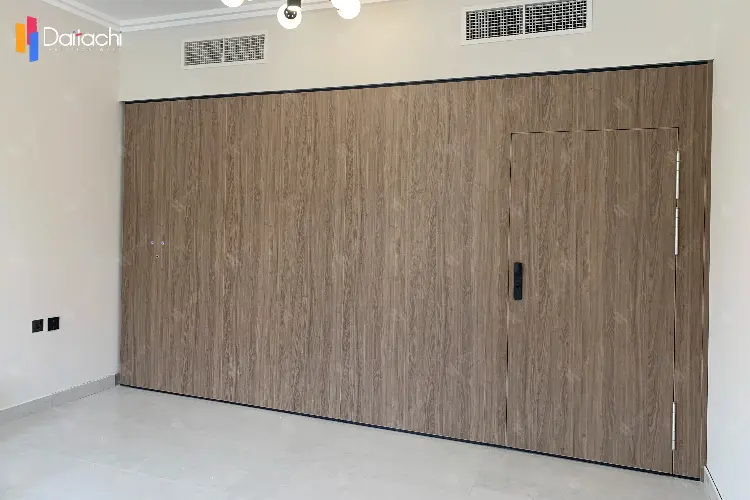
Panel colors and finishes can be customized to match walls and ceilings, reducing visual impact and allowing the partition to function as an invisible background element.
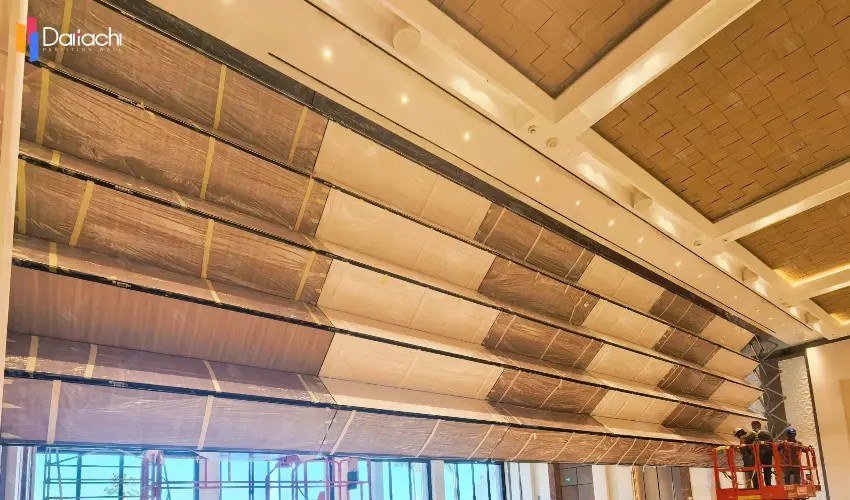
Core components such as the motor and transmission mechanism are concealed within the ceiling structure, maintaining smooth and quiet movement during operation.
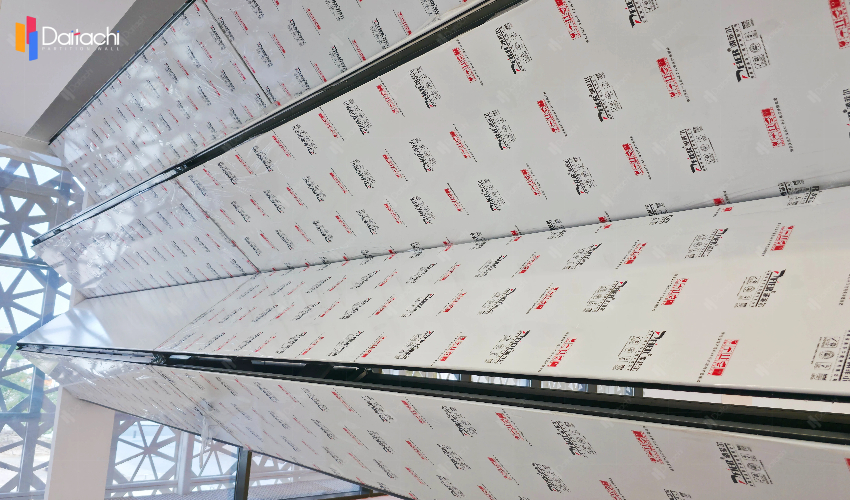
Invisibility does not mean complete disappearance. Instead, it introduces dynamic aesthetic value through flexible spatial transformation.
A Sense of Order During Operation
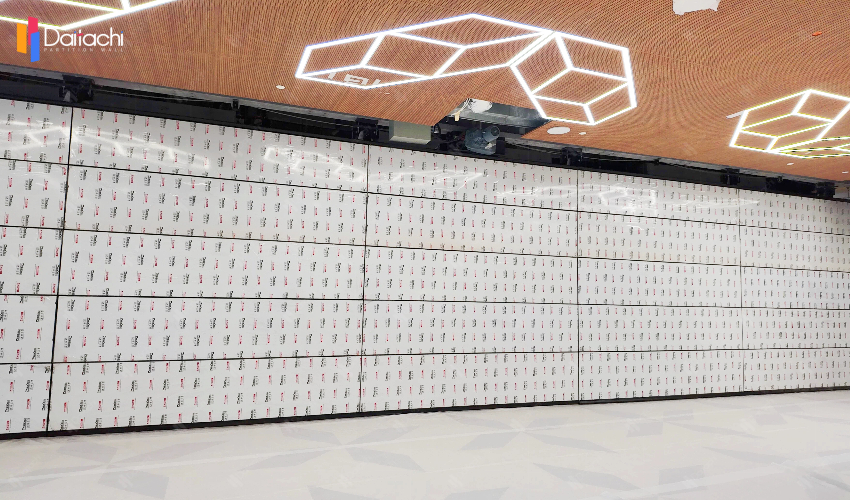
When fully deployed, the flat wall surface can function as a projection background, exhibition surface, or branding display area, extending the visual language of the interior.
When retracted, the panels fold neatly into a pre-designed ceiling recess, occupying minimal space while maintaining architectural clarity.
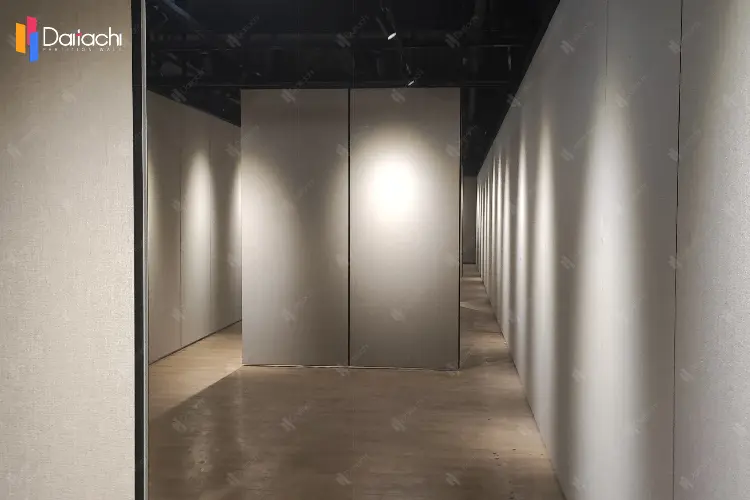
The system is suitable for environments requiring privacy without permanent enclosure, including open-plan offices, café spaces, meeting areas, and exhibition environments.
Harmonious Materials, Integrated with Interior Design
A variety of finishes can be selected to coordinate with surrounding architectural materials, including wood veneer, brushed metal, and stone textures.
For example, wooden interiors can incorporate matching wood finishes, while industrial-style environments can use matte metal surfaces to maintain overall design consistency.
Design Freedom:Supports customized sizes, colors, and finishes to match different architectural styles.
Technical Highlights:Concealed track systems and advanced motor technology ensure smooth and quiet operation.
Quick Installation:Modular design enables efficient installation with minimal impact on existing structures.
Long-Term Value:Durable materials and reduced maintenance requirements provide lasting performance.
The invisible design of the vertical folding lifting wallrepresents a balance between functional flexibility and architectural aesthetics. Rather than dominating the space, the system quietly adapts to changing requirements, allowing architecture to maintain openness while providing effective spatial control. Whether used in commercial buildings, cultural spaces, or private environments, this invisible partition solution connects functionality with contemporary design principles.
Related Articles: Invisible Partitions: How Vertical Folding Walls Enable Seamless Space Management