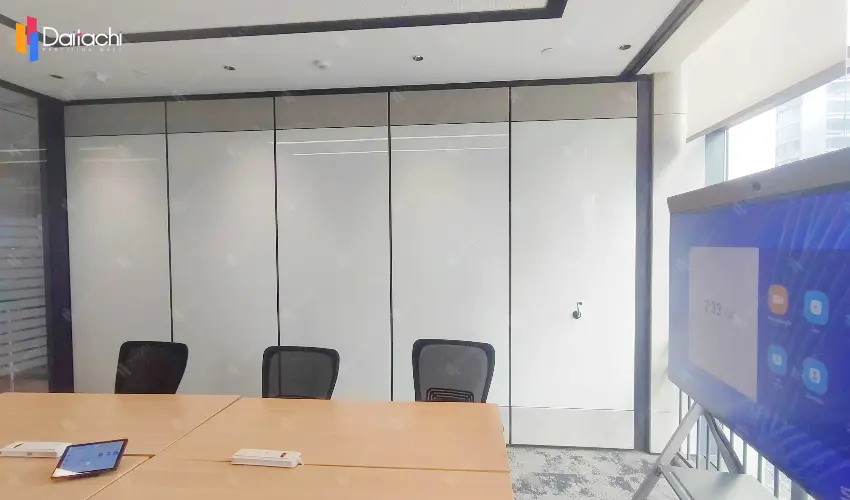
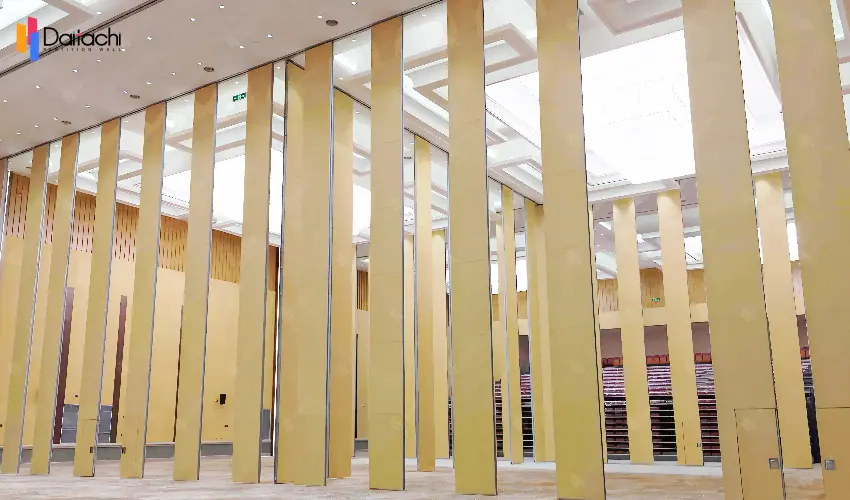
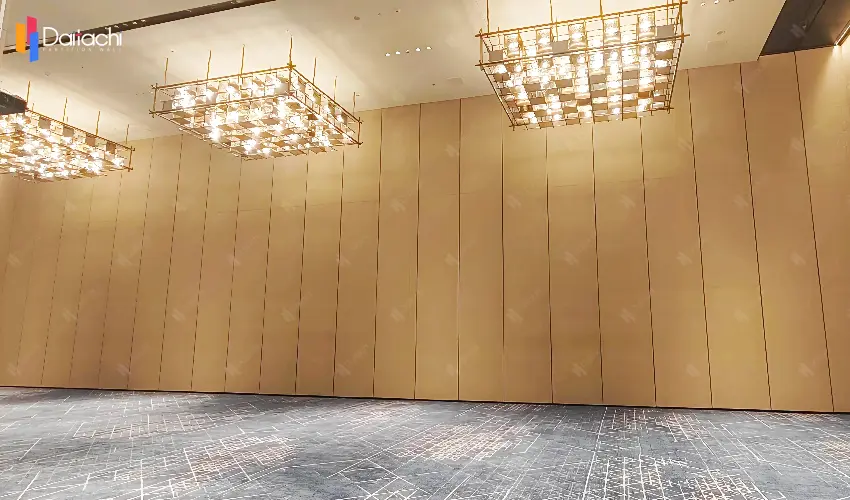
To learn about all aspects related to Movable Partition Wall, you can consult our comprehensive guide on Movable Partition Walls Hub .
Starting from Scientific Principles to Practical Applications
The core theoretic: The chemical and physical qualities of the substance directly affect its ability to fight aging. Examples: Anti-brightboard made by a high-temperature and high pressure, it offers durability against wear, corrosion and resistance to moisture. When it is in a moist environment (such like the bathroom) its service lifespan could last for more than 15 years. This is far beyond the lifespan of standard PVC boards.
Aluminium alloy profiles: After anodizing the bending strength increases by 500kg/m2 and it will not be easy to bend after 20 years.
Low-quality materials like low density plates, or recycled plastics tend to break as a result of absorption by water and the expansion of ultraviolet light and their service life can be reduced to 3-4 years.
The key process influences:
Track System: Galvanized steel tracks are sprayed with fluorocarbon as well as salt spray. The wear resistance is more than 1000 hours. Ordinary painted tracks could rust within less time.
Sealing strip: EPDM terpolymer is employed, allowing its elasticity even in a temperature range that ranges from -40 to 120 guaranteeing that the sound insulation as well as sealing remain effective. Less effective PVC strip seals are susceptible to break down and fail in just 2 years.
Connectors: Connectors made of Steel hanging wheels 304 stainless as well as 8.8-grade heated screw rods are together, with a load bearing capacity of 2500kg per piece, significantly above the industry standard.
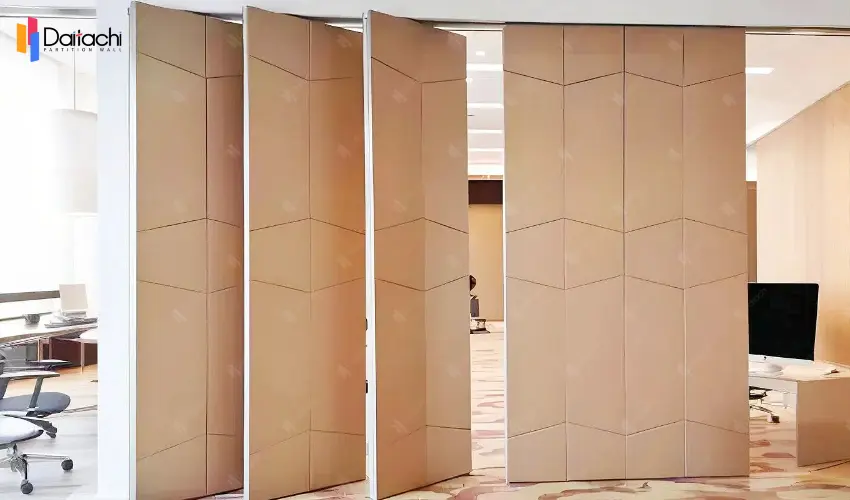
Scenario-based material selection:
Environments with high humidity (such such as swimming pools and bathroom facilities): Compact boards or frames made of 304 stainless steel are required to stop the mildewing of ordinary metals or wood from corrosion due to the moisture.
High-frequency situations (such like conference rooms): Track must use bearings with high strength that can last an average lifespan of 20 years after sliding frequently throughout the day.
The requirements for fire protection Class A fireproof materials do not produce toxic gases when heated to high temperatures. Also, their durability of the structural structure lasts over three times the time of Materials of Class B.
Treatment of the surface: Nano-coating technology permits the panels to be self-cleaning capabilities, which reduces frequency of cleaning, and the possibility of corrosion due to chemical agents.
Modular structure for example, a an replaceable sealing strip design to avoid scrapping across the entire system because of local damages and extending the life of the system up to 25 years.
Material with low quality 3 to 8 years (frequent maintenance, expensive total cost)
Middle-to-high-end materials 10 to 20 years (maintenance cost cut by over 60%)
High-end materials and custom-designed technology over twenty-five years (such as scenes with high-end features such as theaters/hotels)
Related Articles: The Impact of Material Selection on Service Life
Ultra-High Operable Partition Walls: Materials and Design Concepts
Related Product: Type 85 Manual Collapsible Partition Wall