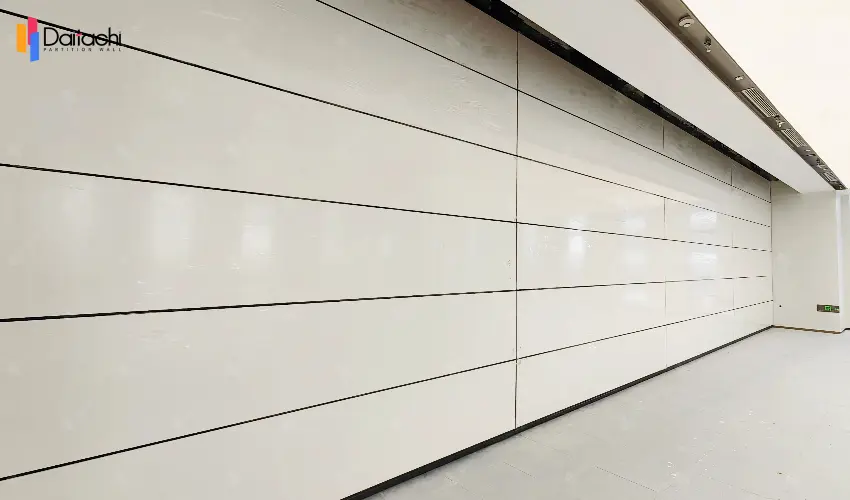
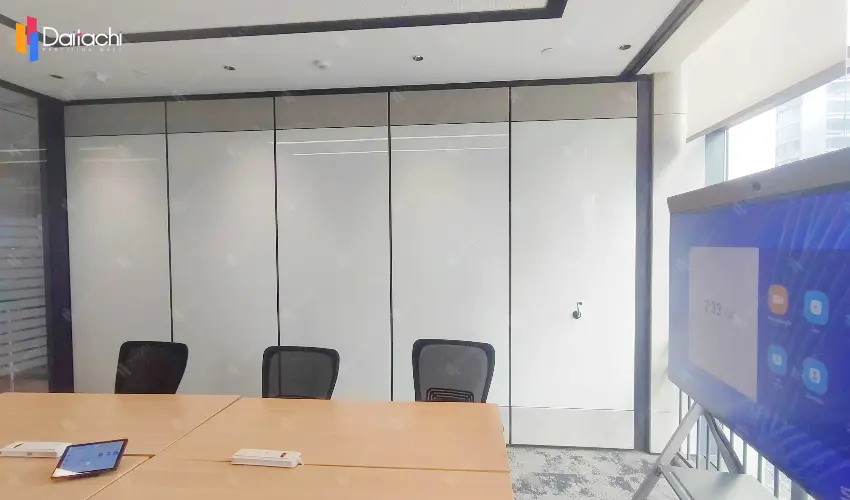
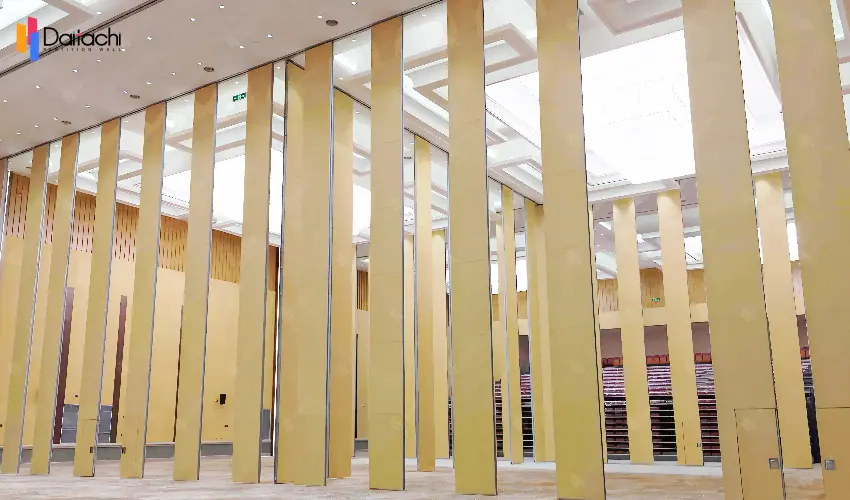
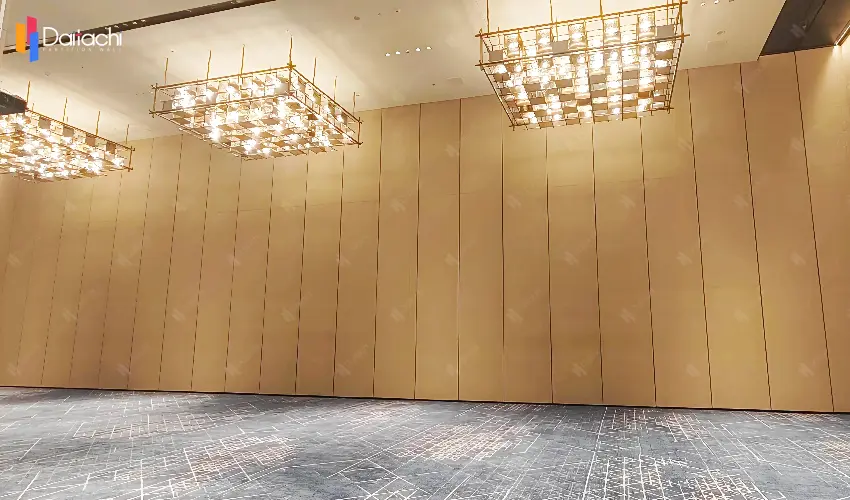
To learn about all aspects related to Vertical Folding Partition Wall, you can consult our comprehensive guide on Vertical Folding Partition Wall Hub.
Here are the key signs that your vertical lifting wall may need maintenance, applicable to both movable partitions and vertical folding walls:
Symptoms: Uneven lifting speed, pauses, friction, or banging sounds.
Possible causes: Dust buildup in tracks, worn pulleys/bearings, or motor issues.
Risk: Track deformation, motor burnout, or panel detachment.
Symptoms: Sound leakage or visible gaps after closing.
Possible causes: Deformation from prolonged pressure, humidity changes, or adhesive failure.
Risk: Reduced sound insulation and potential pest intrusion.
Symptoms: Height differences, gaps, or misalignment between panels.
Possible causes: Loose hinges/latches, external impacts, or uneven floor stress.
Risk: Poor sound insulation, detachment hazards, and compromised appearance.
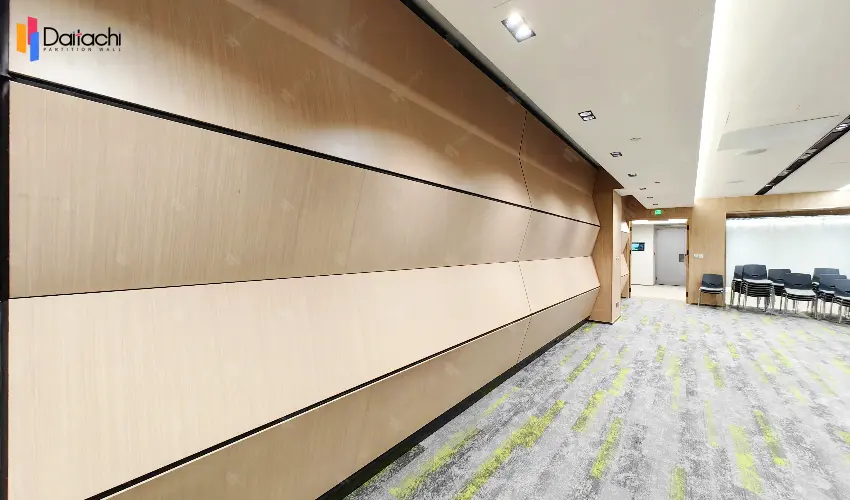
Symptoms: Noticeable noise transfer from adjacent spaces.
Possible causes: Degraded internal soundproofing materials, failed seals, or damaged panel structure.
Risk: Disrupted user experience in meeting rooms and studios.
Symptoms: Unresponsive remote/buttons, sudden stops, reversals, or motor running without movement.
Possible causes: Power issues, overload protection, or control module errors.
Risk: Complete system paralysis requiring urgent repair.
Symptoms: Scratches, peeling, or fading on panel surfaces.
Possible causes: Frequent friction, harsh cleaners, or UV exposure.
Risk: Reduced aesthetics and perceived product quality.
Symptoms: Gaps between panel bottom and floor, or detached brushes.
Possible causes: Uneven floors and accelerated aging from frequent use.
Risk: Dust, noise, and dirt penetration from below.
By addressing these signs early, you can greatly improve the durability and performance of your vertical lifting walls while minimizing long-term maintenance costs.
Related Articles: Reduced Maintenance Costs: Why are Modular Partitions Easier to Maintain?
How to Maintain These Signs to Ensure the Smooth Operation of Vertical Lifting Walls