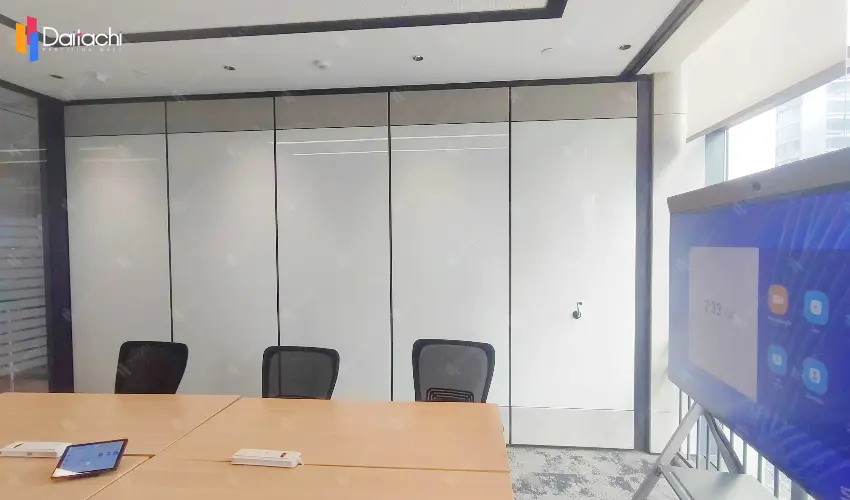
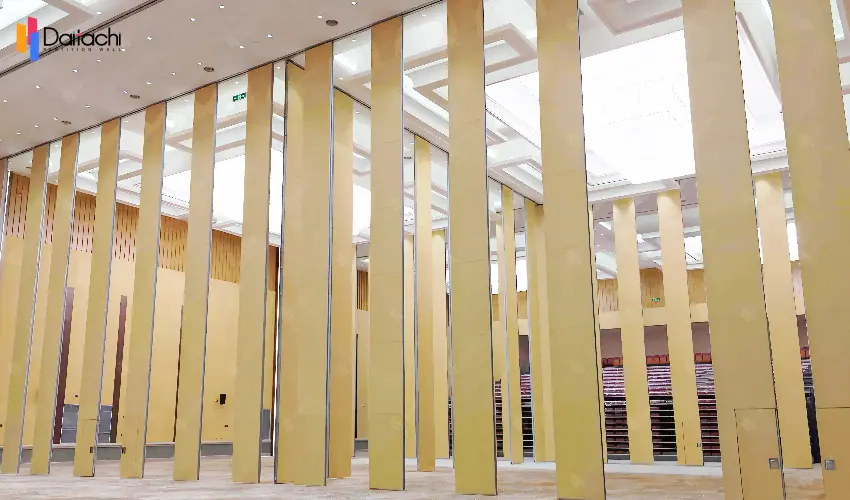
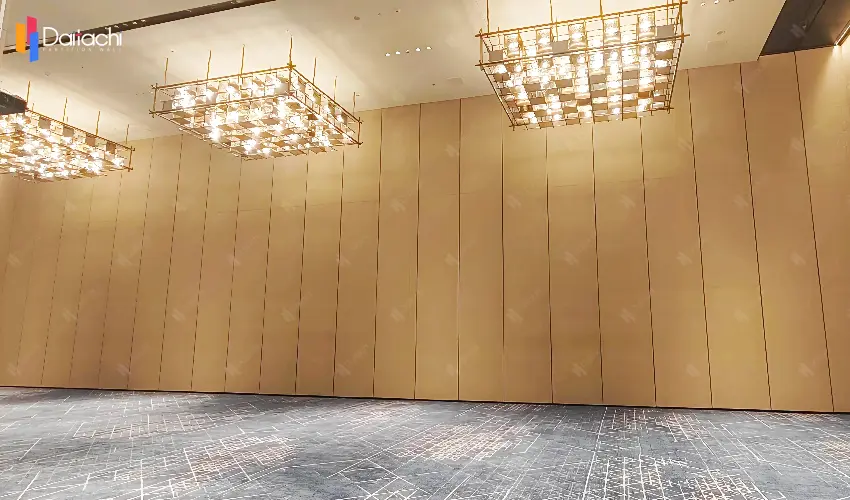
To learn about all aspects related to Movable Partition Wall, you can consult our comprehensive guide on Movable Partition Walls Hub.
With a sufficient budget, selecting a high-performance removable partition focused on superior sound insulation requires attention to five critical factors: material density, structural design, sealing performance, thickness and cavity design, and component quality. Here is a clear and practical guide:
Recommended Materials:
Steel Plate / Aluminum Alloy: High density and solid structure Effectively block sound transmission. Choose 6063-T5 or 7075-T6 aircraft-grade aluminum alloy with a wall thickness of ≥1.2mm (≥1.5mm in load-bearing areas). Avoid cheap recycled aluminum or thin-walled products that deform easily.
High-Density Fiberboard (HDF): Offers better sound insulation than standard MDF, ideal for high acoustic requirements.
Soundproof Gypsum Board / Perforated Gypsum Board: Using two layers significantly enhances sound absorption.
Key Tips: Skip low-density ordinary MDF, which provides poor insulation and deforms over time. Although glass partitions offer transparency, their soundproofing performance is relatively weak — choose them only when necessary.
Recommended Designs:
Double-Wall Structure: Fill the gap between walls with soundproofing wool or fiberglass to create an effective air layer that reduces sound transmission.
Sandwich Design: Incorporate soundproofing felt, mineral wool, and other damping materials between layers to block and absorb sound waves.
Sound-Absorbing Cavity: Increase the internal cavity width to further lower sound transmission efficiency.
Key Tips: Avoid large gaps that cause sound leakage. Ensure the partition's diagonal tolerance is within millimeters for structural stability.
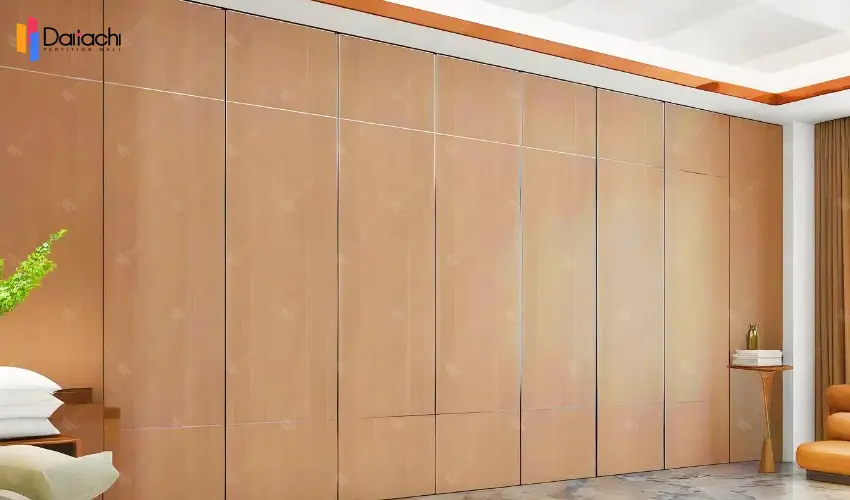
Critical Areas:
Frame Sealing Strips: Use high-elasticity EPDM rubber strips for excellent sealing between the frame and wall.
Automatic Bottom Seal: Automatically drops when the partition closes to eliminate the gap at the floor.
Joint Treatment: Apply professional soundproofing sealant to all joints and holes.
Key Tips: Relying only on soundproofing materials while ignoring sealing will greatly reduce effectiveness. Check that sliding tracks operate smoothly without rust or stiffness.
Recommended Specifications:
65-Type: 65mm thick, STC 32-36dB — suitable for general office areas.
80-Type: 80mm thick, STC 40-50dB — ideal for conference rooms requiring moderate privacy.
100/125-Type: 100mm or 125mm thick, STC ≥53dB — best for high-end meeting rooms, recording studios, and environments needing maximum sound insulation.
Key Tips: Insufficient thickness cannot achieve the desired performance. Balance cavity width with available space.
Essential Accessories:
Tracks and Load-Bearing Wheels: Select heavy-duty systems with smooth operation to prevent sagging or jamming.
High-Quality sealing strips and internal fillings (soundproof cotton, mineral wool) for consistent performance.
All components should match the overall system quality.
Key Tips: Low-quality accessories often cause panel sagging, difficult operation, or premature failure. Always inspect the quality of tracks, seals, and hardware.
Related Articles: Core Strategies for Saving Labor Costs with Movable Soundproof Partitions (Part 1)
Fixed Walls VS Partition Walls: Which Is the Most Cost-effective Solution for Space Renovation?