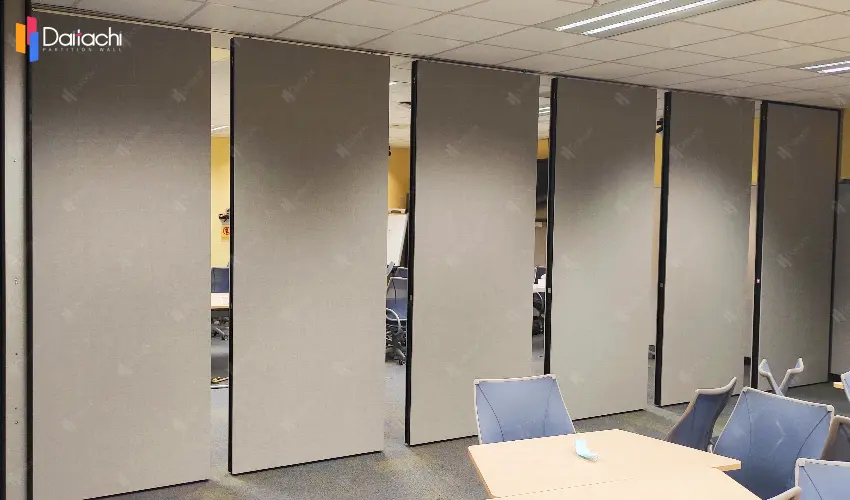
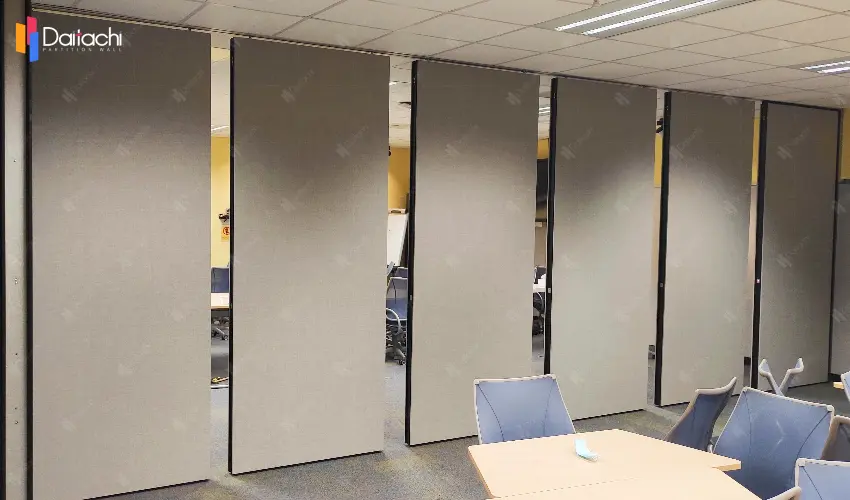
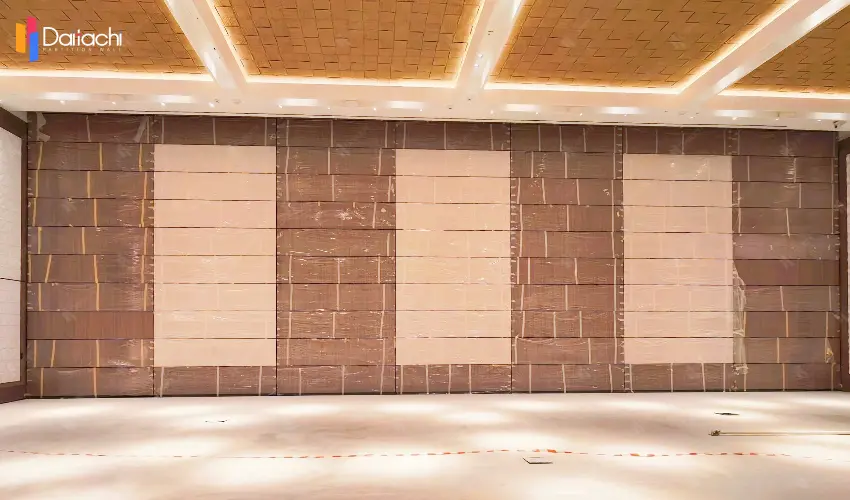
To learn about all aspects related to Vertical Folding Partition Wall, you can consult our comprehensive guide on Vertical Folding Partition Wall Hub.
Independent R&D Capabilities: Assess whether the supplier possesses independent intellectual property rights for core technologies to avoid supply risks associated with reliance on third-party technologies.
Custom Design Capabilities: Evaluate the supplier's ability to provide personalized solutions tailored to specific scenarios.
Spatial Adaptability: Can they customize non-standard wall dimensions to fit the specific architectural structure?
Functional Integration: Do they support special requirements such as sound insulation, thermal insulation, fire resistance, or light transmission?
Power System Options: Do they offer electric, hydraulic, or hybrid power solutions to match varying load-bearing capacities and operational frequency requirements?
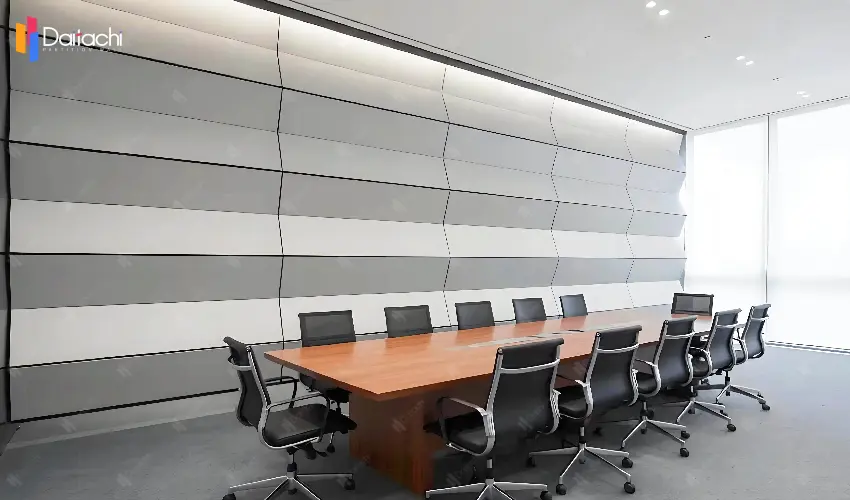
Core Component Quality:
Drive System: Prioritize suppliers utilizing high-strength motors to ensure smooth operation and low noise levels.
Tracks and Guide Wheels: Inspect the materials and machining precision to prevent jamming or wear-and-tear after prolonged use.
Sealing Structure: Evaluate the waterproofing and dust-proofing designs, particularly for applications in humid or dusty environments.
Operational Efficiency:
Lifting Speed: The lifting speed should be uniform and stable to ensure the proper functioning of the wall panels.
Synchronization Precision: When multiple wall sections operate in tandem, the synchronization error should be within a millimeter tolerance to prevent gaps or collisions.
Load-Bearing Capacity: Clearly define the wall system's maximum load capacity to ensure it meets the required structural load demands.
Ease of Maintenance:
Modular Design: Verify whether the system supports the rapid replacement of faulty components to minimize downtime.
Lubrication System: Prioritize systems featuring automatic lubrication or easy-to-maintain lubrication structures to reduce long-term maintenance costs.
Project Case Studies: Require the supplier to provide at least three examples of past projects across different scenarios; focus on the complexity of these cases and their relevance to your specific spatial wall project requirements.
Client Reviews: Research the supplier's reputation and track record through social media and other channels; prioritize suppliers that have previously collaborated with well-known enterprises.
Related Articles: Quality and Safety Specifications for Vertical Lifting Wall Systems
How to Choose a Reliable Supplier for Vertical Lift Wall Systems (part 2)