To learn about all aspects related to Movable Partition Wall, you can consult our comprehensive guide on Movable Partition Walls Hub.
Overhead Track Syste
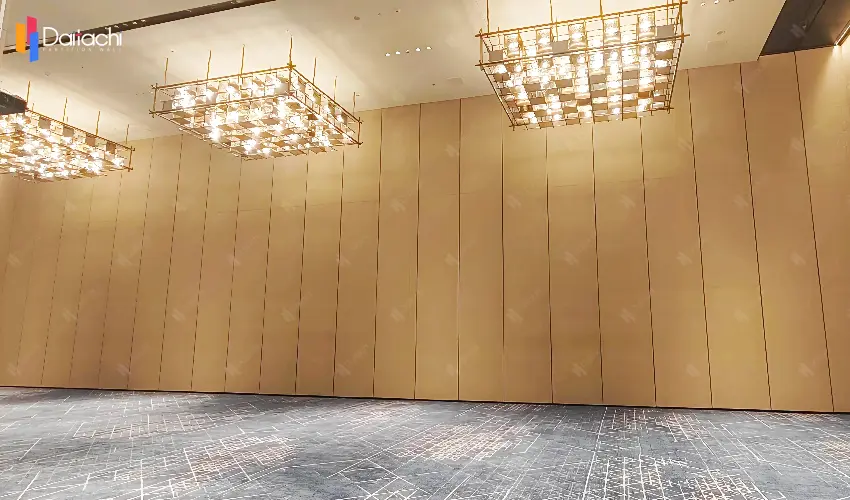
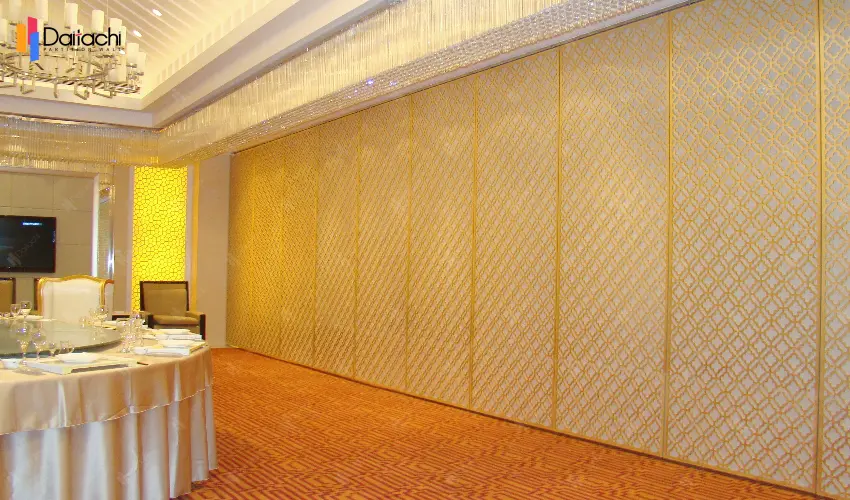
Technical Principle: Track sliding systems use tracks that run in the ceiling so that the walls rest/sit on a loader system that is hidden in the ceiling. No ground-level installations are present.
Main Characteristics
Bearing Performance: Depending on the model, the load-bearing capacity of the 65 type is around 225 kg, the 80 type is 450 kg and the 100 type is about 675 kg.
Spatial flexibility: No need for ground interference making it suitable for open office space and exhibition centers where the ground needs to remain undisturbed.
Installation specifications: Ceiling makes costlier installations.
Usage: Suitable for high-end business lodging, operating room dividers in hospitals, procedures for sterile workshops and places that need to be pristine.
Ground Track System (Ground Integrated)
Technical Principle: Tracks are embedded in the ground and the walls positioned by the slide of the roller are relocatable.
Main Characteristics
Technical Maturity: The system has been in use for over 30 years in the industry and comes at a really low maintenance cost with a high level of flexibility.
Stability: Systems embedded in the ground offer better support for room partitions to be heavier.
Cleaning Difficulty: Track installations are prone to collecting a lot of dirt and dust from the surroundings and need to be cleaned regularly making it a poor experience to use at home.
Usage: Industrial plants, conventional conference rooms, places with low cost renovations.
Trackless Systems (Completely Hidden)
Deduction principle: The upper guide rail and the telescopic transmission structure are integrated, and the partition wall can be completely retracted and stored against the ceiling or wall.
Main product characteristics
Aesthetic zero threshold on the ground, can meet the requirements of modern minimalist design style.
Flexible operation deploy and store single-handedly, support 360-degree rotation.
Limitations on load-bearing due to the characteristics of the telescopic structure, the maximum load-bearing capacity is usually lower than the upper guide rail, and is applicable to lightweight partitions.
Application scenarios: home living room, creative studio, temporary exhibition space.
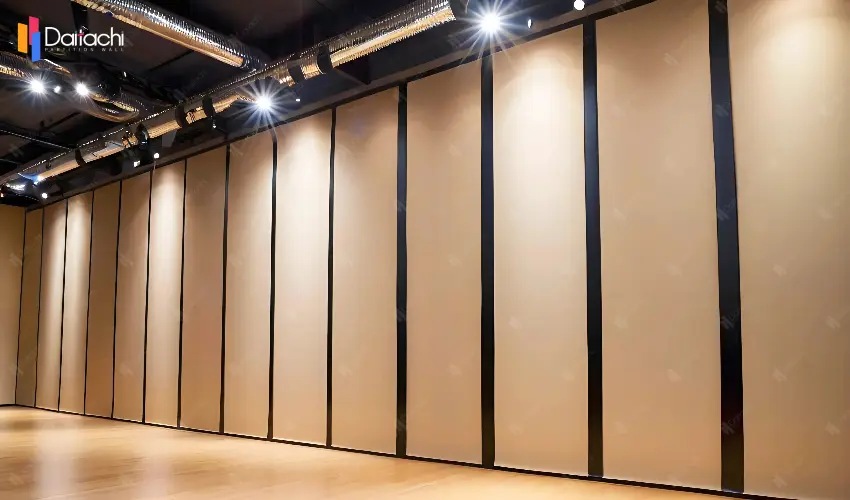
Aluminum Alloy Tracks: lighter than steel by almost 40% and highly resistant to corrosion and highly aesthetic, but very costly (1.5x steel tracks). Most applicable where there are humid environments like swimming pool locker rooms or dust free workshops.
Steel Tracks: Able to support weights up to 1,000 kg and highly resistant to wear and tear, but will corrode, resulting in the need for constant repainting and maintenance. Suitable for industrial plants and for the partitioning of heavy machinery.
Intelligent Control: Integrated motors and sensors allow for and control via an app and through voice.
Modular Design: Standardized track interfaces allow for the use of multiple hard materials in are mixed.
Environmental Upgrade: use of recycled aluminum and anti-corrosive coatings.
In cases where the high frequency of use is an important consideration, aluminum alloy tracks are prioritized due to their durability and the simplicity of operational requirements.
For lower cost transformations, the alternative is for lesser aesthetics. The high cost is for the ground steel rail system tracks.
For wet or corrosive environments, 304 stainless steel system tracks with no tracks have been used to alleviate the ground rusting issues.
Related Articles: Top Hoisting Vs Ground Track
Hidden Track Movable Walls with Window in Educational Environments Learning Spaces
Related Product: Type 100 Series Manual Sliding Partition Wall