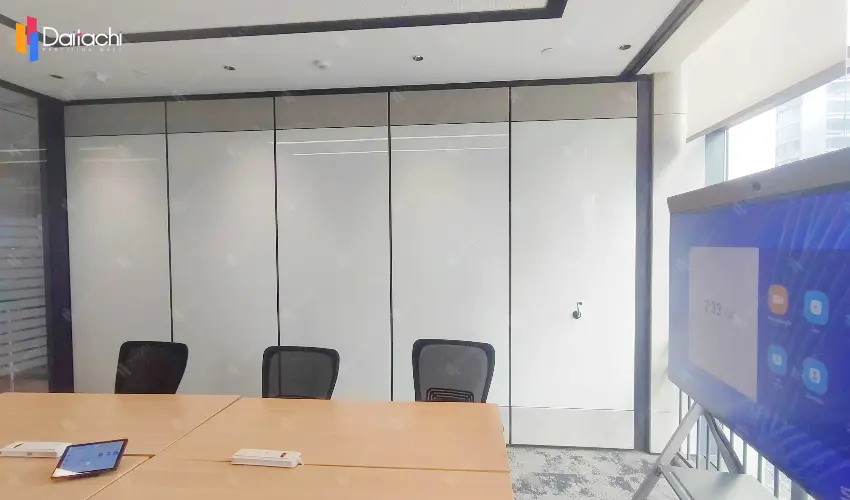
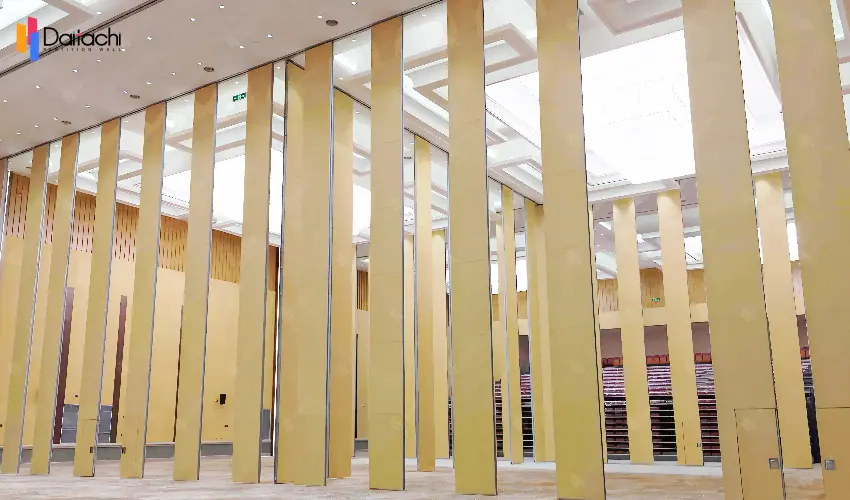
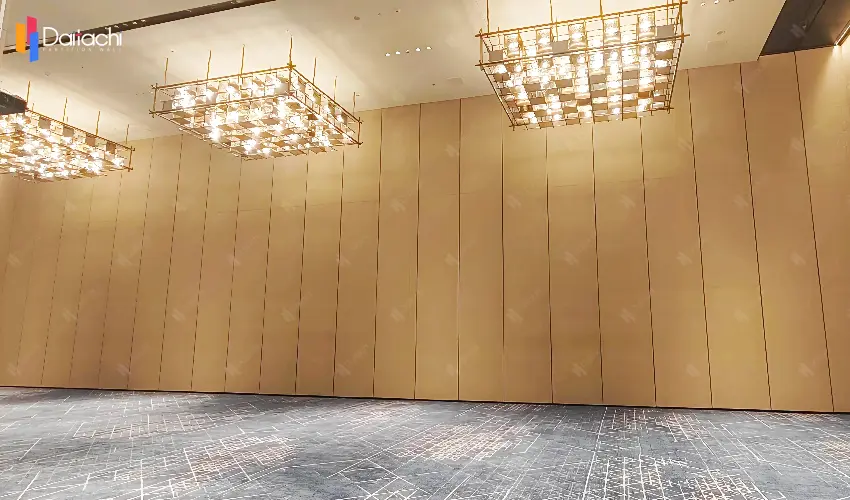
To learn about all aspects related to Movable Partition Walls, you can consult our comprehensive guide on Movable Partition Walls Hub.
Sound wave propagation characteristics
When sound propagates through the air, energy decays with distance, but the main reason for the failure of building sound insulation is that sound is directly transmitted through solid structures such as walls and floors. Experiments show that if the plaster layer increases by 1 cm, the sound insulation can be increased by about 5 decibels, but 0.1% of the pores can cause the sound insulation to drop sharply.
Building defects
Cost restrictions: In order to reduce costs, developers may use single-layer bricks or thin plates for walls, and ordinary materials and inferior sealing strips for doors and windows.
Construction defects: Wall connections are not tight, ceilings and floors are not treated with vibration isolation, and pipes are not sealed through walls.
Design defects
Spatial layout: Narrow corridors or open spaces are prone to acoustic resonance.
Material selection: Parameters such as material density, elasticity, and toughness are not considered, such as inferior sound insulation felts that are easy to tear and sound insulation boards that have no test reports.
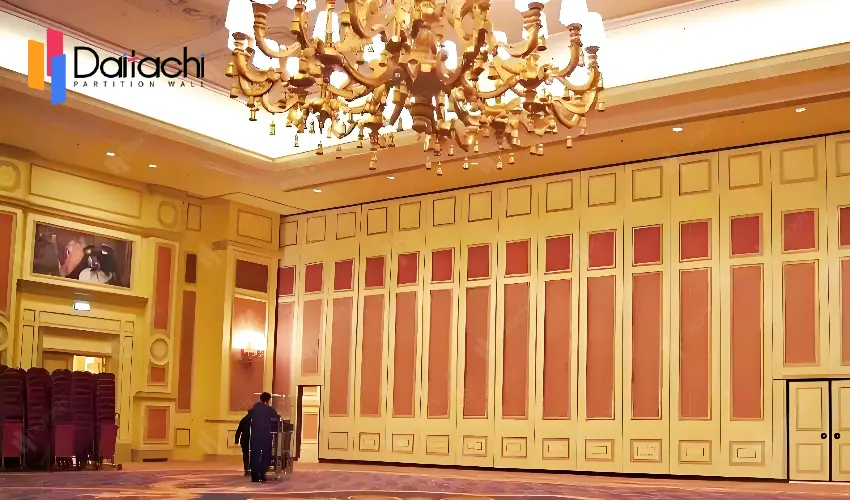
System optimization
Sealing upgrade: Use sound insulation sealant strips around the panel to fill the gaps, which is low-cost but has a significant effect in blocking high-frequency noise.
Panel renovation: The construction frame uses high-quality aluminum frames with double or multi-layer sound insulation materials, which can reduce noise by more than 60% even in street-facing scenes.
Wall sound insulation project
New construction scene: Use "sound insulation felt + keel + sound-absorbing cotton + gypsum board" structure, or shock absorber + sound-absorbing cotton combination.
Renovation scene: Paste polyester fiber sound-absorbing board (≥2cm thick).
Sound insulation engineering is an interdisciplinary subject of materials science, structural engineering and environmental acoustics. By understanding the mechanism of sound wave propagation and carrying out systematic renovation of building defects, we can achieve a leap from "passive tolerance" to "active control".
Related Articles: Stc Sound Insulation Classification Analysis: a Key Indicator of Renovation Sound Insulation
Popular Science of Sound Reduction Coefficient: Detailed Explanation of NRC, SAC, and SAA