To learn about all aspects related to Partition Wall, you can consult our comprehensive guide on Movable Partition Walls Hub / Vertical Folding Partition Wall Hub.
In architectural acoustics and materials science, the sound insulation coefficient is the core indicator for evaluating the sound absorption performance of materials. NRC (noise reduction coefficient), SAC (sound absorption coefficient), and SAA (average sound absorption coefficient) are three key parameters that quantify the material's ability to absorb sound from different dimensions. This article will systematically analyze the definitions, differences, and practical application scenarios of these three to help you scientifically select acoustic materials.
NRC (noise reduction coefficient)
Definition: NRC (Noise Reduction Coefficient) is the arithmetic mean of the sound absorption coefficient of the material in the four mid- and high-frequency ranges of 250Hz, 500Hz, 1000Hz, and 2000Hz, rounded to the nearest 0.05. The range is 0 to 1, and the higher the value, the stronger the sound absorption performance.
Features: Ignore low frequencies (such as 125Hz), and need to be evaluated in combination with low-frequency data (such as theaters and spaces with more bass).
Application scenarios: offices, classrooms, recording studios and other places where mid- and high-frequency noise needs to be controlled. Evaluate the acoustic performance of materials such as ceilings, wall sound-absorbing panels, carpets, etc.
SAC (Sound Absorption Coefficient)
Definition: SAC (Sound Absorption Coefficient) is the sound absorption capacity of a material at a single frequency, such as the sound absorption coefficient of a specific frequency such as 250Hz, 500Hz, etc.
Features: Accurately reflects the performance of a material at a specific frequency, but cannot fully evaluate the overall sound absorption effect.
Application scenarios: Concert halls need to optimize SAC for specific frequencies (such as 500Hz). In industrial noise reduction, optimize for specific frequencies of mechanical noise.
SAA (Average Sound Absorption Coefficient)
Definition: SAA (Sound Absorption Average) is the arithmetic average of 12 1/3 octave sound absorption coefficients in the range of 200~2500Hz according to the ASTM C423 standard, rounded to 0.01. The range is 0 to 1, and the higher the value, the stronger the sound absorption performance.
Features: Covers a wider frequency range, including low-frequency parts, and has a more comprehensive evaluation. The accuracy is higher than NRC, but the acceptance in actual applications is not as wide as NRC.Application scenarios: Multi-functional halls, complex industrial environments, and other scenarios that require full-band sound absorption. Evaluate the comprehensive performance of materials from low frequency to high frequency.
2. The connection between them
Connection: NRC and SAA: Both are single-value evaluation indicators, but SAA covers a wider frequency and has higher accuracy. SAC and NRC/SAA: SAC is the basis of NRC and SAA, and NRC or SAA is calculated through multiple SAC values.
3. Practical application cases
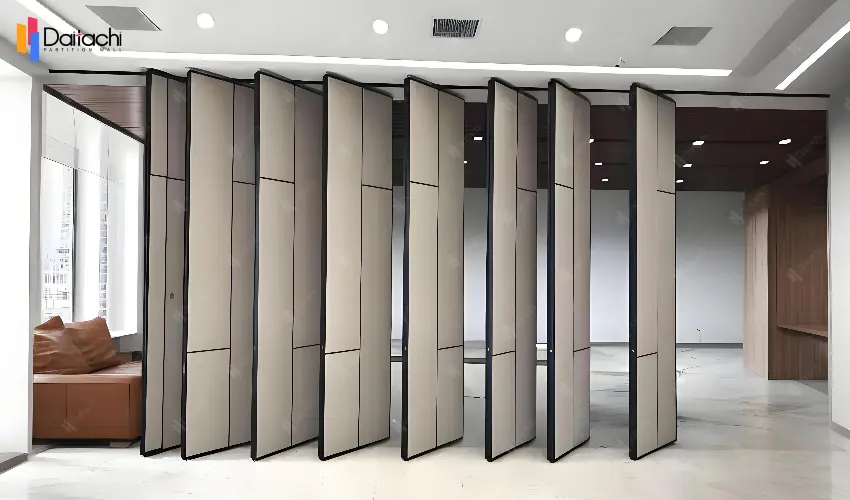
Office partition wall
Demand: Reduce mid- and high-frequency reverberation and improve language clarity.
Indicator selection: NRC ≥ 0.8.
Material examples: Mineral wool sound-absorbing board (NRC = 0.8 ~ 0.95), thick carpet (NRC = 0.6 ~ 0.8).
Demand: Full-band sound absorption to ensure pure sound quality.
Index selection: SAA ≥ 0.9.
Material examples: glass fiber sound-absorbing cotton (SAA = 0.9 ~ 1.0), wooden diffusion board (SAA = 0.58 ~ 0.95).
Requirement: Optimization for specific frequencies (such as 500Hz) of mechanical noise.
Index selection: SAC (500Hz) ≥ 0.7.
Material examples: perforated metal plate (SAC = 0.6 ~ 0.8), sound insulation felt (SAC = 0.5 ~ 0.7).

1. Does the higher the NRC value, the better the sound insulation effect?
No. NRC measures the ability to absorb sound, not the ability to block sound. Sound insulation needs to refer to STC (sound transmission level).
2. Can SAA and NRC be directly compared?
Yes, but you need to pay attention to the difference in frequency range. SAA covers a wider range and may be more comprehensive, but NRC is more commonly used in architectural acoustics.
3. Why is there a difference between laboratory data and actual results?
Reason: Construction technology (such as gap treatment), environmental humidity, installation method, etc. all affect actual performance. On-site testing and verification are recommended.
Related Articles: Evaluating Sound Insulation Materials
Factors Affecting Sound Insulation and Solutions
Movable Partition Walls: Unveiling the Art of Soundproofing and Noise Reduction Technology