To learn about all aspects related to Movable Partition Wall, you can consult our comprehensive guide on Movable Partition Walls Hub.
In the humid and intense salt spray corrosion environment in the salt spray corrosion environment in coastal zones conventional partitioning systems typically suffer from the industrial issue of rust forming within 3 to 5 years. This article focuses on the basic technology used to create water-proof partition walls designed for coastal climates and provides a lasting security system by utilizing technological advancement and material innovation.
Skeleton technology: 6000 series of aluminum alloys are utilized as a replacement for carbon steel. It offers good quality, formability, corrosion resistance as well as welding capability. Track systems use 6063-T6 aluminum-magnesium alloy that is marine grade with a surface anodized film thickness is 25mm or more; the connectors are all A4-80 stainless steel bolts that are able to pass the test of salt spray with no the red rust.
Panel system: The basis panel is made of phenolic resin imbedded paper laminate. The surfaces are covered with fluorocarbon coated aluminum-plastic composite.
Double coating procedure: The edge seal is coated with EPDM.
Pretreatment of the metal substrate: This material is blasted prior to the shot to decrease the roughness of the surface as well as increase the thickness the zinc phosphating layer, as well as improve adhesion the coating. The nano-ceramic Ceramic pretreatment agent closes the microscopic pores
Coating system: Water-based epoxy zinc-rich paint is used as primer; graphene-modified polyurethane paint is used as midcoat, which greatly improves the shielding effect; fluorosilicone-modified acrylic paint is used as topcoat, and weather resistance needs to pass exposure test
Electrochemical security: The track system combines sacrificial blocks of anode in the year-long replacement schedule is coordinated with maintenance. Stainless steel parts are protected by cathodic form.
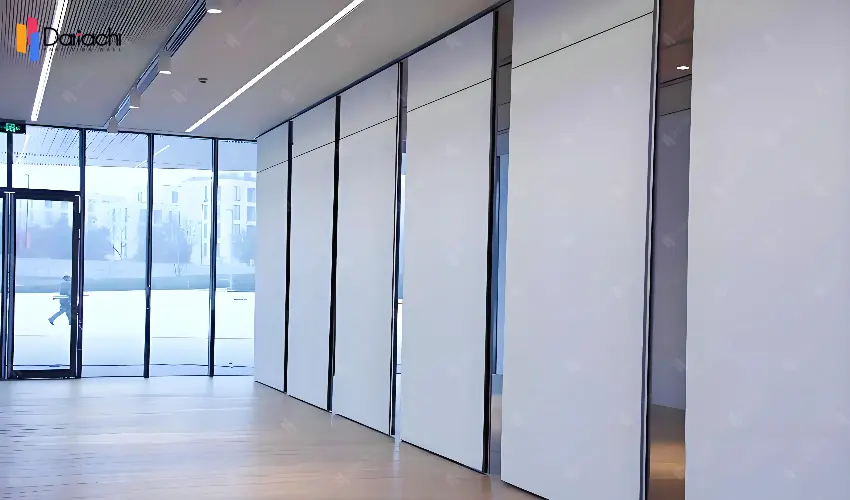
Structural seal: The panel joints are sealed with a double channel layout, where the inside layer is made of modified silicone sealant, while the outside layer uses polysulfide rubber stripping for sealing.
Sealing dynamically: Track system has three levels of sealing tools such as brush seals with rubber scraper, an airtight strip
Control of the micro-environment: The bottom track is built with a drainage slope that is integrated with a condensate divert groove the upper hidden space is occupied by an desiccant module
The basic treatment: Basic treatment when the flatness error occurs in the millimeter range The epoxy resin is used to level the surface. utilized, and an intermediate iron paint made of epoxy micaceous will be sealed right after embedding parts have been welded.
Assembly precision: Track straightness error is less than millimeters. When laser calibration is utilized, the deviation in verticality of the panel is minimal and an Hydraulic lifting device and an adjustment mechanism is employed.
Maintenance phase: coating system coating system must be dried over 7 days within a controlled setting, while the sealant requires 14 days to completely cure. In this time, all removal operation is not permitted.
Smart monitoring: The integrated the temperature and humidity sensor network Real-time alerts of corrosion hazards, periodic conductivity tests and evaluation on the quality of the seal system
Maintenance process: Renew the grease for track (salt type that is resistant to spray) every year. Also, perform an exhaustive sealing test every three years. Also, concentrate on the parts that are being welded.
With the help of advancements through the field of material science and development. Modern water-proof partitions have established the industry's new standard of "50-year design lifespan and 20-year maintenance-free". The technological advancement that transforms the protection of buildings from repair that is passive towards active defense can provide more durable options for space-saving solutions in coastal cities. Traditional partitions get rusty from salinity, the solution has a brand new chapter in the durability of buildings by reducing the per year.
Related Articles: The Importance of Customized Movable Partition Walls?
What Determines the Frequency and Duration of Cleaning?
Interpreting the Cost Drivers of Movable Partition Walls, Reasons for Price Differences