To learn about all aspects related to Movable Partition Wall, you can consult our comprehensive guide on Movable Partition Walls Hub.
Modern commercial spaces are no longer designed for a single purpose. Offices, hotels, conference centers, educational facilities, and public buildings increasingly require environments that can quickly adapt to different activities.
A well-designed movable partition wall system does more than divide a room. It helps create flexible spaces that support changing business needs, improve space utilization, and maintain a balance between functionality and aesthetics.
However, choosing the right movable partition wall requires careful consideration of several design factors. From acoustic performance and material selection to operation methods and system integration, every element influences the long-term performance of the space.
Here are eight key elements to consider when designing a modern movable partition wall solution.
The first step in movable partition wall design is understanding how the space will be used.
Different environments have different requirements. A conference room may prioritize privacy and sound control, while a training room may require fast and frequent layout changes.
Before selecting a partition system, consider:
What type of space needs to be created?
How often will the layout change?
Is acoustic separation important?
Does the area require visual separation or complete privacy?
Clear planning helps ensure that the chosen movable partition wall system meets the functional needs of the project.
A movable partition should provide convenience as well as flexibility.
Smooth operation is essential, especially in spaces where layouts change frequently. A well-designed system should allow users to easily open, close, move, and store partition panels when required.
Important design considerations include:
Smooth panel movement
Reliable track systems
Simple operation methods
Efficient storage solutions
An easy-to-use partition system improves daily usability and reduces unnecessary operational challenges.
Modern interiors require solutions that combine performance with visual appeal.
Movable partition walls should not appear as separate additions to a space. Instead, they should integrate naturally with the overall architectural design.
Available design options may include different:
Surface finishes
Panel materials
Colors and textures
Decorative styles
A properly designed partition system can enhance the appearance of offices, hotels, conference spaces, and commercial interiors while maintaining flexibility.
A high-quality movable partition wall depends on the coordination of multiple components.
The track system, panels, seals, and locking mechanisms must work together as a complete solution. Poor compatibility between components may affect operation, alignment, and overall performance.
During the design process, it is important to consider the entire system rather than individual parts.
A complete and integrated approach helps create a more reliable and efficient partition solution.
Modern businesses continue to evolve, and interior spaces must be able to adapt.
One of the main advantages of movable partition walls is their ability to support future changes. A flexible design allows businesses to modify layouts without major reconstruction.
When planning a movable partition system, consider:
Future expansion requirements
Possible room reconfigurations
Long-term space planning
Changing workplace needs
Designing with future flexibility in mind helps maximize the long-term value of the investment.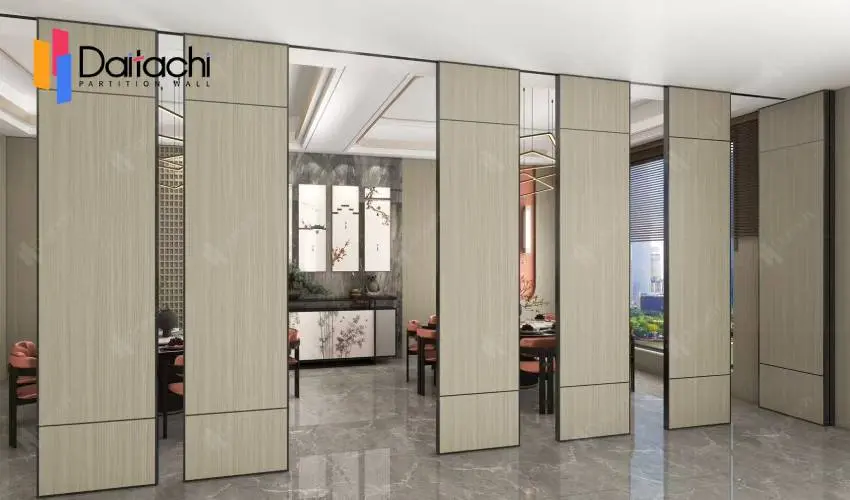
Effective space planning is one of the biggest benefits of movable partition walls.
A large room can become multiple smaller spaces when needed, then return to an open layout afterward.
During the design stage, consider:
Panel stacking areas
Storage requirements
Room circulation
Available floor space
A well-planned system allows businesses to make better use of every square meter.
For offices, hotels, and conference facilities, this flexibility can significantly improve space efficiency.
Sound control is an important factor in modern interior design.
Many commercial spaces require privacy between different areas, especially meeting rooms, conference facilities, and professional workplaces.
A movable partition wall designed with acoustic considerations can help improve separation between spaces.
Important factors include:
Panel construction
Sealing systems
Installation quality
Required privacy level
Choosing the appropriate acoustic solution ensures that flexible spaces remain comfortable and functional.
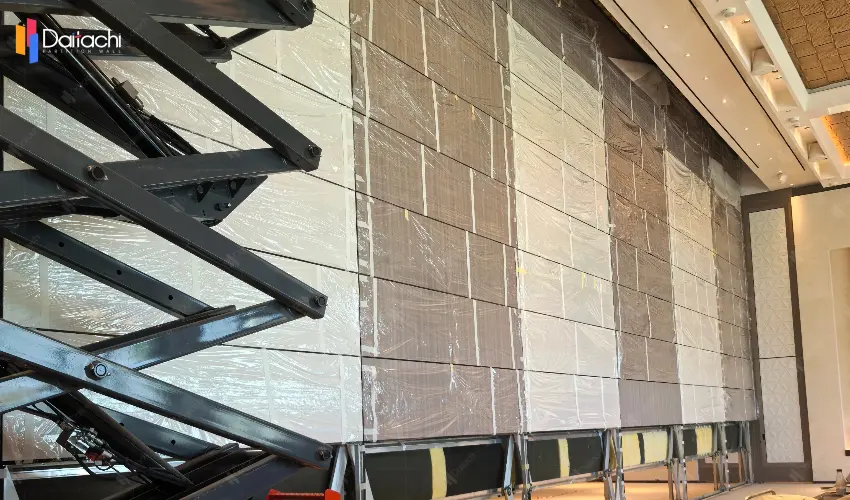
A successful movable partition wall installation requires careful coordination with the existing building structure.
Because many systems use ceiling-mounted track solutions, early planning is important to ensure compatibility with:
Ceiling structures
Lighting systems
HVAC equipment
Other building services
Proper coordination during the design stage helps create a seamless installation and reliable long-term operation.
A successful movable partition wall system is not only about separating rooms. It is about creating adaptable environments that can respond to changing requirements.
By considering purpose, operation, aesthetics, compatibility, flexibility, space efficiency, acoustics, and installation planning, businesses can create smarter and more functional interiors.
Whether used in offices, hotels, conference centers, or commercial buildings, carefully designed movable partition walls provide a practical solution for modern space management.
1. What factors should be considered when designing a movable partition wall system?
When designing a movable partition wall system, important factors include space usage, acoustic requirements, operational frequency, interior design, future flexibility, and compatibility with existing building structures.
2. How do you choose the right movable partition wall for a commercial space?
The right solution depends on the purpose of the space, required privacy level, frequency of reconfiguration, aesthetic preferences, and overall project requirements.
3. Can movable partition walls be customized for different building designs?
Yes. Movable partition wall systems can be designed with different finishes, materials, configurations, and layouts to meet the specific needs of offices, hotels, conference centers, and commercial spaces.
4. Why is acoustic performance important in movable partition wall design?
Acoustic performance helps maintain privacy and comfort between divided areas. It is especially important for meeting rooms, conference spaces, offices, and other environments where sound control is required.
5. How do movable partition walls support future space flexibility?
Movable partition walls allow spaces to be reorganized without major reconstruction, making it easier for businesses to adapt their interiors as requirements change.