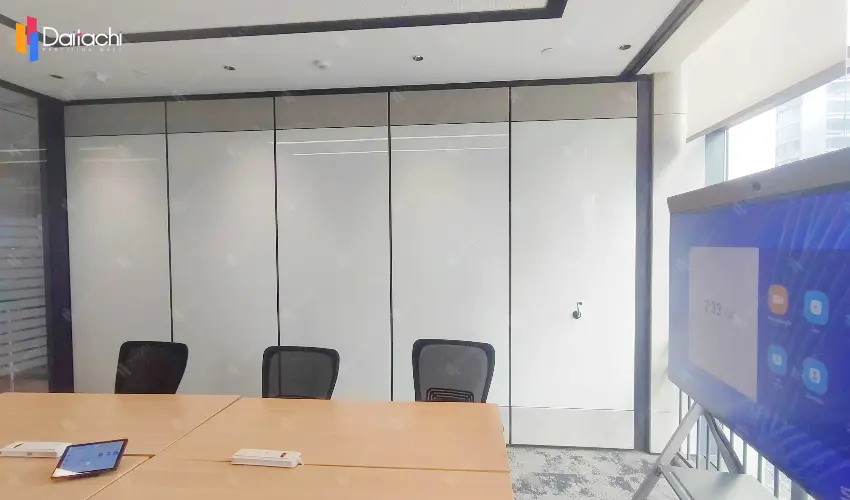
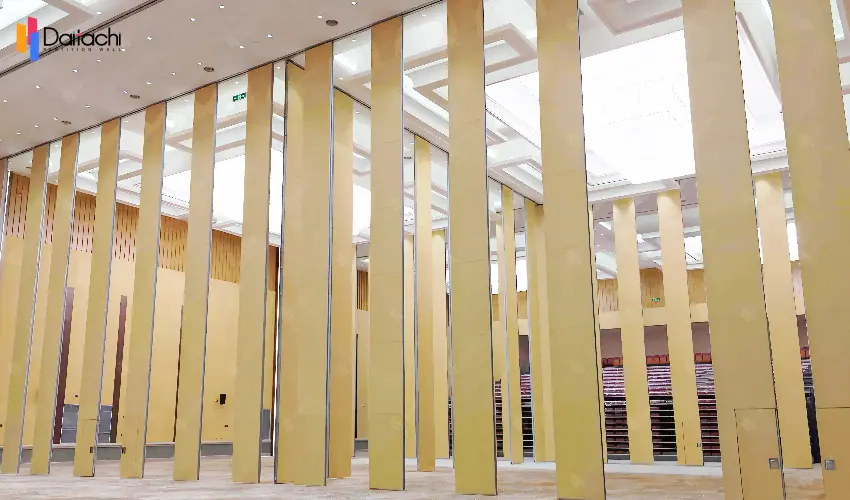
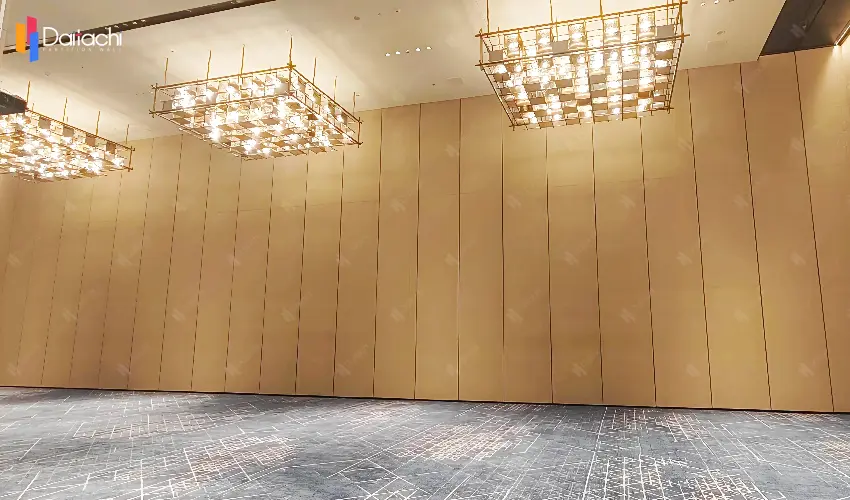
To learn about all aspects related to Movable Partition Wall, you can consult our comprehensive guide on Movable Partition Walls Hub.
Panels for movable partition walls and vertical folding lift walls are typically thin (common thickness range: 65-105 mm). This choice is not driven by cost considerations, but rather by precise design based on the following core principles:
Maximizing space efficiency: Thin panels significantly reduce the space occupied when the partition is retracted. For example:
Vertical folding lift walls: Thin panels fold to a lower height, freeing up more vertical space from ceiling to floor, making them ideal for locations with limited ceiling height, such as basements and shops.
Movable partition walls: Thin panels slide or fold, creating a more compact structure that eliminates the need for corridors or activity areas, improving space utilization.
Improving ease of operation: Thin panels are lighter and easier to operate manually. Even women or single users can easily push, pull, or fold the partition. The motor drive system consumes less energy and has a longer service life
Quick Installation and Retrofitting: Thin panels are easy to transport and assemble on-site, making them particularly suitable for temporary events or rental venues, shortening construction time and reducing costs.
High-Strength Composite Structure: Modern panels utilize a multi-layer composite design, balancing strength and lightweighting:
Core: Honeycomb aluminum panels, polycarbonate panels, or wood-plastic panels provide flexural rigidity.
Surface: Fireproof panels, wood veneer, or metal panels enhance wear resistance and aesthetics.
Inner Filling: Soundproofing foam or rock wool enhances sound insulation (up to 45dB noise reduction).
Precision Engineering Optimization: Unique process analysis and optimized panel structure ensure that, despite its thinness, it can withstand the impact of everyday collisions, the risk of deformation caused by long-term use, and remain stable in extreme environments (such as temperature and humidity fluctuations).
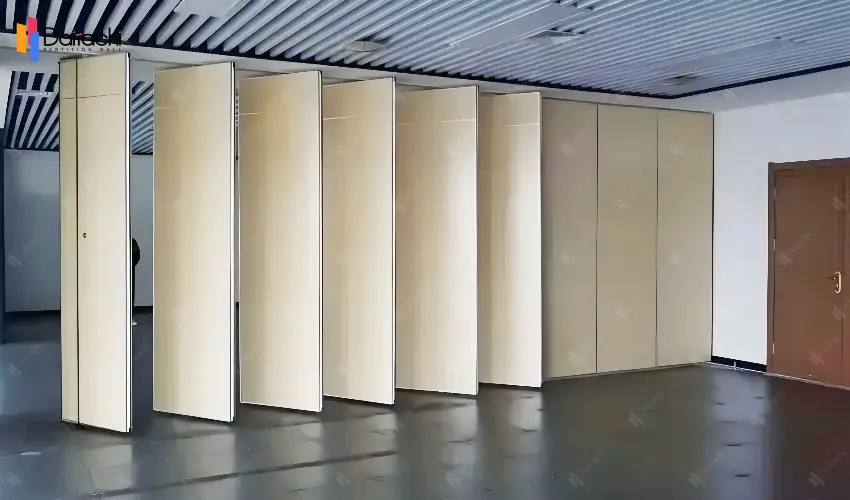
Restaurants/Banquet Halls: Thin partitions quickly divide dining areas and create an open atmosphere when retracted without obstructing views.
Offices: Lightweight partitions allow for flexible workstation layouts to accommodate team size increases or decreases.
Exhibition Halls/Conference Centers: Thin panels facilitate quick setup of temporary exhibition areas, reducing logistics costs.
Schools/Hospitals: Lightweight partitions reduce structural loads and comply with safety regulations.
Myth: Thin = No Soundproofing
Fact: Through internal insulation and sealing, thin panels can achieve sound insulation comparable to thicker walls (e.g., STC 40+ rating).
Myth: Thin = Less Durable
Fact: Composite panels offer superior impact resistance compared to traditional gypsum board, and a scratch-resistant coating extends their lifespan.
Myth: Thin = Lack of Design
Fact: Panels can be customized with finishes such as wood grain, brushed metal, and 3D printing to meet high-end aesthetic needs.
Based on Functionality: For ultimate spatial flexibility, choose ultra-thin panels; for higher sound insulation or fire ratings, choose reinforced panels.
Based on the building structure: For older buildings with limited load-bearing capacity, thinner panels are preferred to reduce the load. For new construction projects with reserved track space, increased thickness can improve performance.
Consult a professional supplier: Provide site drawings and usage requirements for customized thickness recommendations (for example, our team offers free space planning services).
Thin panels are the "invisible masters" of modern spatial design. Their scientific design defies the traditional notion of "thicker is better," achieving the perfect balance between lightweight, functionality, and aesthetics. When choosing, the key is to clearly define your needs, not simply pursue thickness—after all, the right fit is best.
Related Articles: Storage Methods for Movable Partition Wall Panels
Movable Partition Wall Series: In-depth Analysis of Models 65, 85, and 105
Related Product : Type 85 Manual Collapsible Partition Wall