To learn about all aspects related to Movable Partition Wall, you can consult our comprehensive guide on Movable Partition Walls Hub.
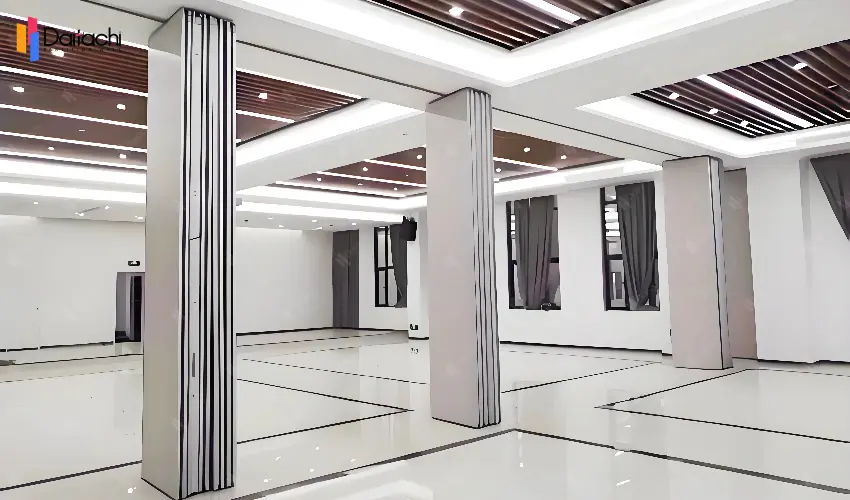
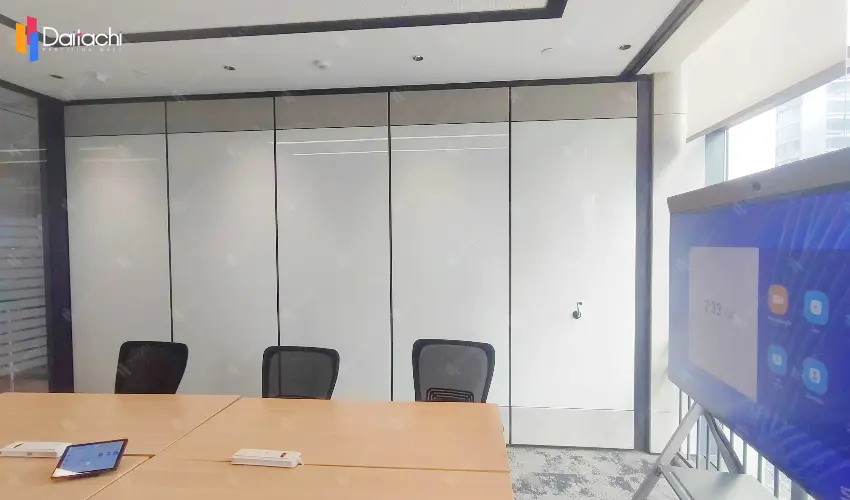
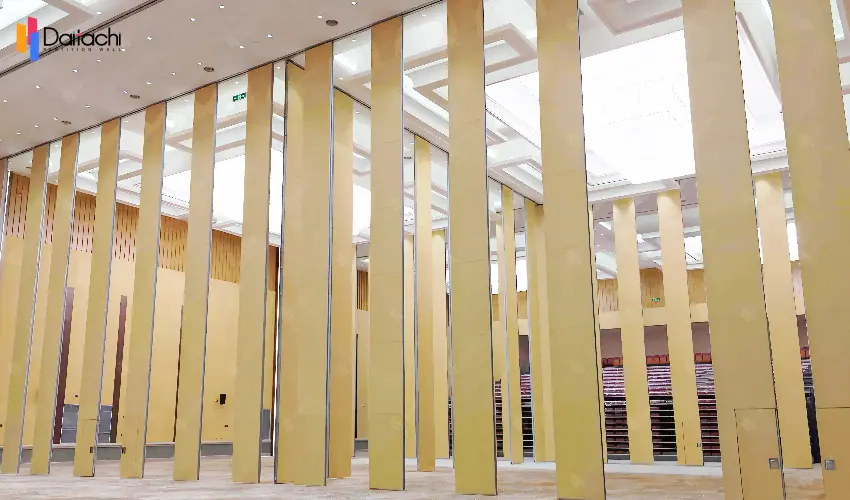
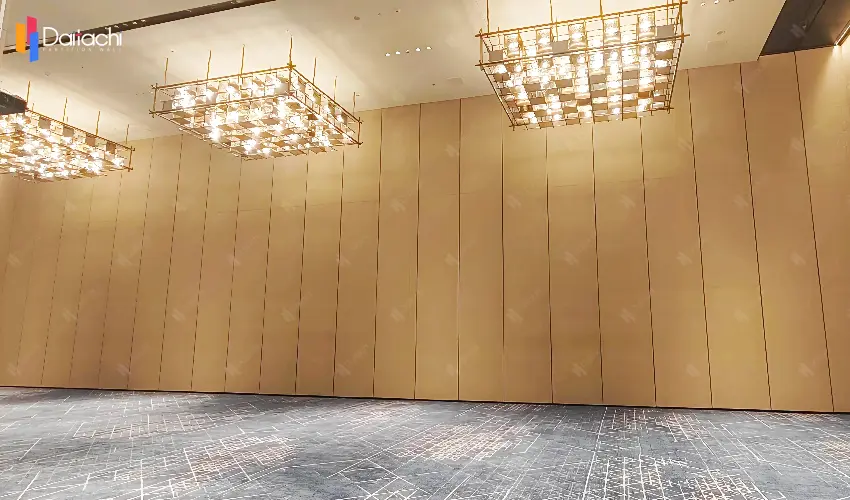
The storage method for movable partition walls needs to be designed based on the characteristics of the space, usage frequency, and functional requirements. It is essential to ensure that the partition wall does not occupy excessive space after being stored, while still allowing for convenient and quick unfolding and use. Below are some common storage methods and their specific application scenarios:
Rail-Suspended Storage:
Principle: A track is installed on the ceiling or top structure. The partition panels are suspended on the track via pulleys or hooks, and can slide along the track to a designated position for folding or stacking.
Applicable Scenarios: Meeting rooms, private rooms, and other places where frequent space adjustments are required.
Advantages: Does not occupy floor space, suitable for rooms with high ceilings. When unfolded, the partition panels fall vertically, forming a continuous partition with good sealing.
Principle: An embedded groove is provided on one side of the wall. After folding, the partition panel is pushed into the groove via hinges or sliding rails, with the surface flush with the wall.
Suitable Scenarios: Offices, living rooms, and other spaces where walls need to be kept tidy.
On-site Hidden Storage:
Advantages: Highly concealed, almost invisible when folded. Suitable for lightweight materials (such as wood and PVC), easy to operate.
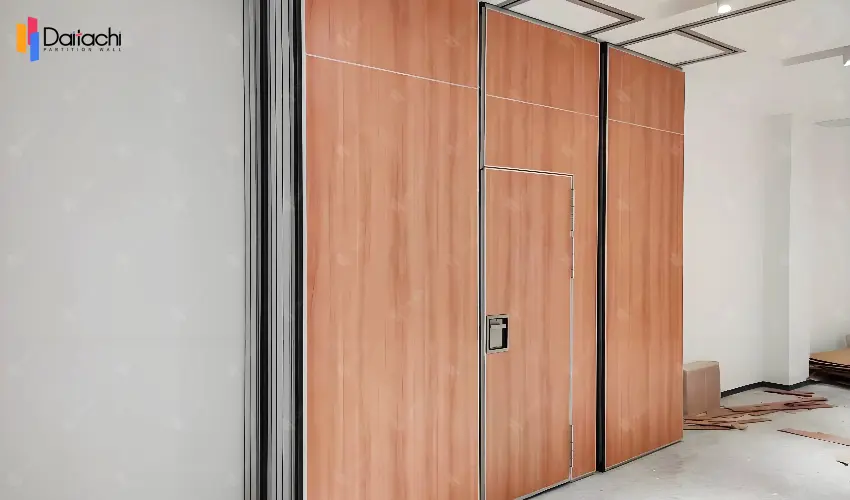
Book-style Folding:
Principle: The partition uses a book-like folding structure, with each page connected by hinges, folding into a compact volume when stored.
Suitable Scenarios: Classrooms, training rooms, and other spaces requiring flexible partitions.
Advantages: Small thickness when folded (usually ≤20cm), can be placed against the wall. No additional support is needed when unfolded, easy to operate.
Accordion-style Folding:
Principle: Panels are connected by flexible connectors (such as fabric or leather) to form a continuous pleated structure, compressing into a wave shape when folded.
Suitable Scenarios: Family living rooms, dining rooms, and other places where a warm atmosphere needs to be created.
Advantages: Soft material, high safety, suitable for families with children. When folded, it is compact and can be hidden behind a sofa or inside a cabinet.
Space Dimensions: For small spaces, vertical or folding storage is preferred; for large spaces, horizontal or rotating storage can be considered.
Usage Frequency: High-frequency use requires automated or labor-saving designs (e.g., motorized tracks or hydraulic in-ground systems).
Panel Material: Lightweight panels (wood, PVC) are suitable for hanging or folding; heavy-duty panels (metal, glass) require stacking or recessed installation.
Aesthetic Requirements: Hidden storage spaces are suitable for high-end locations; exposed storage spaces (e.g., tracks or stacking shelves) are suitable for industrial-style designs.
Related Articles: Do Different Panel Thicknesses Produce Different Results?
Manual Movable Partition Wall: Reconstructing Space Boundaries with Ingenious Craftsmanship
Related Product : Type 85 Manual Collapsible Partition Wall