To learn about all aspects related to Vertical Folding Partition Wall , you can consult our comprehensive guide on Vertical Folding Partition Wall Hub.
In an era where small and medium-sized enterprises face mounting pressures—such as rising rents and inefficient utilization of office space—retractable folding walls have emerged as a pivotal solution for optimizing spatial layouts and reducing operational costs. This is achieved through dynamic space partitioning, integrated functional modules, and intelligent control technologies. These vertical-lift walls not only significantly enhance space utilization efficiency but also directly assist businesses in substantially reducing expenses related to rent, energy, and renovations.
Traditional fixed walls divide office spaces into static zones, often leading to overcrowding during peak hours while leaving resources idle during off-peak periods. By employing three core technologies—"vertical lifting, folding storage, and modular assembly"—vertical-lift walls break down these rigid spatial boundaries, thereby enabling "on-demand space allocation":
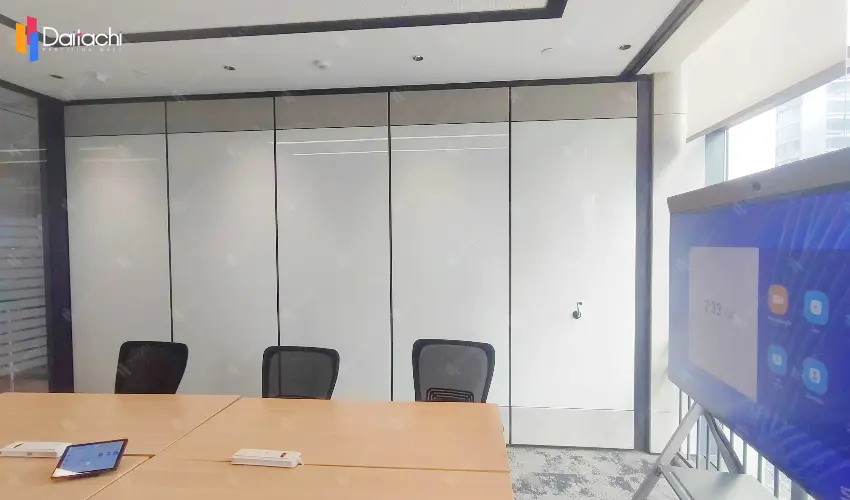
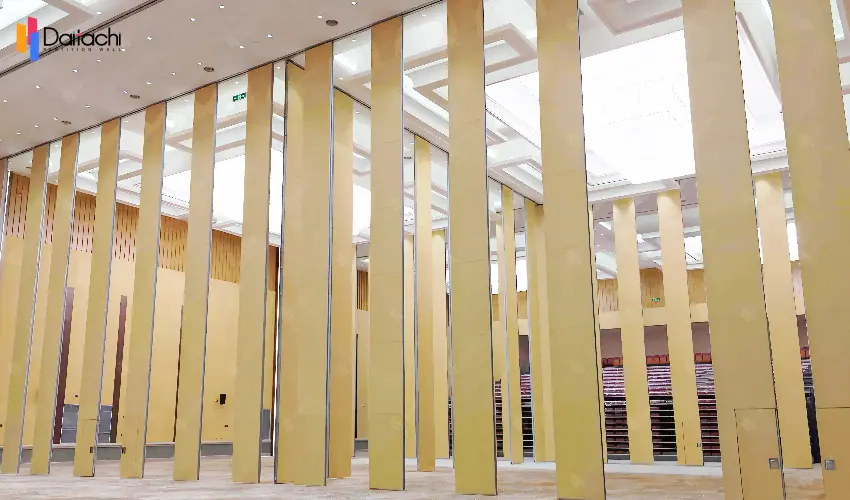
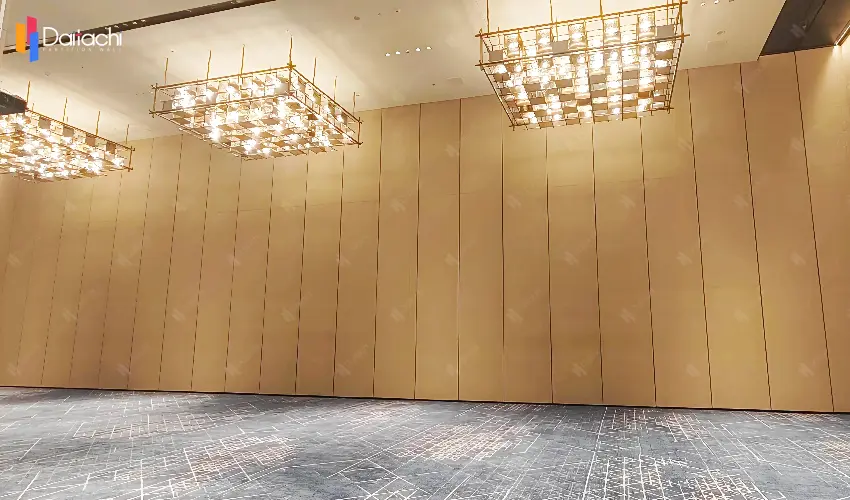
Dynamic Space Adjustment: The walls lift vertically along overhead tracks, allowing open-plan office areas to be rapidly transformed—within just a few minutes—into independent conference rooms or private meeting booths, without the need for any structural demolition or reconstruction work.
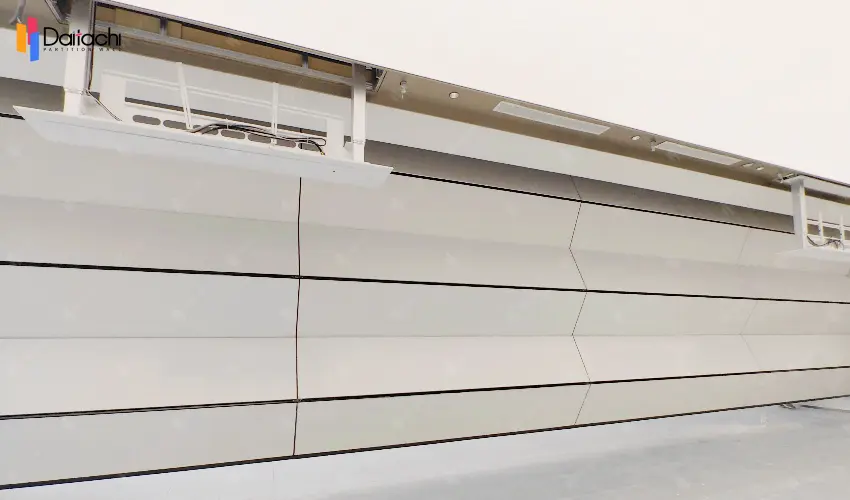
Folding Storage Function: The walls can be folded and retracted into a pre-designated ceiling cavity, becoming completely concealed within the overhead space; this frees up floor area that would otherwise be occupied by fixed walls.
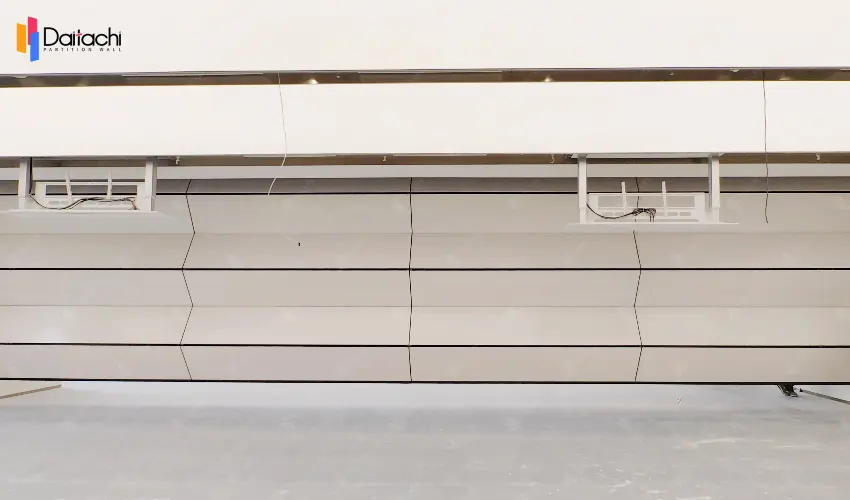
Renovation Costs: Modular Design Reduces Customization Expenses
Unlike traditional fixed walls—which require time-consuming and cumbersome custom finishing work—vertical-lift walls are assembled using standardized modules. This design philosophy significantly shortens construction timelines and minimizes material waste.
Maintenance Costs: Durable Design Lowers Long-Term Operational Expenditures
The core structure of vertical-lift walls features frames made from aluminum alloy or carbon fiber, clad in high-performance, fire-resistant, and wear-resistant surface materials. This robust and durable structural design ensures an exceptionally long service life—far exceeding that of traditional partition walls.
Furthermore, the modular design facilitates localized repairs and component replacements, thereby substantially reducing long-term maintenance and upkeep costs.
Creating Multifunctional Spaces on a Limited Budget: Startup teams can utilize retractable partitions to subdivide open-plan office areas into private phone booths and small meeting rooms, thereby avoiding the additional expense of renting external meeting venues due to insufficient internal space.
Coworking Spaces: Operators of coworking spaces can leverage retractable partitions to provide tenants with "on-demand" spatial services, thereby enhancing the added value and market appeal of their workspace offerings.
Rapid Deployment and Flexible Adjustment: Corporate branch offices often face constantly evolving spatial requirements. Retractable partitions enable the rapid reconfiguration and layout adjustment of space, thereby eliminating the resource waste typically associated with the demolition of fixed walls.
With their flexible "multipurpose wall" design, retractable partitions offer small and medium-sized enterprises a practical and viable solution. Their core philosophy is simple: "Saving space means saving costs." From reducing rental expenses to optimizing energy consumption, and from cutting renovation costs to simplifying daily maintenance, the value of retractable partitions extends far beyond that of a mere space-dividing tool; they have evolved into a strategic instrument for managing office operational costs.
Related Articles: How Modular Lift Walls Help Organizers "Recoup" Renovation Costs?
Pitfalls of Buying Vertical Folding Walls: Three Hidden Costs of Low-priced Products