To learn about all aspects related to Vertical Folding Partition Wall Hub, you can consult our comprehensive guide on Vertical Folding Partition Wall Hub.
The durability of vertical folding lifting walls systems from the comprehensive application of materials science in terms of strength, durability, lightweighting, and environmental adaptability. Specifically, this is reflected in the selection and design optimization of the following key materials:
Aluminum Alloy Frame
Characteristics: Utilizing aerospace-grade aluminum alloy, it possesses high specific strength (strength-to-density ratio) and corrosion resistance. The surface is treated with anodizing or fluorocarbon coating to further enhance wear resistance and rust prevention.
Function: As the frame of the wall, the aluminum alloy frame must withstand the mechanical stresses of repeated folding and lifting, as well as external loads such as wind pressure and earthquakes. Its lightweight characteristics also reduce the load on the drive system, thereby extending the overall service life.
Steel Connectors
Characteristics: Key connecting components (such as hinges and slide rails) are made of high-strength steel, and heat-treated or galvanized to improve fatigue resistance and corrosion resistance.
Functions: Steel connectors must be able to withstand shear forces and torques under dynamic loads; their durability directly affects the smoothness and service life of the wall folding mechanism.
Composite Panels
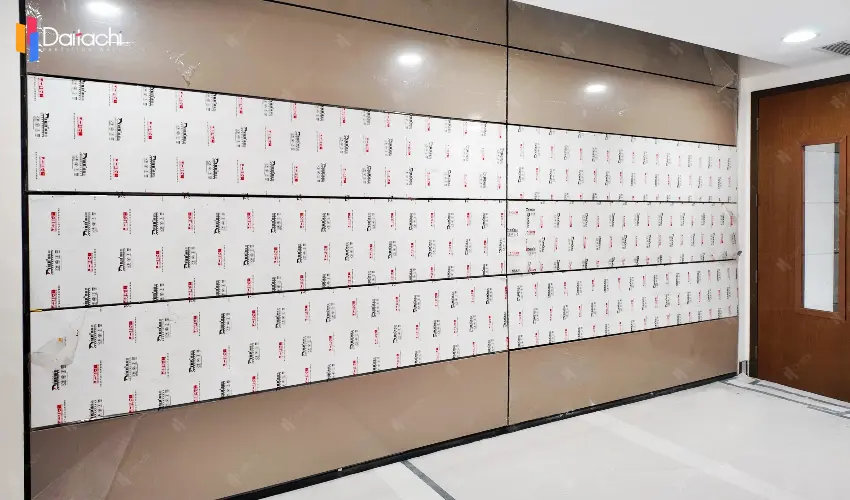
Characteristics: The wall surface uses glass fiber reinforced polymer or aluminum honeycomb composite panels, combining lightweight and high rigidity.
Functions: The composite panels need to resist daily scratches, impacts, and UV aging. Their surface coating can further extend weather resistance to over 10 years.
Sealing Strips and Cushioning Materials
Characteristics: High-density silicone rubber or EPDM rubber sealing strips are used in the folding area, possessing excellent temperature resistance and elastic recovery rate.
Functions: The sealing strips not only prevent dust and moisture from penetrating the mechanical structure but also cushion impacts during the folding process, reducing material fatigue.
Topology Optimization Structure
Principle: Finite element analysis is used to optimize the topology of the wall frame, removing redundant materials to reduce weight while maintaining strength.
Case Study: Baker's vertical folding wall utilizes a high-strength aluminum alloy frame and honeycomb core structure, achieving a reduction in weight per square meter while meeting STC 62 sound insulation standards.
Low-Friction Bearings and Rails
Features: Employs self-lubricating composite materials or ball bearings, resulting in a low coefficient of friction, reducing drive energy consumption and wear.
Function: The low-friction design ensures smoother wall lifting and lowering, while reducing motor load and extending the service life of the transmission system.
Low-Temperature Resistant Materials
Application: In cold regions, wall materials must possess resistance to brittle fracture. For example, using modified polypropylene or nylon instead of ordinary plastics can improve low-temperature impact strength, preventing cracking at -40°C.
Flame-Retardant Materials
Standards: Wall panels must meet Class A fire resistance standards, and connectors must be flame-retardant treated.
Function: Maintains structural integrity during a fire, buying time for evacuation.
Fatigue Life Optimization
Methods: Verify the fatigue resistance of materials through laboratory high-cycle fatigue tests; optimize hinge design to ensure uniform stress distribution and prevent stress concentration leading to crack propagation.
Self-Healing Coating Technology
Innovation: Some high-end products utilize microcapsule self-healing coatings. When scratches appear on the coating, the internal repair agent is released and solidifies, automatically filling microcracks and extending the protection period.
Modular Replaceable Design
Advantages: The wall adopts a modular structure, allowing for quick replacement of key components (such as sealing strips and bearings), reducing maintenance costs and extending the overall service life.
Related Articles: Reduced Maintenance Costs: Why are Modular Partitions Easier to Maintain?
Vertical Lifting Wall Components: Materials and Functional Description