To learn about all aspects related to Movable Partition Walls, you can consult our comprehensive guide on Movable Partition Walls Hub.
The thickness of movable partition walls varies according to the partition type, material structure, sound insulation requirements, and application environment. In general, the common thickness range is between 65mm and 150mm, with different thickness levels corresponding to different spatial performance needs.
01 / Basic Thickness (65-80mm)
Applicable scenarios:
Suitable for temporary space separation, including exhibitions, event venues, and offices with basic sound insulation requirements.
Material composition:
Usually consists of fiberboard panels or light steel keel structures + single-layer gypsum boards, with internal filling of sound-absorbing cotton to improve acoustic performance.
Sound insulation performance:
STC 45-50dB
02 / Standard Thickness (100-120mm)
Applicable scenarios:
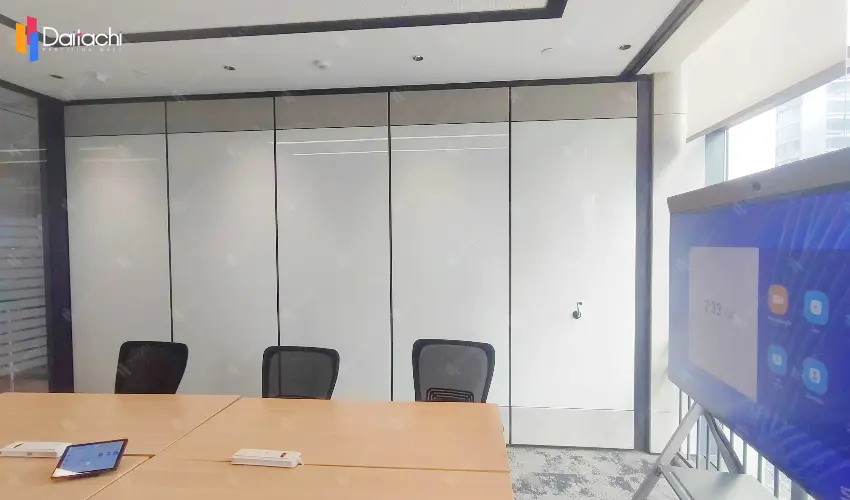
Ideal for conventional offices, educational spaces, meeting rooms, and other environments requiring a balance between sound insulation and flexible space utilization.
Material composition:
Built with double-layer 12mm gypsum boards + 75mm light steel keel, combined with rock wool filling to enhance noise reduction.
Sound insulation performance:
STC 55-60dB
03 / High Sound Insulation Thickness (150mm)
Applicable scenarios:
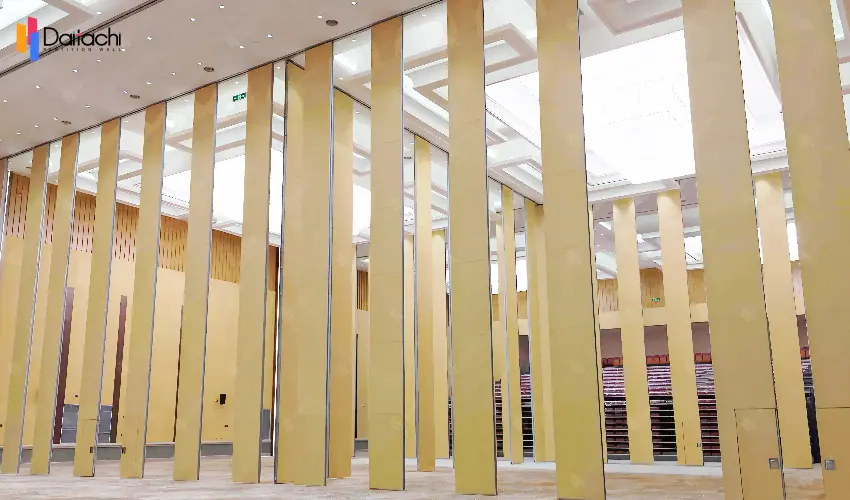
Designed for high acoustic requirement spaces such as theaters, recording studios, hospitals, and other noise-sensitive environments.
Material composition:
Uses a multi-layer composite structure, including double-layer gypsum boards, a middle sound insulation layer, and high-density glass wool filling.
Sound insulation performance:
STC 65-70dB
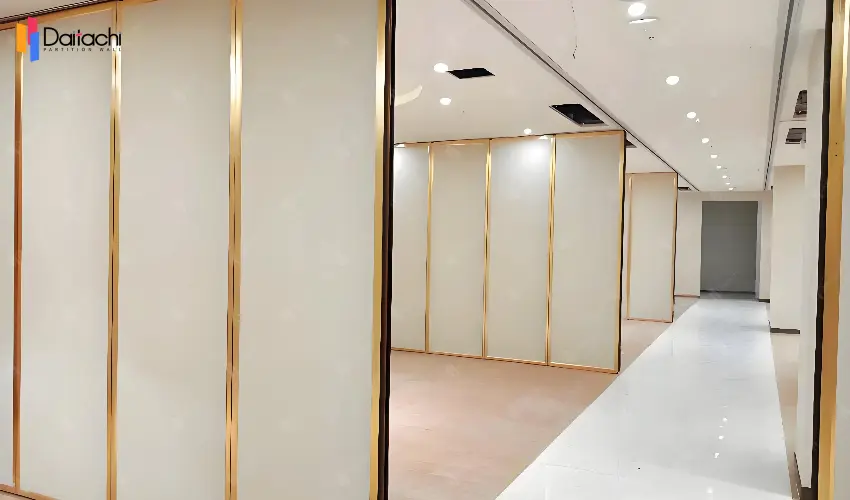
The selection of movable partition wall thickness should be based on space function, building height, and acoustic requirements.
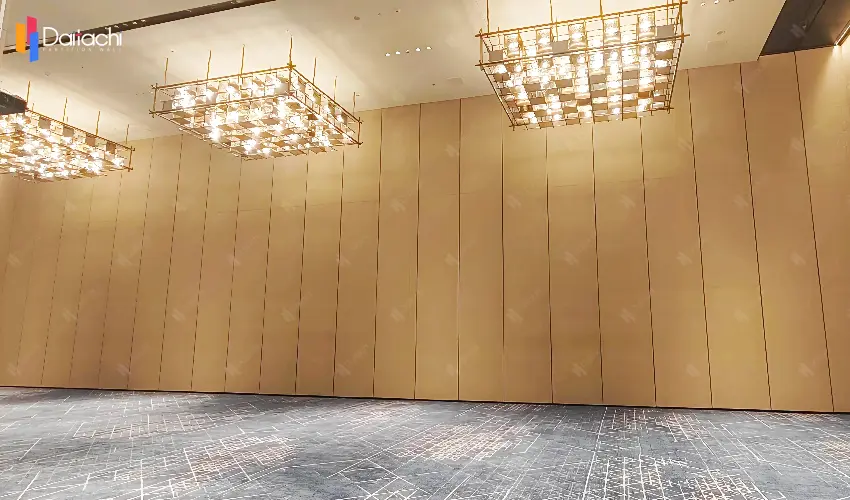
For basic space division, 65-80mm partition systems are generally sufficient for daily applications such as offices and classrooms. Spaces with higher sound insulation requirements can choose 100mm or thicker partition walls, which can effectively reduce noise by 30-40 decibels and are commonly used in conference rooms, hotels, and banquet halls.
For super-high-rise buildings or spaces with a floor height exceeding 10 meters, 120mm+ reinforced movable partition systems are recommended. These systems provide stronger track support and improved wind pressure resistance.
When selecting a partition system, it is recommended to consider integrated track systems after confirming the room function, ceiling height, and sound insulation requirements. The overall thickness usually includes the required track installation space, helping avoid additional occupation of floor height.
For environmentally friendly partition solutions, recycled materials should account for at least 30%, such as recycled steel keels combined with FSC-certified wood panels, supporting sustainable building practices.
The thickness of movable partition walls also affects daily operation and maintenance performance.
For manual movable partitions, systems with a thickness of 120mm or less can generally be operated easily by one person.
According to performance tests:
A 100mm movable partition has a friction force of approximately 15N, providing smooth operation.
A 150mm movable partition has a friction force of approximately 30N, requiring stronger structural support.
In terms of service life:
A 100mm partition system can withstand approximately 20,000 folding cycles without cracking.
A 150mm high-performance partition system can reach around 30,000 folding cycles, with pulley components recommended for inspection every five years.
Choosing the appropriate partition wall thickness, material structure, and track system can effectively improve space flexibility, acoustic performance, durability, and overall building efficiency.
Related Articles: Movable Partition Wall Series: in-depth Analysis of Models 65, 85, and 105
Comparison of Manual, Semi-automatic, and Fully Automatic Movable Partitions