To learn about all aspects related to Vertical Folding Partition Wall, you can consult our comprehensive guide on Vertical Folding Partition Wall Hub.
III. Structural Optimization: Balancing Lightweight and High Strength
Ultra-Thin Honeycomb Composite Panels
Material Selection: Utilizing aluminum honeycomb core and aluminum alloy panels, the thickness is effectively reduced, resulting in a 60%-70% weight reduction compared to traditional solid walls, while maintaining sound insulation performance above STC 60.
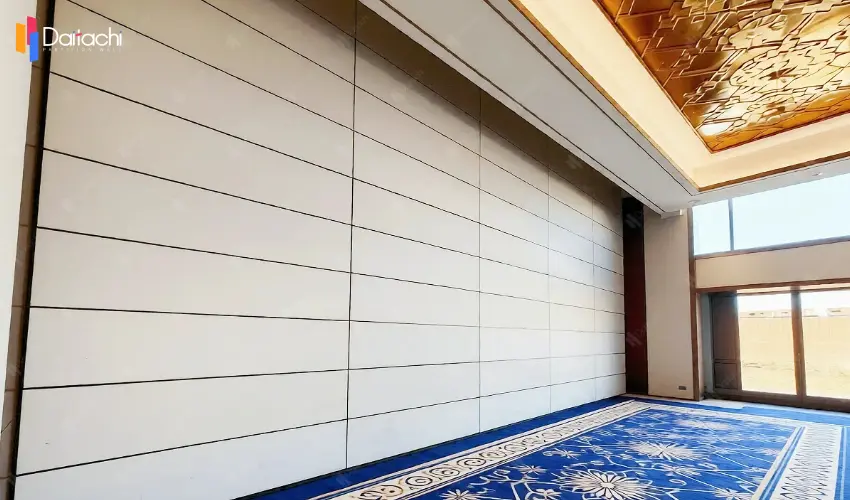
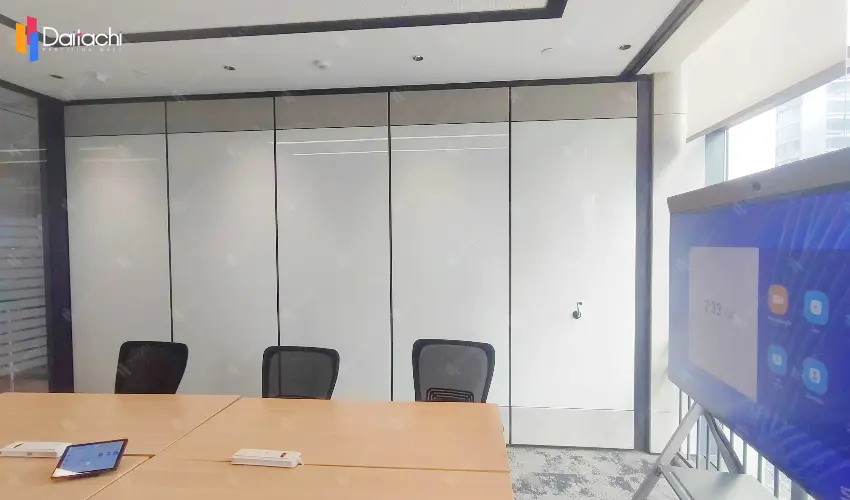
Aesthetic Advantages: The ultra-thin panels reduce visual bulk, aligning with modern minimalist design styles.
Example: Baker's vertical lift folding wall uses lightweight, high-strength materials, reducing weight per unit area and facilitating wall lifting and lowering.
Modular and Scalable Design
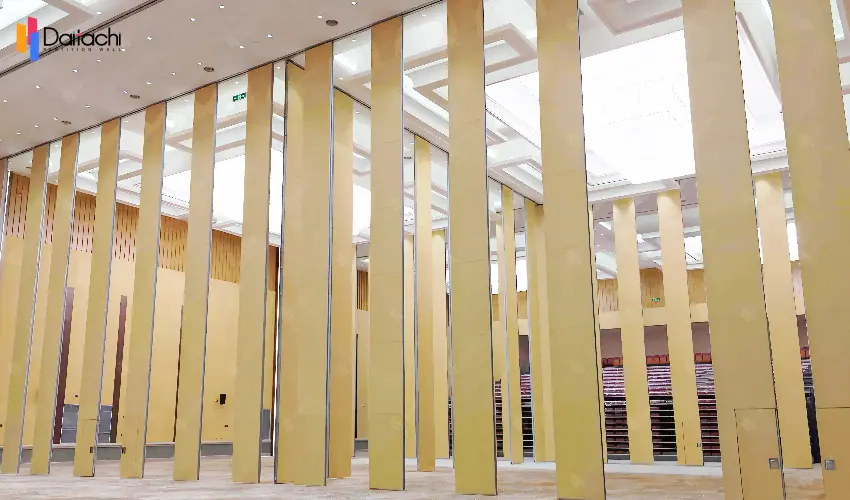
Technical Principle: The wall is constructed from standard modular panels, supporting horizontal or vertical expansion to adapt to different space size requirements.
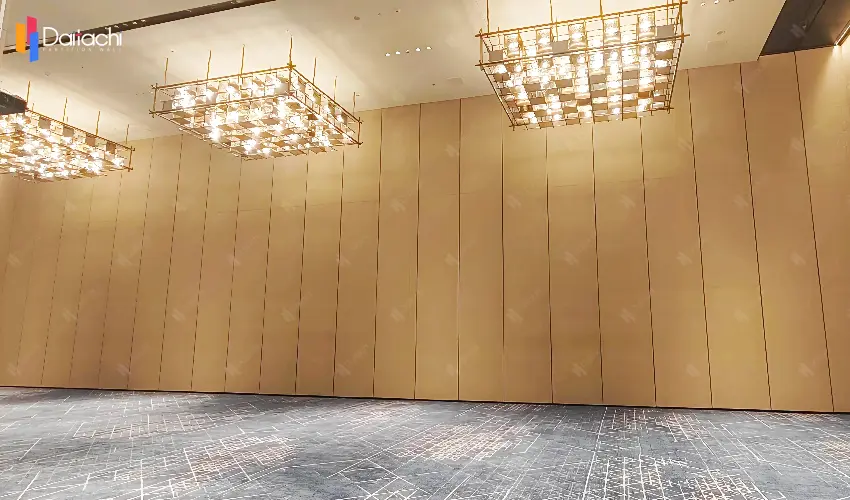
Aesthetic Advantage: Seamless splicing technology between modules creates a unified visual effect without gaps.
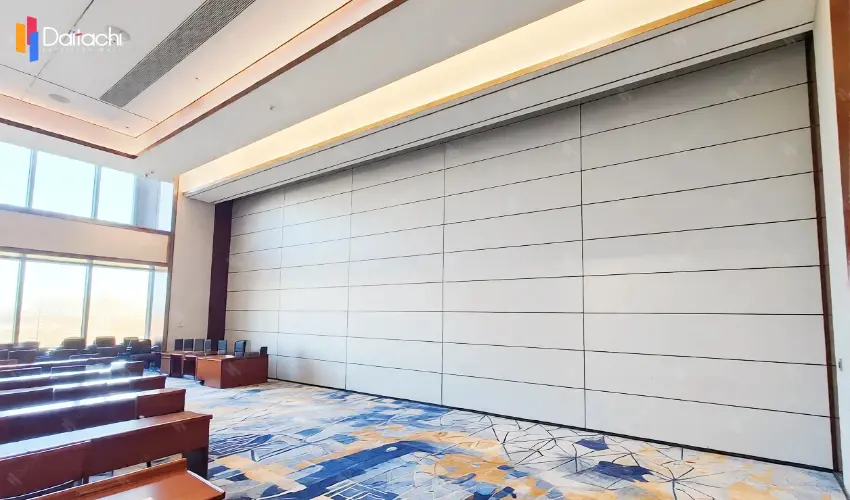
Electric Chain/Belt Drive
Technical Principle: The drive motor is concealed within the ceiling or wall, transmitting power via a chain or synchronous belt for low-noise lifting.
Aesthetic Advantage: The drive system is completely hidden, with no exposed motors or wiring on the wall, maintaining a clean and aesthetically pleasing appearance.
Case Study: The Baker mobile wall uses an imported German motor paired with a silent chain to achieve uniform lifting and smooth, vibration-free operation.
Intelligent Sensors and Anti-Pinch Design
Technical Principle: A pressure sensor is installed at the bottom of the wall. When encountering an obstacle, the wall automatically stops and retracts for 3 seconds to avoid the risk of pinching.
Aesthetic Advantage: The sensor is embedded in the edge of the panel, with no extra protrusions, balancing safety and a minimalist design.
The vertical lift folding wall, through four core technologies—top guidance, concealed hinges, ultra-thin panels, and integrated drive—completely breaks through the limitations of ground tracks, achieving a perfect fusion of "invisible storage" and minimalist aesthetics. Its value lies not only in flexibly switching spatial functions but also in making architectural elements an extension of spatial aesthetics rather than a visual burden through technologically concealed design.
Related Articles: How Vertical Lift-Up Folding Walls Achieve "Invisible Storage" and Minimalist Aesthetics (Part 1)