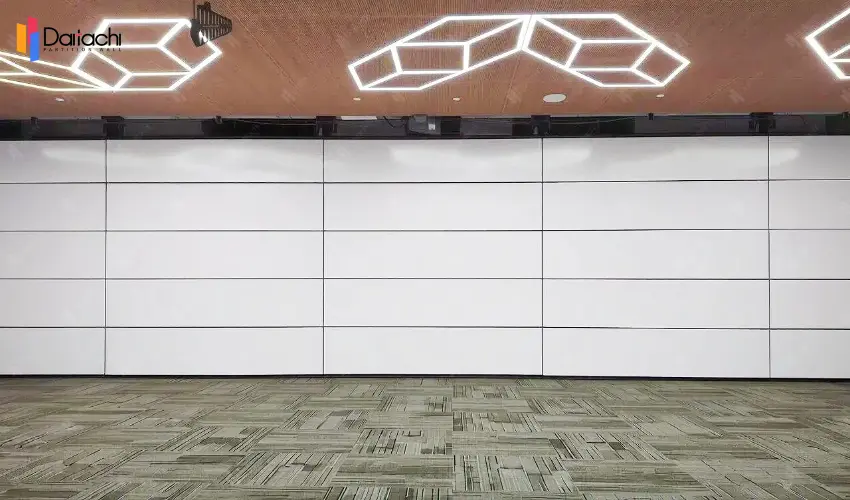
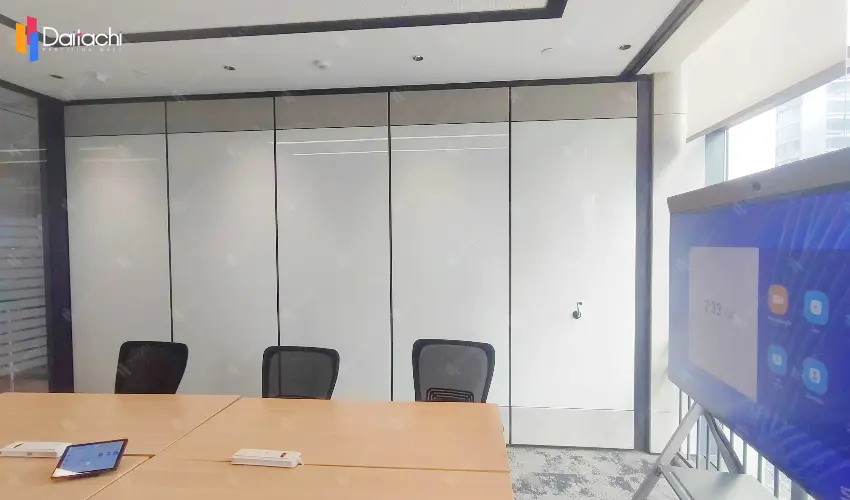
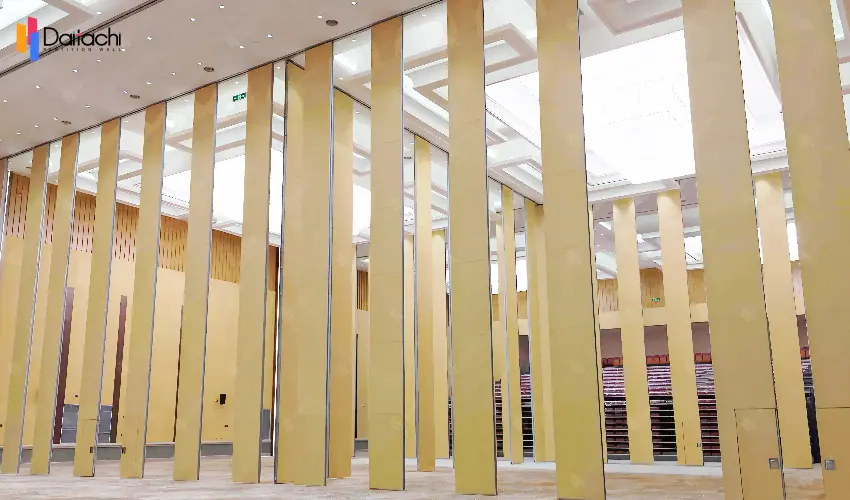
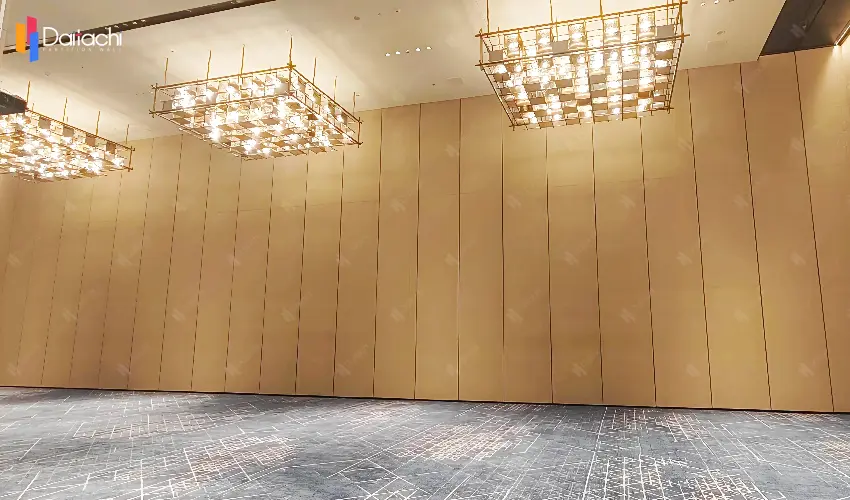
To learn about all aspects related to Vertical Folding Partition Wall, you can consult our comprehensive guide on Vertical Folding Partition Wall Hub.
III. Key Design Features for Implementing Trackless Systems
Top-Suspension System
Track Type: Utilizes high-strength aluminum alloy or steel structural tracks, which can be either recessed into the ceiling or independently mounted; the load-bearing capacity of the track system must exceed twice the self-weight of the wall structure itself.
Synchronous Control: Employs a motor-driven mechanism to ensure perfect synchronization of all wall panels during the raising and lowering process, thereby effectively preventing the wall from tilting or becoming misaligned.
Bottom Sealing Technology
Compressible Sealing Strips: High-elasticity sealing strips are installed along the bottom and sides of the wall panels; as the wall descends, these strips compress and deform to fill any gaps on the floor surface while retaining their elastic resilience, thereby preventing permanent deformation over time.
Dust-Resistant Design: The surface of the sealing strips features a low-friction coating designed to minimize dust accumulation and facilitate easy daily cleaning and maintenance.
Lightweight, High-Strength Structure
Material Selection: The wall frame is constructed using aerospace-grade aluminum alloy or carbon fiber composites, significantly reducing overall weight while ensuring structural integrity.
Honeycomb Structure: The interior is filled with an aluminum honeycomb core to enhance structural bending stiffness and minimize the risk of structural deformation.
Surface Finishes: Exterior finishes can be selected from fire-resistant laminates, steel panels, or decorative laminates to meet specific requirements regarding sound insulation, fire safety, and aesthetic appeal.
Intelligent Control System
Motor Drive: Employs low-noise motors paired with gear reducers to ensure precise control and smooth operation during the vertical movement of the wall.
Safety Sensors: Integrates pressure sensors and anti-pinch mechanisms; if an obstruction is detected beneath the wall, the system will automatically halt operation or retract the wall, thereby effectively preventing accidents.
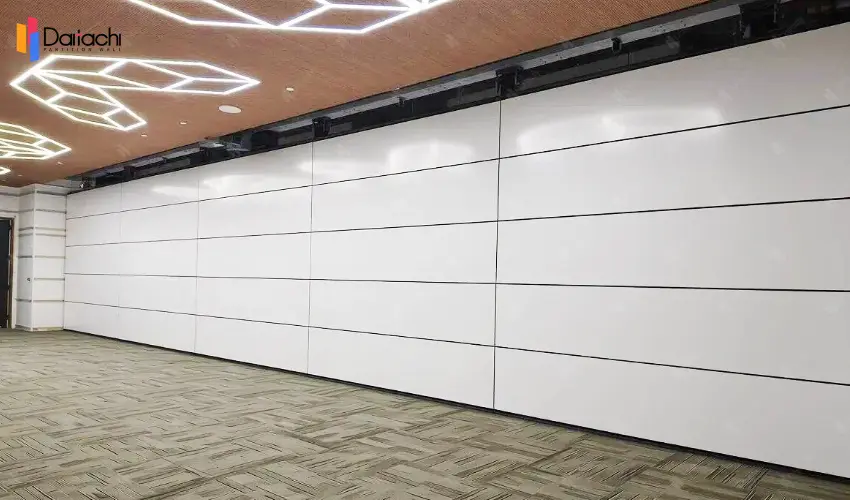
Leveraging innovations in overhead guidance mechanisms, bottom sealing technologies, and intelligent control systems, the trackless design has redefined the boundaries of vertical-lift folding wall applications. It not only resolves the critical challenge of floor-level obstructions but also drives the evolution of spatial partitioning concepts—elevating the focus from mere "functionality" to an emphasis on the overall "user experience." As material science and smart technologies continue to advance, trackless partitions will continue to evolve—becoming lighter, more integrated, and more sustainable—ultimately emerging as a core solution for achieving flexible spatial partitioning in the architecture of the future.
Related Articles: the Versatility of Vertical Lift Folding Walls in Creating Trackless Designs
Trackless Design: How Vertical-Lift Folding Walls Enable Unobstructed Floor Access (part 1)