To learn about all aspects related to Vertical Folding Partition Walls, you can consult our comprehensive guide on Vertical Folding Partition Walls Hub.
To find a compromise between weight and strength in the vertical partition walls for lifting it is necessary to make breakthroughs within three domains such as the selection of materials or structural optimization as well as the design of drive systems. Here are some specific technological methods and case studies
Aluminum Alloy Frame + Composite Finish
By using an aerospace-grade aluminum alloy (such 6061-T6) as the principal structure for load bearing, its durability is 1.5 times greater than steel. Its density is around 1/3 of steel. It is resistant to corrosion as well as good low-temperature performances, welding capability, and excellent processing capabilities. The finishing layer utilizes honeycomb aluminum panels, or magnesium oxide panel. The composite material, which has a an average thickness of 10-15mm they can attain an bending stiffness of three times than traditional gypsum boards as well as decreasing weight by 40 percent.
Carbon Fiber Reinforced Polymer Local Reinforcement
For areas with high stress, like the location of mounting for the drive system and track connection carbon fiber prepregs are integrated, creating the localized structure of reinforcement through an injection molding procedure. The material has characteristics that include very low percentageof temperature expansion and corrosion resistance thermal shock resistance, as well as wear resistance. Also, it exhibits igh strength, very high toughness, high thermal conductivity as well as the lowest density, which greatly improves the resistance of a structure to fatigue.
Bionic Honeycomb Design: Based on the benefits of mechanical hexagonal honeycombs The partition wall is constructed with an open honeycomb structure. The analysis of finite elements optimizes the unit's dimensions, which reduces weight by 60%, while keeping the bending stiffness.
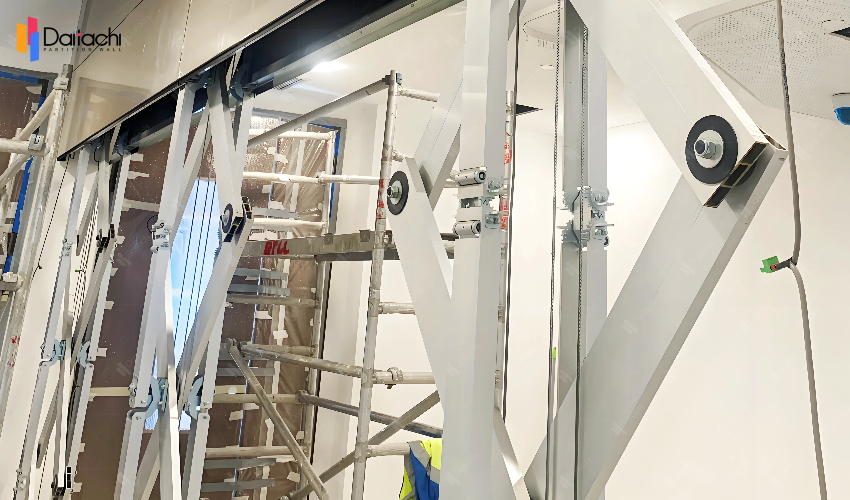
Truss Structure Optimization: Truss structure effectively distributes the stress to ensure maximal load bearing capacity while using very little materials. In addition, the smart design of the structure eliminates any unnecessary elements which further reduces the weight of the structure and the lifting and lowering process simpler and smoother.
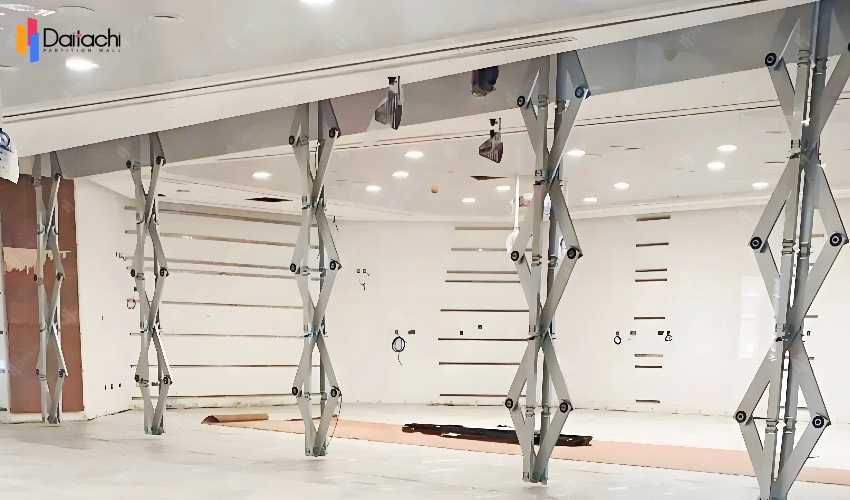
Distributed Micro Servo Motors : By eschewing traditional centralized drives the concept of a distributed layout comprising several micro motors is used. Millisecond-level responses are achieved by the use of synchronous control techniques. This gives you the most innovative and flexible interface between motors and drivers.
Magnetostrictive displacement sensor : A magnetostrictive sensor can achieve millimeter-level positioning using algorithms that dynamically correct deviations. Sensors make use of high-tech materials and the latest processing technologies, which allow use in high-temperature, high-pressure and high-vibration conditions.
Energy Recovery Braking : System Regenerative brake module is built into the drive motor that converts potential energy from lifting into electric energy. The results of real-world tests show the technology can reduce system energy use by around 18%, in addition to decreasing the loss of heat from braking and prolonging the life of the drive unit.
AI-based Predictive Control: A neural network model that has been trained from historical data forecasts loads changes 0.5 seconds ahead of time while further enhancing the parameters of drive.
Wireless Installation: Using the LoRa wireless sensor network decreases the cost of wiring and increases system performance.
Self-healing Materials : Repair agents for microcapsules are embedded within the structure. If cracks are large enough to reach the microcapsules, repair agent releases and then solidifies to create self-repair.
With the combination of technological innovation in the field of materials structural optimization, intelligent drive systems wall partitions that lift vertically have found a perfect equilibrium between strength and light design. With the advancement of AI as well as new technologies for materials partition walls are expected to evolve toward more intelligence and adaptability offering endless opportunities for architectural designs of the future.
Related Articles: Standards and Solutions for Testing the Tightness of Wire Ropes for Vertical Lifting Walls
How to Determine If a Movable Partition Wall Can Withstand the Weight?