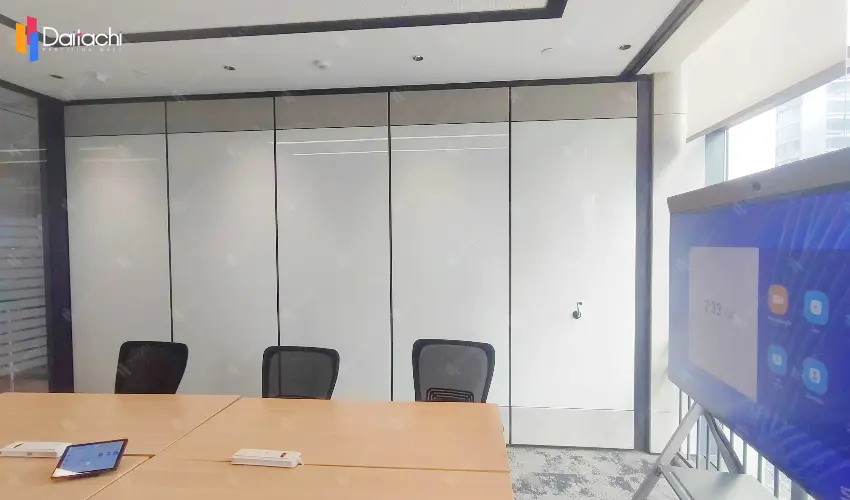
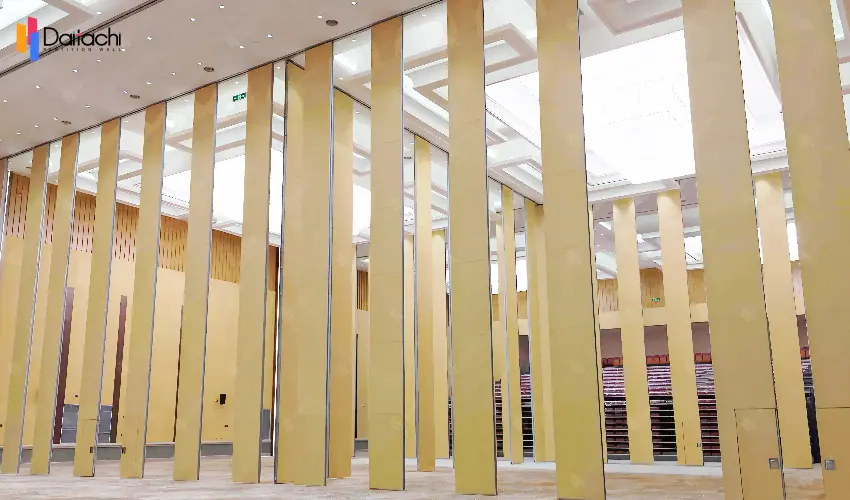
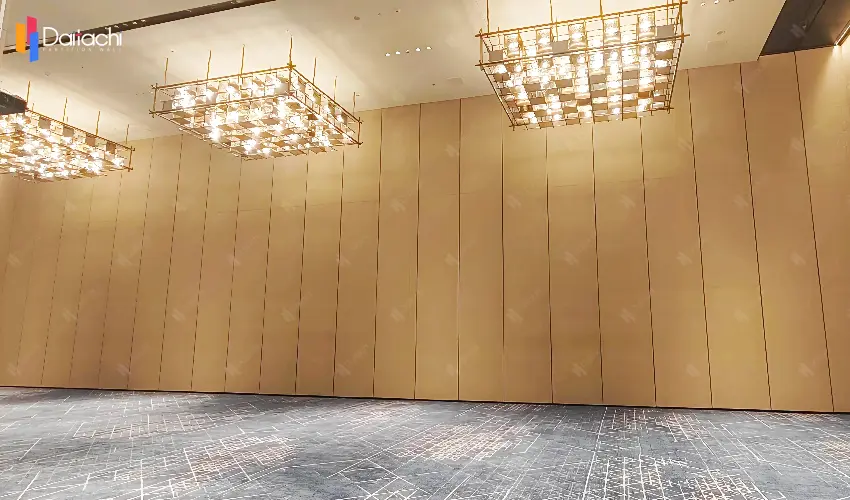
To learn about all aspects related to Movable Partition Wall, you can consult our comprehensive guide on Movable Partition Walls Hub.
1. Core Performance Evaluation Dimensions Acoustic Performance
Acoustic performance: The sound insulation ratio should be greater than STC-50 (double-glazed with the sound-absorbing layer of honeycomb can reach STC-55). Tests on site are conducted in an office setting in a quiet environment, keeping background noise to a minimum of 40dB.
Smoothness of track: 10-meter track slide resistance= 5N. Ceiling track support equipment can be used plug-and play.
The restructuring efficiency: One person could restructure 10m2 of area in less than three minutes.
Structural safety: Deflection of less than millimeters for a wind force of 300Pa as well as the track on top of your ceiling must support a weight of more than 150kg/m2.
Emergency devices: Lift walls with electric motors should respond to anti-pinch sensors in a matter of one second.
Safety measures: Use Class A fire-resistant aluminum composite panels that have nano-coatings for safety and ensuring that they are in conformity with international standards for certification.
2. User Experience Evaluation Methodology
Operating Ease: Response Time for app control or remote controllers is under 1 second. For touchscreen clicks or key controls, it's less than one second.
Cleanability Track: This floor-free layout cuts down on the time for cleaning by 90 percent..
Style Compatible: The surface of the partition texture should be consistent with the overall design of the office (e.g. wood grain or brushed metal).
System Maintenance: Cleaning is performed daily. done, and annually survey and safety inspections by experts are carried out to make sure that the system is operating properly.
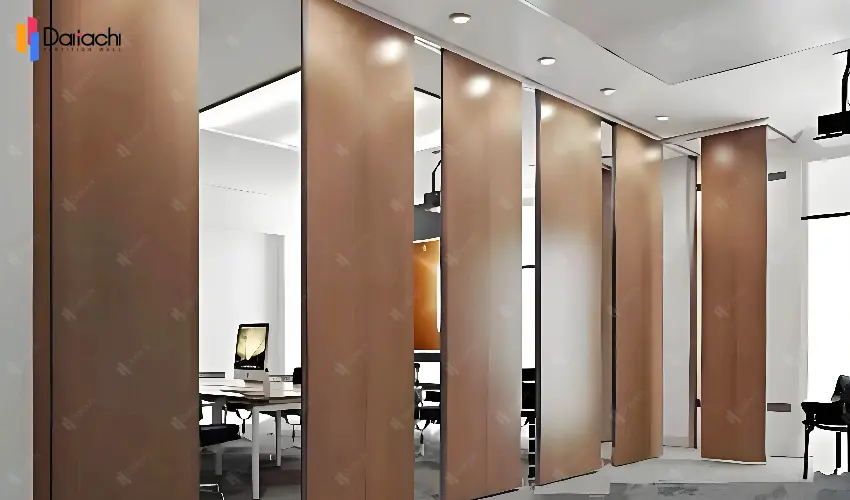
1. Intelligent Material Application: Electrochromic glass controls light transmission through a low voltage electric field. This creates a vibrant harmony between daylight and privacy Shape-memory alloy partition frames can automatically change their form to meet various spatial needs.
2. Energy Self-Support Systems: Photovoltaic partitions incorporate flexible solar panels over the partition's surface for powering the control system. systems for energy recovery that convert the mechanical energy of moving the partition into electrical energy.
3. Digital Twin Technology: A virtual commissioning system makes use of 3D simulation to simulate the operation of partitions and to identify weaknesses in design prior to commissioning. AR maintenance assistance uses mobile AR to present repair actions as well as the location of components in real-time.
1. Phased Improvement Roadmap
Temporary (1-3 months) Acoustic performance testing as well as rail system upgrade
Medium-term (4-12 months): Implement intelligent control mechanisms and increase security measures
Lang-term (1-3 months): Achieve energy self-sufficiency, and implement fully the digital twin technology.
2. Typical Application Scenario Solutions
Highly Changing Spaces (e.g., Coworking Spaces)
Solution: Electric Lifting Walls + Magnetic Track System + Electrochromic Glass
Advantages: Rapid reconfiguration in just a few minutes, easy plug and play assistance
High-End Conference Rooms
Solution: Double-glazed Partitions + Electrochromic Film + Environmental Sensor Integration
Benefits: Superior insulation for sound (STC-55) with adjustable privacy settings, as well as automatic climate and humidity control
With a systematic approach to evaluation and specific improvement, coupled by the use of intelligent material, energy-efficient technologies and tools for digital that allow businesses to achieve greater area efficiency and reduce operational costs over the long term. We suggest starting with basic performance improvement and slowly incorporating new technology for the ultimate goal of building a partitioning system that is able to adapt to the changing requirements of office space.
Related Articles: Interpreting the Cost Drivers of Movable Partition Walls, Reasons for Price Differences
What Common Mistakes Do Non-professional Installers Make When Installing Wall Systems?