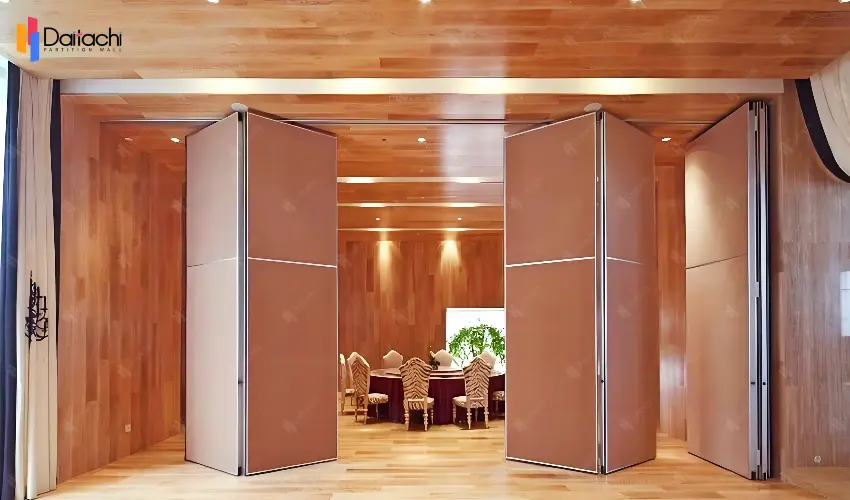
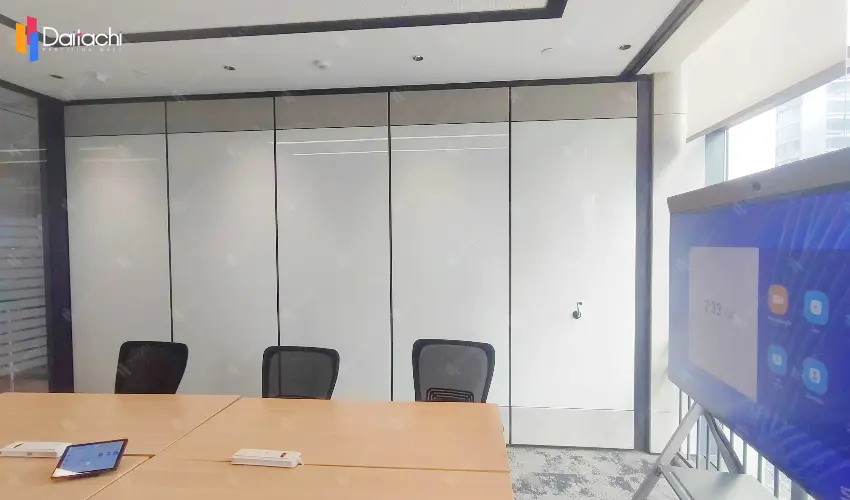
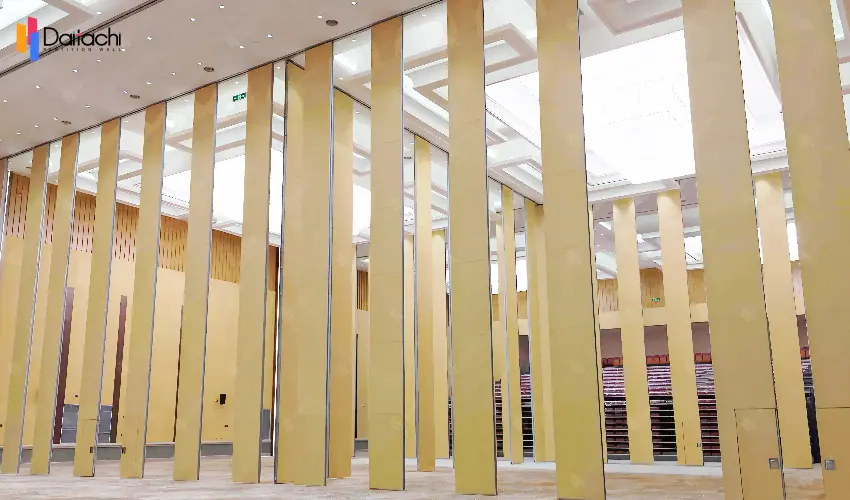
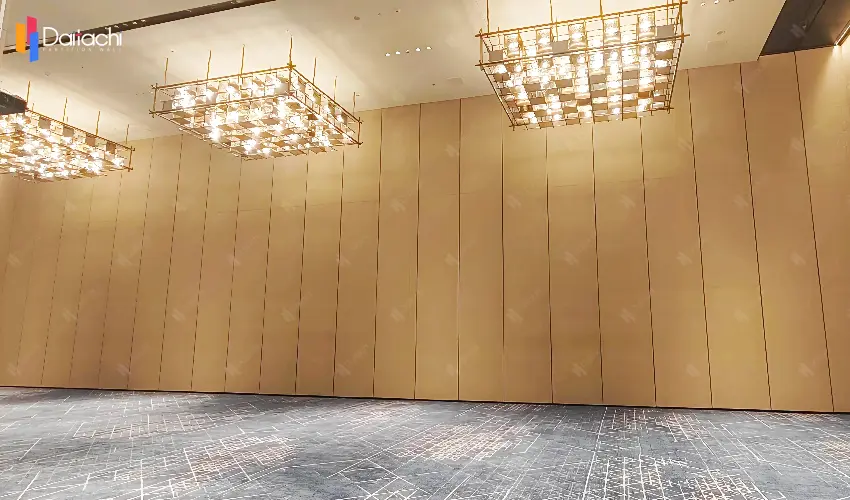
To learn about all aspects related to Movable Partition Wall, you can consult our comprehensive guide on Movable Partition Walls Hub.
Modular moveable partitions is a partition system that is composed of a variety of standard elements. Its primary components comprise the essential components listed below:
Frame Structure:
The frame acts as the framework of the partition that is modular and generally made from strong, light components like steel and aluminum alloy.
The design of the frame incorporates the structural stability as well as mobility, which allows the partition to take on certain external pressures as well as being simple to move and put back together.
Frames can be outfitted with hinges, slides, or connectors that allow for mobility and connection between components.
Panel Material:
The panel is visible section of the partition. It directly influences its appearance, as well as its functions.
The materials used for panels vary. They include metal, wood, and fabrics-covered panels (glass isn't included).
The selection of a panel is based on the requirements of space for the ability to block out sound, fire and aesthetics.
Connectors and Fixtures:
Connectors are an essential component of modular partitions. They ensure that each module is securely joined. Connectors could include bolts clips, nuts and magnetic strips that make the installation process fast and simple.
Equipment like casters, casters and support feet hold the partition and allow for movement.
Additional Functional Components:
Modular partitions are also outfitted with other functional elements like vents, doors, windows as well as cables management pipes.
The components are able to be customized according to specific requirements which enhances the functionality and flexibility in the use of partitions.
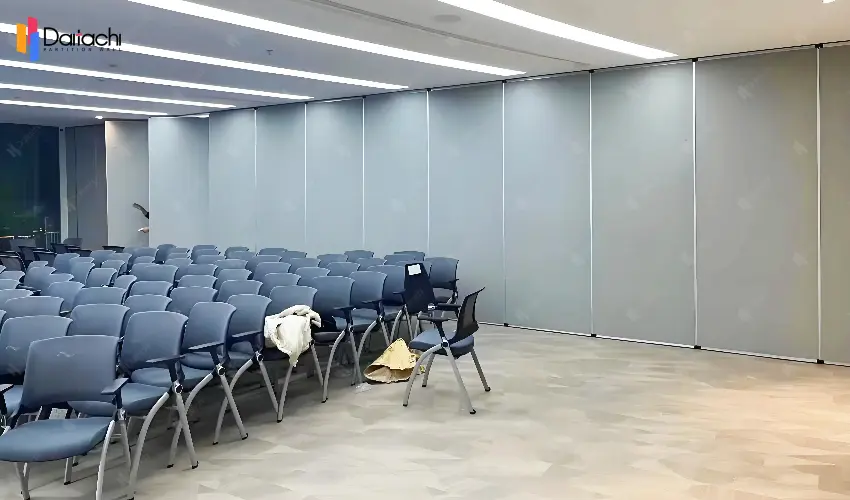
Because of their distinctive structure, modular partitions have some of the most important features listed below:
Flexibility and Reconfigurability:
The most significant benefit for modular partitions lies in the high level of versatility. They can be added, removed and rearrange the modules in any moment, based on the changing requirements for space.
The modularity allows partitions to be adapted to various situations and needs for example, office layout changes and division of exhibition spaces.
Easy Installation and Maintenance:
Because of their standard layout, modular partitions are fairly simple to put in. You simply need to follow the steps or draw up drawings of how to construct the partitions. Maintaining them is easier since damage to one module doesn't affect the entire partitioning system. you just need to replace the damaged part.
Space Optimization and Efficient Utilization:
Modular partitions are effective in dividing and maximize space, thereby increasing the effectiveness of spaces.
When you properly configure modules, you'll have the ability to design an area that is suited to particular requirements, like offices that are open or room for meetings.
Aesthetics and Customization:
Modular partitions come in a range of panels and materials that can be adapted to the needs of various areas.
The users can further customize the partitions according to their company's branding or design fashion, which makes them blend with the rest of the environment.
Functional Integration and Expandability:
Modular partitions may incorporate many functional parts like lighting systems, access control systems and noiseproofing.
As the technology develops and the space needs evolve, modular partitions may also be upgraded or expanded.
Modular partitions that have their distinctive design and unique characteristics have been playing a greater part in contemporary space design. They are not just flexibility and adaptable spaces division, however, they can also increase the beauty as well as the practicality and aesthetics of spaces.
Related Articles: Modular Partitions: Experts in Flexible and Versatile Space Division
Are Vertical Lifting Walls Modular Products?