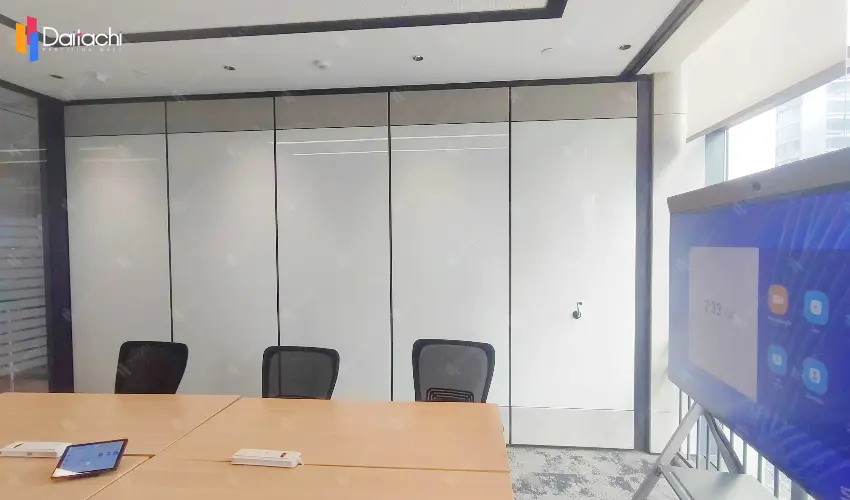
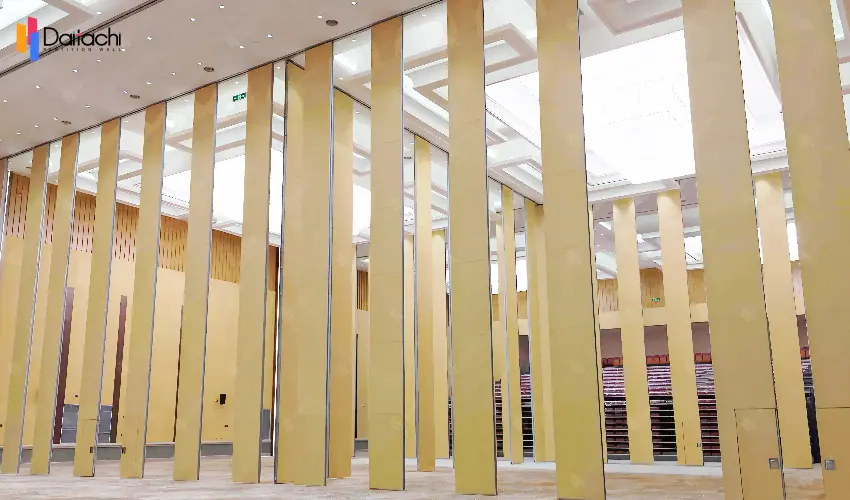
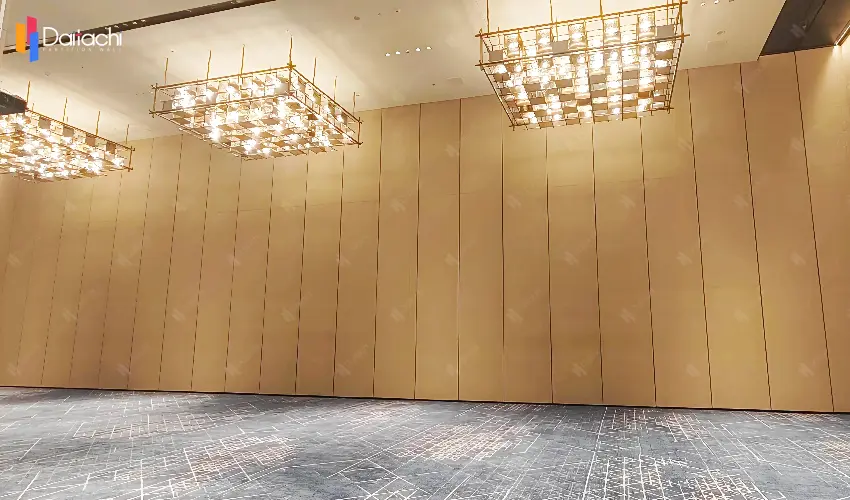
To learn about all aspects related to Movable Partition Walls, you can consult our comprehensive guide on Movable Partition Walls Hub.
Material Composition: Double-layer gypsum board with light steel keel frame
Features: Airborne sound insulation of 45-50 dB, Class A fire rating, with optional acoustic coating on the surface for enhanced sound absorption
Applications: Conference rooms, hotel banquet halls, and other spaces requiring moderate sound insulation
Material Composition: High-density mineral wool board with glass fiber cloth facing
Features: Noise Reduction Coefficient (NRC) ≥ 0.85 (excellent medium- and high-frequency sound absorption), combined thermal insulation performance; fiber protection required during installation—masks recommended
Applications: Equipment rooms, KTVs, and other environments demanding strong sound absorption
Material Composition: Polymer sound insulation felt combined with particle density board
Features: Increases sound insulation by approximately 12 dB through higher surface density; elastic connections effectively reduce sound bridging; total thickness of only 18 mm, ideal for space-constrained projects
Applications: Office partitions and open-plan apartment renovations
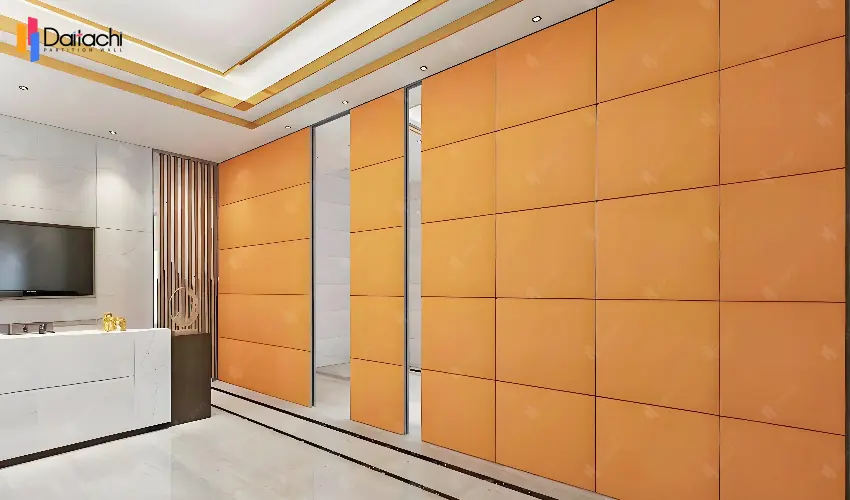
Material Composition: Centrifugal glass fiber with acrylic binder
Features: Extremely low formaldehyde emissions, compliant with international safety standards, excellent moisture resistance, and up to 85% recyclability
Applications: High-end residential buildings, medical facilities, and other environmentally sensitive areas
Material Composition: Closed-cell foam rubber with aluminum foil facing
Features: Superior impact and vibration damping performance, excellent low-temperature adaptability; attention should be paid to material aging (recommended replacement cycle of 5 years)
Applications: Isolation of vibration and noise sources such as air conditioning rooms and pump rooms
1. Airborne Sound Insulation : The ability to block airborne noise transmission through building structures, measured in decibels (dB). Higher values indicate better noise reduction performance.
2. Fire Rating : The material’s fire resistance duration. Longer fire endurance provides greater safety.
3. Environmental Performance : Primarily evaluated by formaldehyde emission levels. E0 grade is the preferred choice.
4. Sound Absorption Coefficient : Measures a material’s sound absorption capacity, ranging from 0 to 1. The closer to 1, the better the absorption performance.
Modern movable partition walls have evolved from single-function products into comprehensive acoustic system solutions. It is recommended to select and combine materials based on the specific noise spectrum of each project, while ensuring full compliance with fire safety regulations and sustainable development requirements.
Related Articles: Evaluating Sound Insulation Materials
Stc Sound Insulation Classification Analysis: a Key Indicator of Renovation Sound Insulation
Related Product: Type 100 Series Manual Sliding Partition Wall