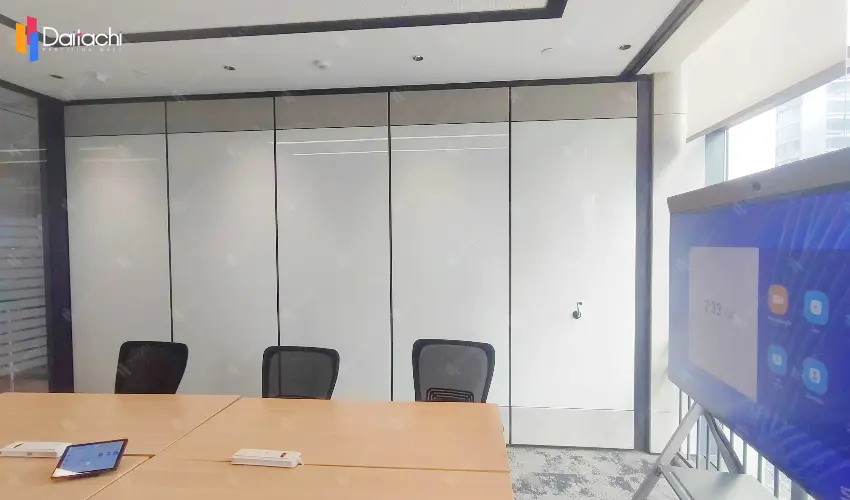
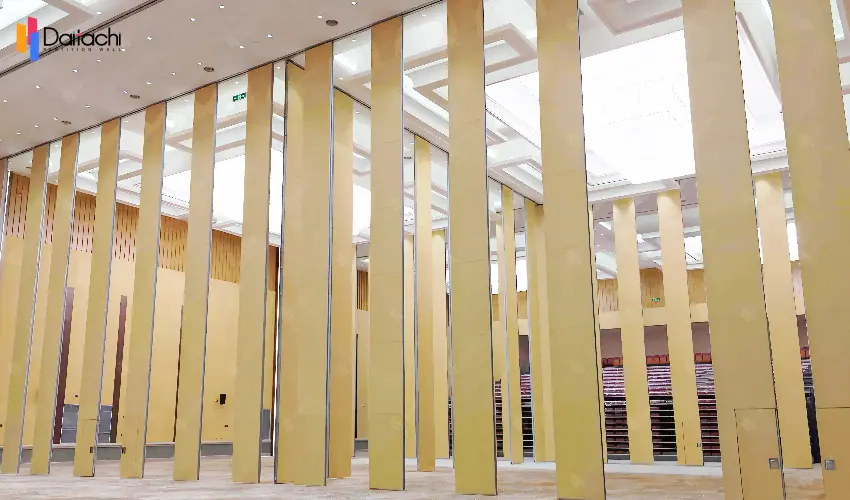
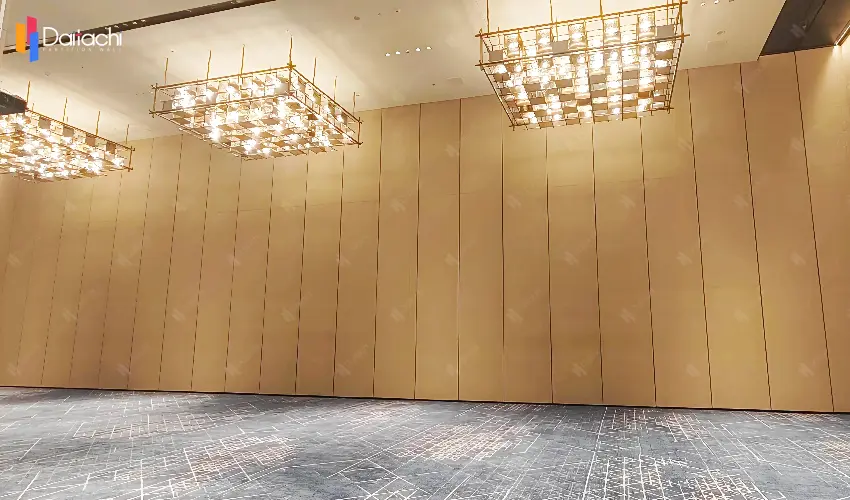
To learn about all aspects related to Movable Partition Wall, you can consult our comprehensive guide on Movable Partition Walls Hub.
Aluminum alloy partition wall: It is a lightweight material with a density of 2.7g/cm³; natural oxide film + anodizing treatment, resistant to moisture, acid and alkali; easy to cut and bend, and supports complex shapes
Steel partition wall: It is a heavy material with a density of 7.9g/cm³; it needs to be galvanized/sprayed, and stainless steel has the best corrosion resistance; it is mainly welded/bolted, and the degree of modularization is low
Antioxidation ability
Aluminum alloy: The oxide film thickness is 5-20μm. Laboratory data shows that there is no red rust in the salt spray test for 3000 hours.
Steel: Ordinary carbon steel needs to be galvanized, and the salt spray resistance time is only 720 hours; stainless steel (304) is salt spray resistant for more than 2000 hours.
Load-bearing and deformation
Aluminum alloy: The light steel keel partition wall (thickness 50mm) has a maximum load-bearing capacity of 30kg/㎡ and no sagging after long-term use. Steel: Steel frame partitions (20mm thick) can bear up to 80kg/m2, but when the thickness increases to 100mm, deformation under long-term loads is only in the millimeter range.
Fire Performance
Aluminum alloy: A non-combustible material with a melting point of 660°C. Its strength drops sharply at high temperatures and requires use with fireproof panels to achieve B1 rating.
Steel: Carbon steel has a fire resistance limit of 1.0h, while stainless steel has a fire resistance limit of 2.0h and can be used directly as fireproof partitions.
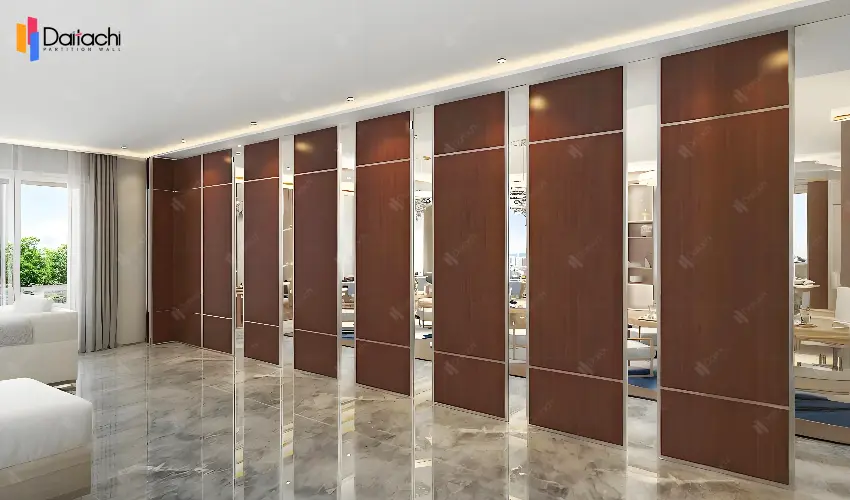
Initial Cost: Aluminum alloy partition walls are slightly more expensive than steel partition walls. The specific price depends on the material, specifications, and installation difficulty.
Maintenance Frequency: Aluminum alloy partition walls generally require cleaning every five years; steel partition walls require a re-coat of anti-rust paint every two years.
General Maintenance Methods: Inspect joints, ensure the runners are cleaned and inspected, and avoid scratching the surface with sharp objects.
Humid environments (such as bathrooms): Aluminum alloy panels should be anodized with a moisture-proof basecoat; steel partition walls should be covered with 304 stainless steel and PVC film for moisture-proofing.
High-load-bearing environments (such as industrial spaces): Aluminum alloy panels require light steel keels and double-layer gypsum board; steel partition walls require steel frame partition walls and concrete facings. A logistics center's sorting area has a load capacity of 100 kg/m2 and has met the 10-year stability standard.
For locations with strict fire protection requirements (such as hospitals): Aluminum alloy panels combined with fireproof panels achieve a B1 fire rating; steel partition walls use stainless steel frames and rock wool filling, and have passed fire safety inspections.
Preferably: For humid environments, lightweight construction, and long-term maintenance-free requirements (such as in southern coastal cities).
Steel is preferred: in dry northern regions, where high load-bearing capacity/fire resistance is required, budget is limited, and regular maintenance is acceptable (such as industrial plants).
Related Articles: How to Choose High-Quality Aluminum Alloy Movable Partition Walls?
Aluminum Alloy Movable Partition Wall: Six Key Features to Reshape Space Efficiency
Related Product : Manual Operable Partition Wall