To learn about all aspects related to Vertical Folding Partition Wall, you can consult our comprehensive guide on Vertical Folding Partition Wall Hub.
A Comprehensive Guide from safety to practical
Vertical lift walls as a fundamental part of modern-day space division, demand an approach that is able to balance functionality as well as aesthetics, safety and the long-term cost of operation. A poor design can result in operating issues, difficulties with maintenance as well as safety risks. Here are the key points to consider in a professional way for you to design an effective and long-lasting lifting partition.
The strength of a vertical wall directly impacts its use longevity and security. Key considerations during design include:
Frame Materials: Choice Choose high-strength aluminum alloy or steel frames for walls that are unaffected and solid during the lifting process. Beware of using light but flexible substances (such like ordinary plastics) for example, particularly when building large buildings and windy areas.
Wind Pressure Resistance: When a wall is required to resist winds that are lateral like for high-rise and outdoor locations the structural reinforcement or counterweights are required to increase the wind resistance. Check local standards for wind pressure to make sure the load design conforms to the standards.
Distributing Load: Installation positions of the core elements like tracks and motors should be distributed evenly to prevent the risk of a large amount of stress locally that can cause structural damage.
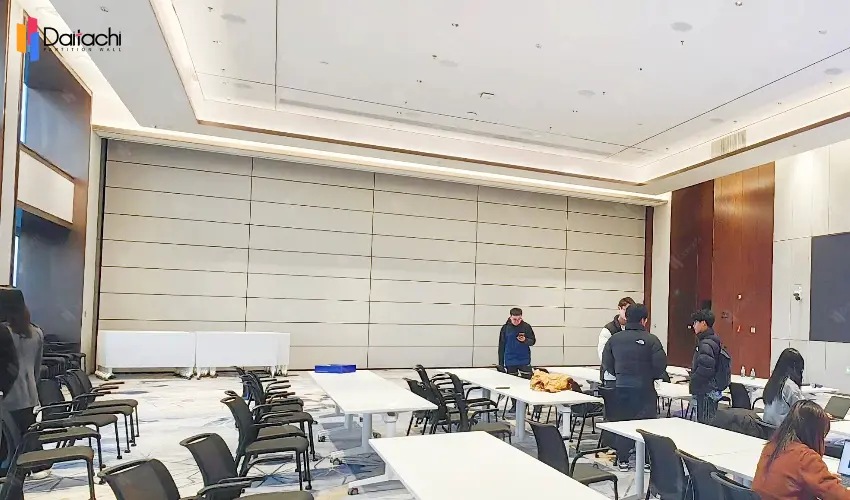
The motors and tracks form at the "heart" of the lifting wall. The design should provide low friction, a excellent precision and a longevity of service:
Track Designs: The most important thing is to have a double track structure in order to enhance the strength of the wall when lifting, and to reduce the shaking. The track's surface must be smoothed to decrease the coefficient of friction with rollers to prolong their service life. Make sure that there is access to maintenance and cleaning, so that there is no the accumulation of dust that can result in jamming.
Motor Select: Pick the right motor in accordance with the wall's weight and the wall's weight. For example, you could choose an electric motor with low power for light walls or a servo motor for walls with a lot of weight. The motor must have overload protection and protection against overheating in order to avoid damage from the excessive force or usage.
Synchronous: Control wall-mounted motors need to be accompanied by an synchronized controller that will ensure the stability of motors and avoid walls from tilting and jamming.
The recommended technical parameters: Straightness of the track 1mm/m. Motor noise 50 decibels.
The safety principle is at the forefront when designing lifting walls. Protection is essential to be reinforced on these areas:
Anti-pinch style: The strips of sealing that are flexible or anti-collision strips should be placed on the edge of the wall, to protect the injury of people or objects when lifting. The distance between tracks is not more than 5 millimeters to avoid fingers or tiny objects from being stuck.
Emergency brake device: Equipped with the manual emergency stop button and wall motion can stop immediately in the event in the event of a crisis. A few high-end models incorporate infrared sensors as well as pressure sensors that automatically identify obstructions and slow down.
Limit security: If the wall is elevated at the lowest or highest point, limit switches, either electronic or mechanical are required to stop any overtravel or derailment.
Related Articles: 7 Key Issues to Consider When Designing Vertical Lifting Walls (Part 2)
Must Read Before Installation: Is Your Building Structure Suitable for Vertical Folding Walls?