To learn about all aspects related to Vertical Folding Partition Wall, you can consult our comprehensive guide on Vertical Folding Partition Wall Hub.
Acting as the "magicians" of modern spatial design, vertical folding lift walls achieve highly efficient space utilization, flexible zone partitioning, and enhanced aesthetic quality through a deep integration of technology and design. The core technical secrets behind this innovation can be summarized in the following key aspects:
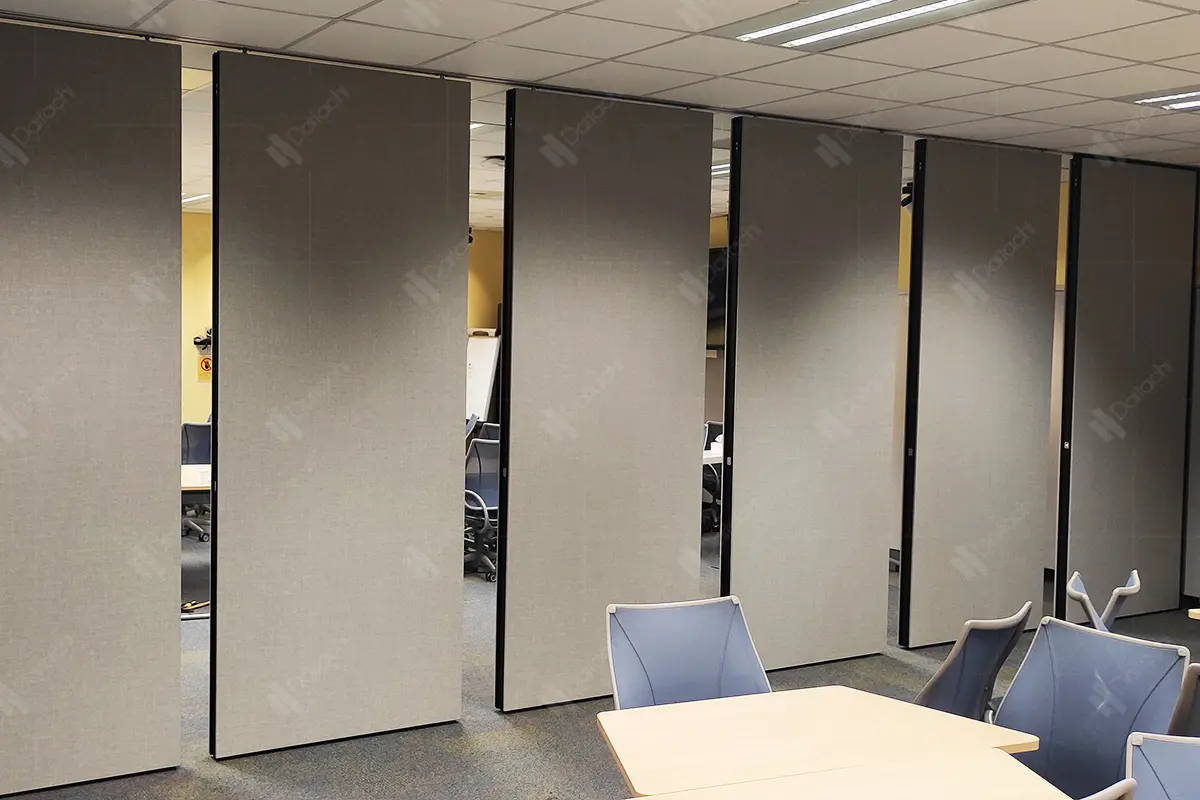
Vertical Storage Mechanism: The vertical folding lift wall employs a hinged-connection design. An electric drive system controls the wall panels, guiding them along a track to fold vertically and retract into the ceiling cavity, thereby achieving zero floor space occupancy.
Balancing Lightweight Design with Stability: The system utilizes a combination of high-strength, lightweight alloy frames and wall panels. While reducing the wall's self-weight—thereby lowering the structural load on the building—it simultaneously employs precision engineering techniques to ensure absolute stability during the folding and operation process.
Fully Automated Operation: Users can effortlessly control the wall's lifting, folding, and stopping functions via a wall-mounted control panel. The electric drive system operates smoothly and quietly, maintaining noise levels below 30 decibels to ensure a comfortable user experience.
Multiple Safety Safeguards:
Pneumatic Sensing System: Automatically detects obstacles, effectively preventing pinching injuries or collision accidents.
Triple Braking System: Integrates electromagnetic braking, hydraulic locking, and mechanical limit functions; the emergency braking distance is ≤ 0.15 meters, significantly exceeding relevant national safety standards.
Automatic End Sealing: Once the wall reaches its final position, it automatically engages an end-sealing mechanism, ensuring effective sound insulation and privacy.
Exceptional Sound Insulation Performance: Through a combination of multi-layer composite structures (e.g., glass + sound-absorbing cotton + metal frame) and a sealed design, the system achieves a Sound Transmission Class (STC) rating of up to 60. This fully satisfies the rigorous privacy requirements of environments such as conference rooms and hotel guest rooms.
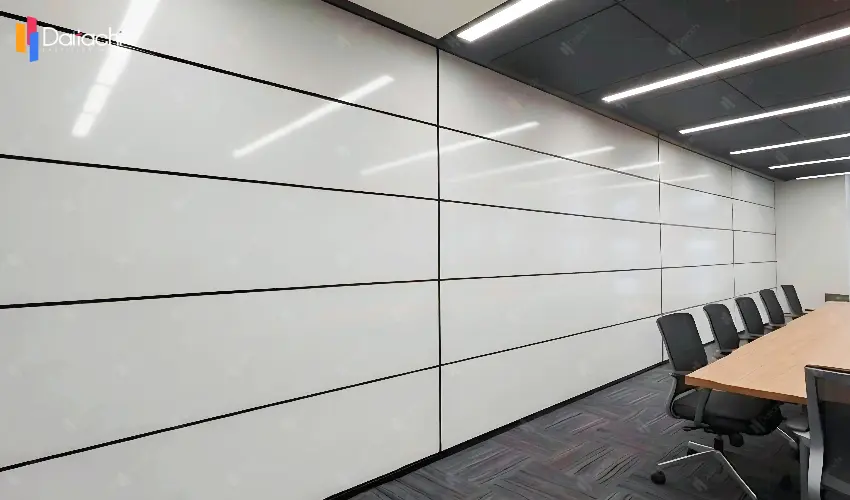
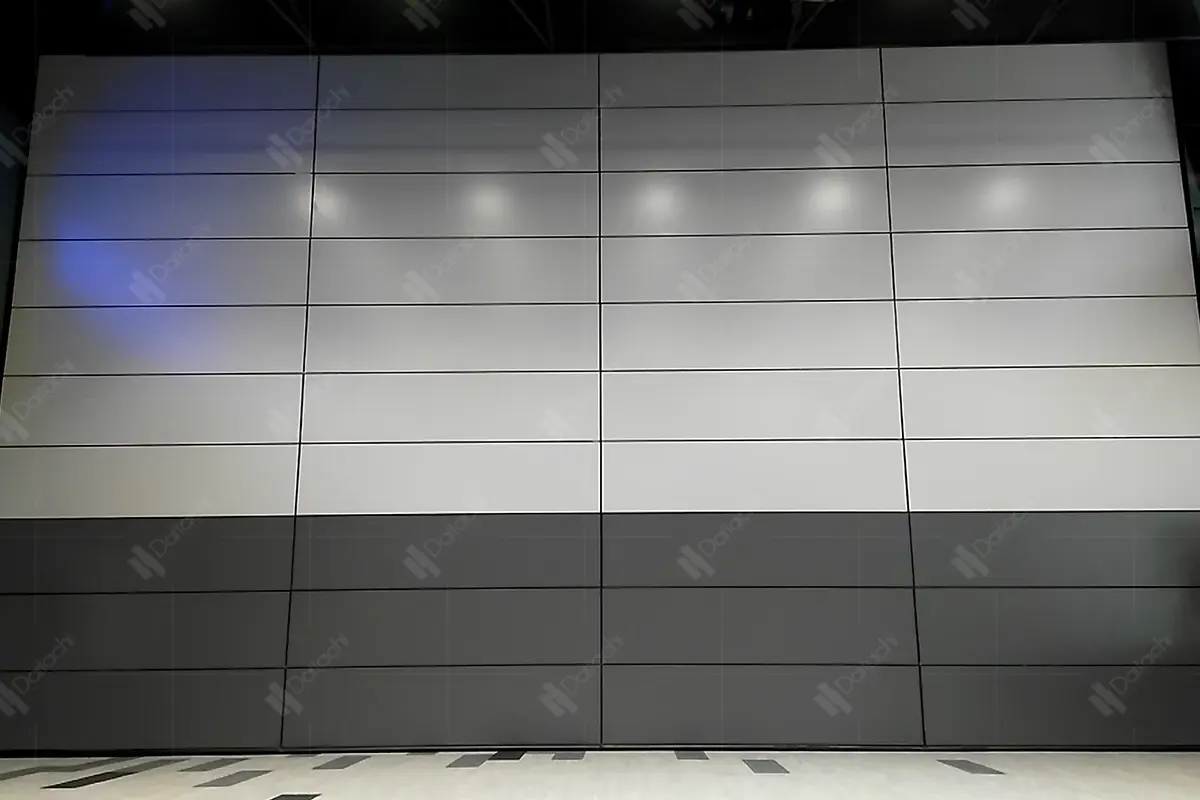
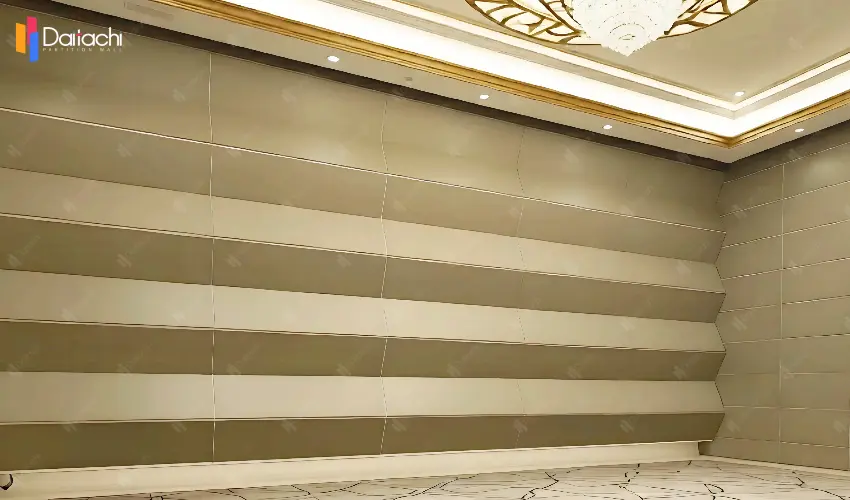
Non-Transparent Design: The wall panels are constructed from non-transparent materials. While effectively partitioning space and maintaining interior privacy, they avoid the sense of confinement often associated with traditional partition walls, thereby visually preserving the openness and spaciousness of the room.
Invisible Design: When in its retracted state, the wall achieves a seamless, integrated connection with the ceiling or adjacent walls. Its surface finishes are meticulously treated—for instance, by applying paint that matches the building's overall color palette or by incorporating wood veneers—thereby completely eliminating any visual incongruity.
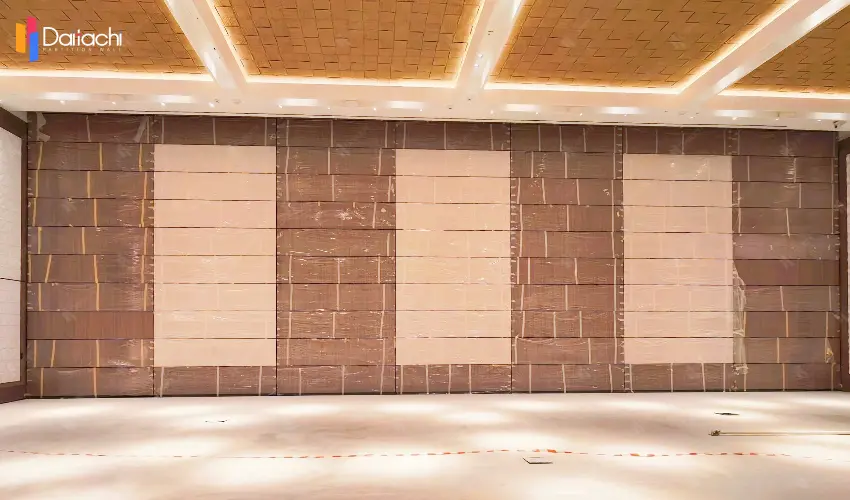
Personalized Customization: The system offers a rich array of finish options and supports custom color services, catering to diverse aesthetic design requirements and ensuring perfect harmony and integration between the wall and its surrounding interior environment.
With the continuous development of IoT technology and materials science, future vertical folding walls will undoubtedly be more intelligent and personalized, becoming an indispensable "space magician" in modern architecture and a technological key to unlocking future spatial experiences.
Through structural innovation, intelligent control, and multifunctional integration, vertical folding and lifting walls redefine the infinite possibilities of space partitioning. They are not only tools for improving space utilization but also masterpieces that blend cutting-edge technology with artistic aesthetics, comprehensively enhancing the aesthetic value of the space and the user experience.
Related Articles: Analysis of Vertical Lift Partition Wall Characteristics
Key Considerations When Choosing a Vertical Lifting Wall System