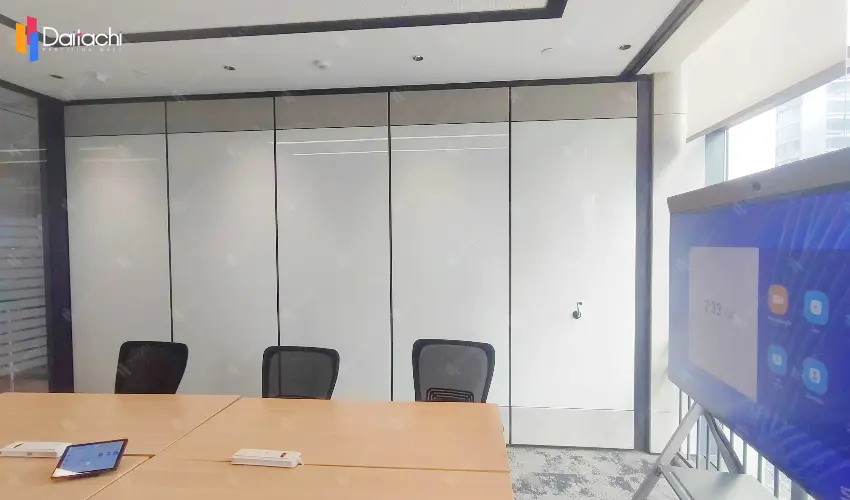
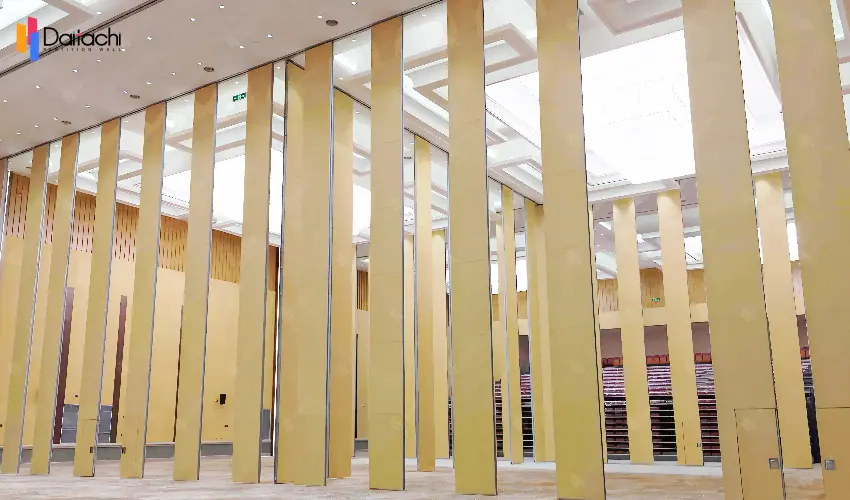
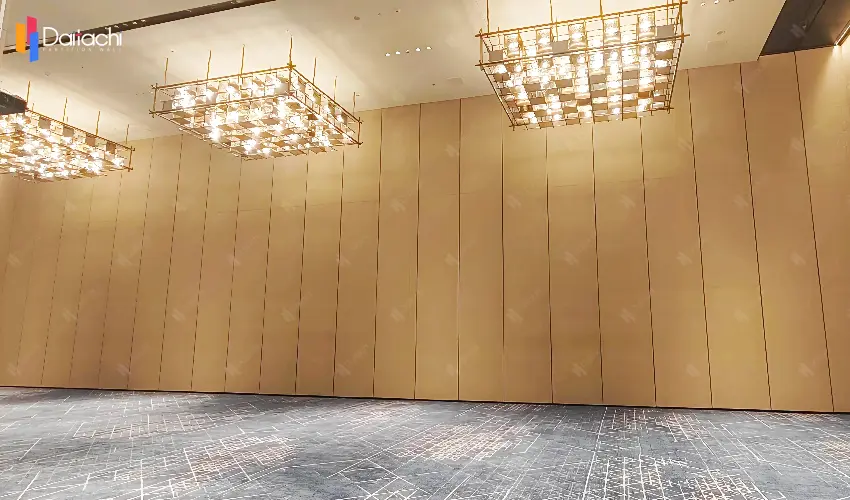
To learn about all aspects related to Vertical Folding Partition Wall, you can consult our comprehensive guide on Vertical Folding Partition Wall Hub.
In contemporary interior design, decorative panels have long transcended their role as mere "functional materials." Through the clever fusion of materials, colors, textures, and craftsmanship, they have emerged as a core medium for conveying spatial aesthetics and personal expression. The following analysis explores three key dimensions—design logic, combination principles, and trend insights—to reveal how personalized decorative panel combinations can be utilized to create stunning interior aesthetics of retractable room partitions.
Spatial Storytellers: Decorative panels serve as the primary "garment" of a space; their materials and colors directly determine the room's overall tone. For instance, dark wood finishes can evoke a sense of professional gravitas suitable for business environments, while light-colored matte panels convey a warm, cozy, and home-like atmosphere.
Style Customization Tools: From the solid-color flat panels of Minimalism to the rugged concrete textures of Industrial style, and extending to landscape-inspired patterns found in New Chinese aesthetics, the rich diversity of decorative panels makes them instrumental in realizing specific design styles.
The Balance of Function and Aesthetics: Decorative panels must strike a balance between utility and ornamentation. For example, in humid areas, waterproof PVC or sintered stone panels may be chosen; conversely, in high-traffic public spaces, durable metal composite panels are more commonly employed—all while maintaining the overall visual harmony of the space.
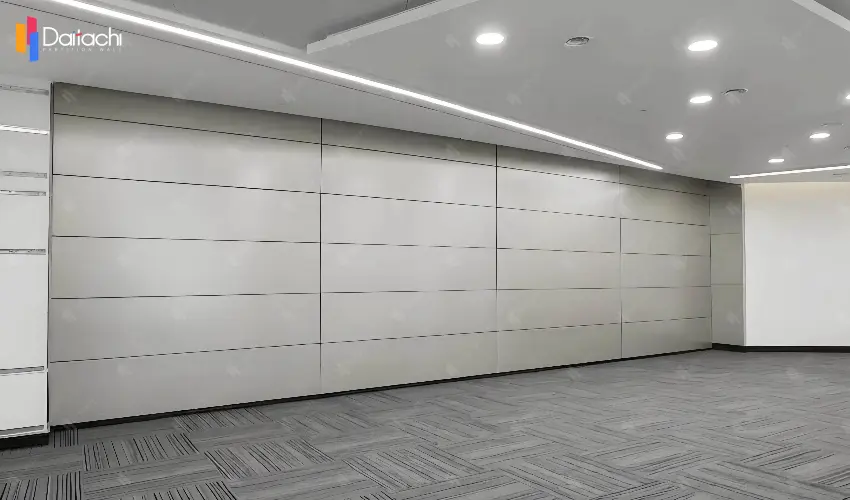
Color Coordination: Establishing Layers and Gradual Effects
Base Colors + Accent Colors: Anchor the design with neutral tones, then introduce 10–20% bright accent colors to serve as visual focal points, thereby preventing visual fatigue.
Gradient Transitions: Create a sense of spatial flow through variations in hue and saturation within a single color family, or through the juxtaposition of contrasting materials.
Abstract Artistry: Geometric lines, abstract patterns, or brushed metal textures are particularly well-suited for spaces with a modern, high-tech aesthetic, serving to stimulate visual interest and engagement.
Proportion and Scale: Flexibly Applying the Golden Ratio
Large-Scale Application: When utilizing a single material across expansive surfaces—such as walls or floors—consider employing linear segmentation or the clever use of "negative space" to break up any sense of monotony.
Subtle Accents: Integrate unique decorative panels into specific elements—such as cabinetry, door fronts, or furniture surfaces—to create a "finishing touch" effect that elevates the overall design.
Interplay of Light and Shadow: The "Second Dimension" of Materials
Matte Materials: These absorb light and are the ideal choice for cultivating a sense of understated luxury—examples include velvet finishes or brushed metals.
High-Gloss Materials: These reflect light, enhancing the sense of spaciousness and openness within a room—examples include mirrored surfaces or high-gloss lacquered panels—though care should be taken to avoid excessive glare.
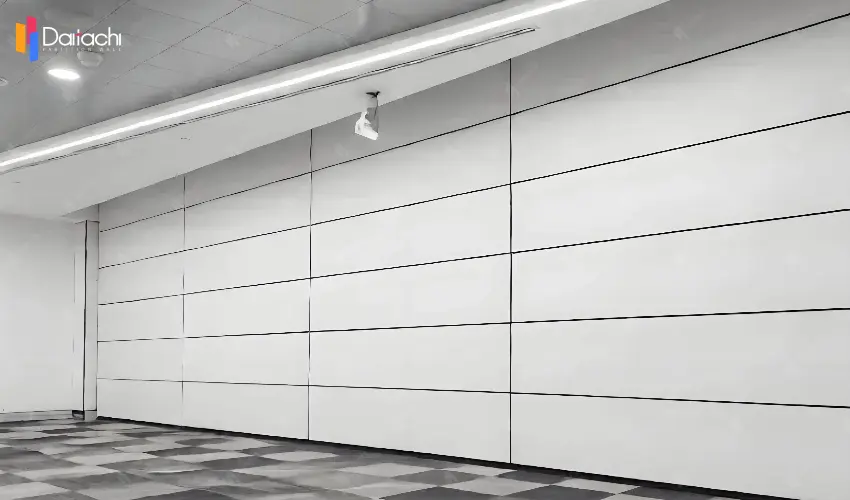
Smart Interaction: The fusion of decorative panels with technology—such as LED panels with adjustable color temperatures, metal finishes featuring touch-sensitive controls, or smart walls embedded with sensors—achieves a dual enhancement in both aesthetics and functionality.
Expression of Modern Cultural Symbolism: Traditional elements are reinterpreted through modern craftsmanship—for instance, using laser engraving techniques to render traditional landscape motifs on metal panels, or employing 3D printing technology to replicate patterns found in ancient architecture.
Modularity and DIY Trends: Modular panel systems feature interlocking and replaceable designs, allowing users to freely combine various elements according to their specific needs. This approach satisfies the dual desire for both personalization and flexibility, making it particularly popular among the younger generation.
The selection of personalized decorative panels is not merely a product of technology, but an extension of art itself. From color palettes to textural nuances, and from functional utility to emotional resonance, every decorative panel tells a unique story about the space it inhabits. In the future—driven by continuous breakthroughs in materials science and design philosophy—decorative panels will further blur the boundaries between art and everyday life, becoming an indispensable element of our living environments.
Related Articles: Vertical Folding and Lifting Wall Panels: Reshaping Space Aesthetics – An Artistic Choice
the "invisible" Design and Architectural Aesthetics of Vertically Folding Walls