To learn about all aspects related to Movable Partition Wall, you can consult our comprehensive guide on Movable Partition Walls Hub.
Modern commercial and public‑sector buildings increasingly rely on movable partition walls to solve complex space‑planning challenges. Instead of committing to permanent fixed‑wall layouts, project owners, architects and contractors can select from multiple movable wall types to meet specific requirements for acoustic privacy, layout flexibility, light transmission and storage constraints. This practical guide outlines seven common types of movable partition walls, explaining core features, strengths and ideal use‑cases, to help you pick the most suitable movable partition system for your building project.
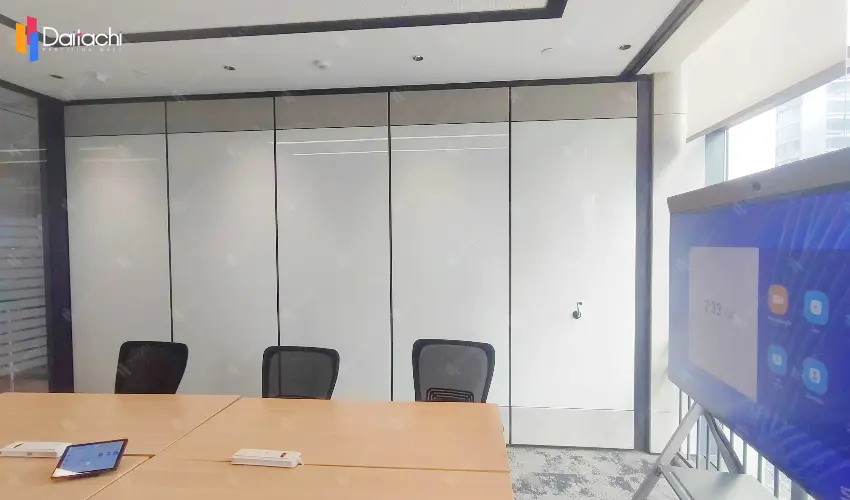
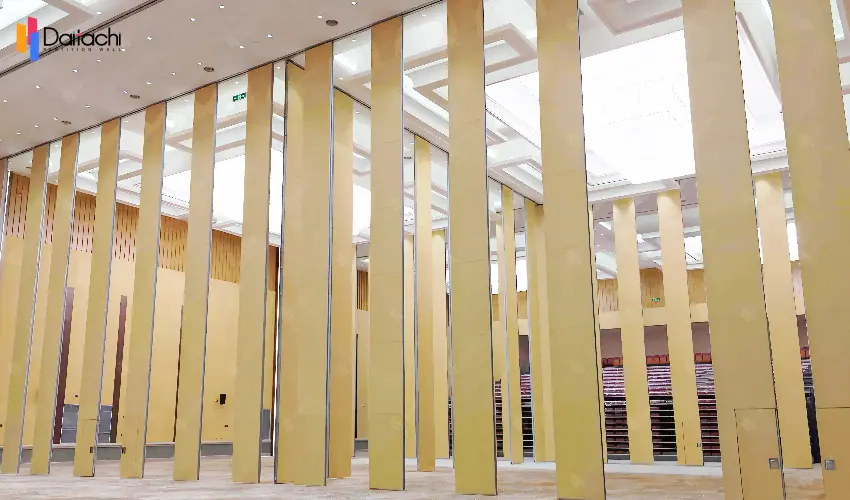
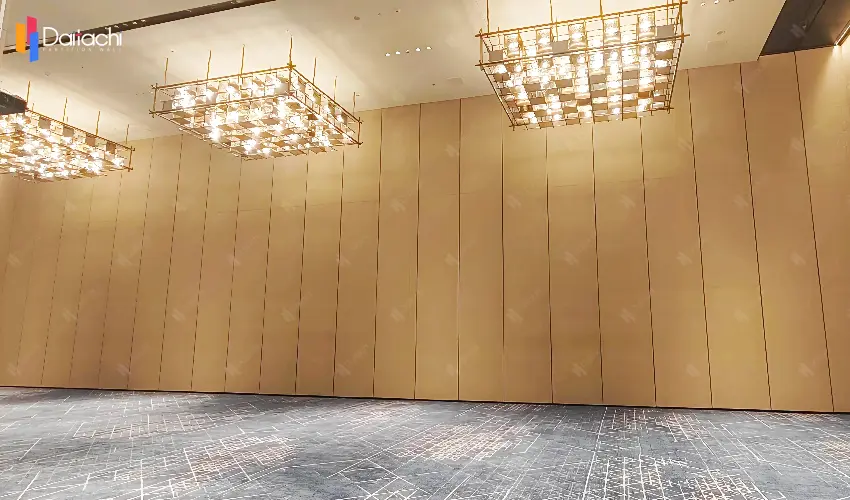
Also widely known as movable acoustic walls, operable partition walls consist of heavy‑duty individual panels that glide along overhead ceiling‑hung tracks. Panels lock and interlock together to create a continuous, solid sound‑insulating barrier. These commercial‑grade partition systems support manual or semi‑automatic operation. Custom options include integrated pass‑through swing doors and glass inserts to boost natural light flow within divided zones.
Core strengths: High‑level sound insulation, stable mechanical locking, flexible customisation.Best for: Conference centres, hotel banquet halls, university classrooms and other venues demanding reliable acoustic separation.
Folding partition walls use hinge‑connected panels that operate in accordion style. When open, panels fold and stack compactly to one side or both sides of the opening. Most folding partition systems are manually operated for quick layout adjustment. They deliver moderate acoustic performance and support diverse surface finishes such as laminate and fabric to match interior design themes.
Core strengths: Fast deployment, compact side stacking, competitive project cost.Best for: Restaurants, co‑working hubs, multi‑purpose community rooms and mid‑traffic shared venues.
Movable sliding glass partition walls prioritize visual openness and contemporary modern aesthetics. Product ranges include frameless glass designs as well as framed acoustic glass variants. Buyers may select clear glass, frosted privacy glass or switchable smart glass to balance transparency and visual confidentiality as project needs dictate.
Core strengths: Maximise natural light, sleek minimalist appearance.Best for: Corporate offices, product showrooms, retail spaces and creative studio environments.
Demountable partition walls belong to fully modular interior wall systems. All components can be rapidly assembled, disassembled, relocated and reused for new fit‑out phases. Unlike permanently fixed drywall construction, demountable partitions cause minimal building damage during reconfiguration, making them well‑suited for leased commercial premises.
Core strengths: Reusability, non‑destructive installation, easy future layout modification.Best for: Tenant improvement projects, corporate office fit‑outs, flexible leased workspaces.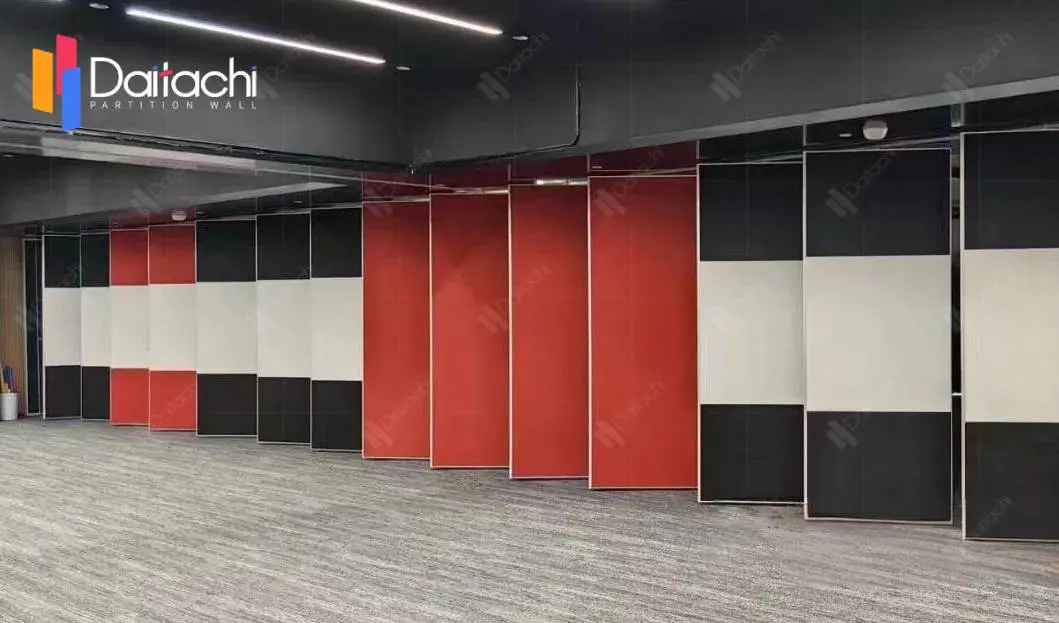
Sliding partition walls feature independent panels travelling along fixed overhead tracks without accordion‑style folding. Delivering a clean minimalist look, many sliding partition configurations incorporate soft‑close hardware for quiet, smooth panel movement. Panels slide sideways to designated storage positions when full open‑plan space is required.
Core strengths: Simple operation, sleek visual lines, low‑noise movement.Best for: Small‑to‑medium meeting rooms, classrooms and general flexible commercial areas.
Fabric or curtain‑style movable partitions represent a lightweight, budget‑friendly temporary zoning solution. Installation work is quick and straightforward. However fabric partitions provide limited noise reduction and cannot deliver full acoustic privacy compared to hard‑panel operable wall systems.
Core strengths: Low investment, fast setup, easy to reposition.Best for: Art studios, fitness gyms, temporary exhibition halls and short‑term event zoning.
Vertical folding retractable walls, also referred to as vertical lift walls, are premium fully‑automated movable partition solutions. Instead of stacking sideways, panels lift upwards and retract into concealed ceiling pockets when not needed. Built‑in obstacle detection sensors enhance operational safety. This trackless design preserves complete floor clearance for pedestrian and equipment movement.
Core strengths: Zero side‑storage footprint, full automation, premium high‑end visual effect.Best for: Auditoriums, large multi‑purpose halls, modern classrooms and luxury premium office projects.
Choosing between different movable wall types requires evaluating your actual project constraints rather than only comparing product appearance. Use these practical decision‑making criteria for your specification:
Acoustic requirements: Confirm your target sound‑insulation performance. Decide whether you need high‑grade acoustic separation or only basic visual zoning.
Frequency of use: Assess how often you will reconfigure layouts: daily, weekly or on a seasonal basis. High‑frequency applications benefit from smoother, more durable hardware.
Design and aesthetics: Define whether partitions should blend subtly into existing interiors or act as intentional design focal points.
Space and storage limits: Check available room space. Confirm if you have wall space for side‑panel stacking, or if vertical ceiling‑pocket storage is necessary.
Budget and long‑term value: Fully‑automated and high‑acoustic partition models carry higher upfront costs yet deliver superior performance and extended service life for heavy‑use venues.
If you are sourcing reliable custom movable partition wall solutions for commercial projects, Bakerwall delivers end‑to‑end service covering design, manufacturing and installation guidance. Our movable wall product portfolio spans manual, semi‑automatic and fully‑automatic vertical retractable partition systems. Supported by international ISO certifications and independent acoustic testing reports, Bakerwall supplies durable movable partition walls for offices, hospitality venues, educational facilities and public buildings worldwide.
There is no universal movable partition wall that fits every space. By prioritising your acoustic needs, available storage space and project budget, you can select the ideal movable partition type to unlock flexible space for your commercial building.
Related Articles: Movable Partition Wall Series: in-depth Analysis of Models 65, 85, and 105
Flexible Office Space Design: Creating Adaptable Workplaces with Movable Partition Wall Systems