To learn about all aspects related to Movable Partition Wall, you can consult our comprehensive guide on Movable Partition Walls Hub.
Within today’s widespread open‑plan workplace, noise disturbance, insufficient privacy and constant distractions have become major pain points holding back employee output. As flexible space‑dividing hardware, movable office partition walls can foster better team collaboration while optimising overall working experience. Drawing upon environmental‑psychology theories, real‑world project cases and data‑backed research, this article analyses the dual‑sided influence of mobile office partitions on workforce productivity and shares practical space‑optimisation advice.
1. Reduced Noise Interference Improves Concentration by 30%+
BBC News reported that "professors at the University of Sydney found that approximately 50% of people working in fully open offices are dissatisfied with sound privacy." Noise in open offices (such as phone calls and conversations) can increase employee error rates by 67% (Source: Acoustical Society of America). Mobile partitions reduce sound transmission through physical barriers. Partitions made of sound-absorbing materials (such as polyester fiber and honeycomb core panels) can reduce noise by 20-30 decibels.
2. Flexible Space Division to Adapt to Diverse Work Modes
Movable partitions allow for quick reorganization of office areas to meet the needs of different scenarios:
Independent Focus Zones: Provide private spaces for tasks requiring deep thinking (such as programming and design).
Collaborative Discussion Zones: Remove partitions to create open areas for team brainstorming.
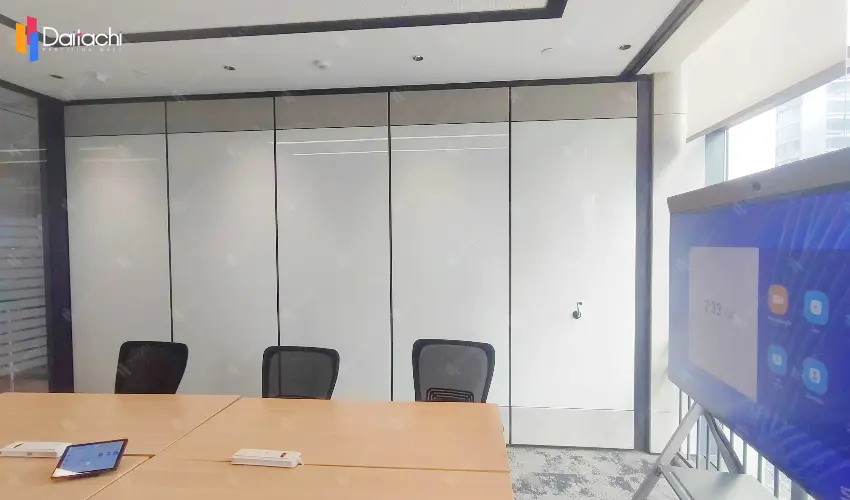
Ad-hoc Meeting Areas: Use partitions to create small meeting rooms, reducing booking wait times.
Data: Flexible workspaces can increase employee satisfaction by 40% and reduce cross-departmental communication costs by 15% (Source: Harvard Business Review).
3. Enhanced Privacy and Reduced Psychological Stress
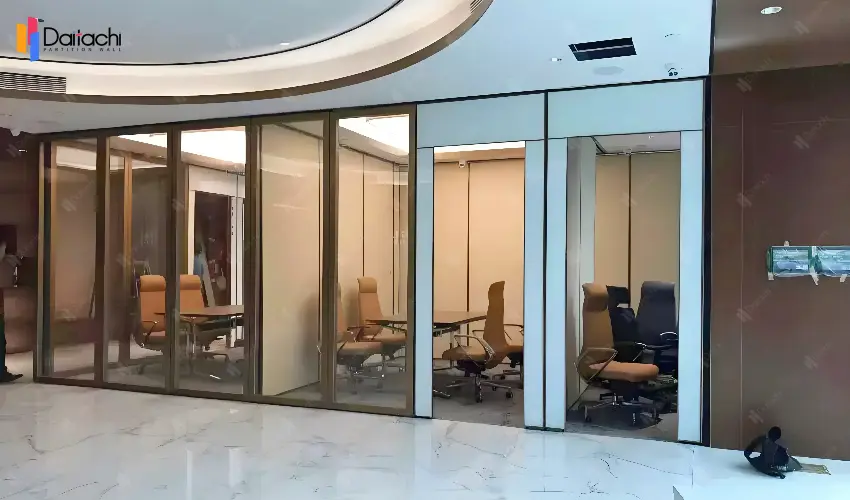
Exercising a constant state of being watched can cause anxiety and reduce motivation. Movable partitions, with their low-height design (1.2-1.5 meters) or transparent frosted finish, provide a psychologically safe boundary while ensuring visual transparency. User Feedback: An employee at a financial company said, "Partitions make me feel like I have my own corner, and I can relax more easily even when handling sensitive tasks."
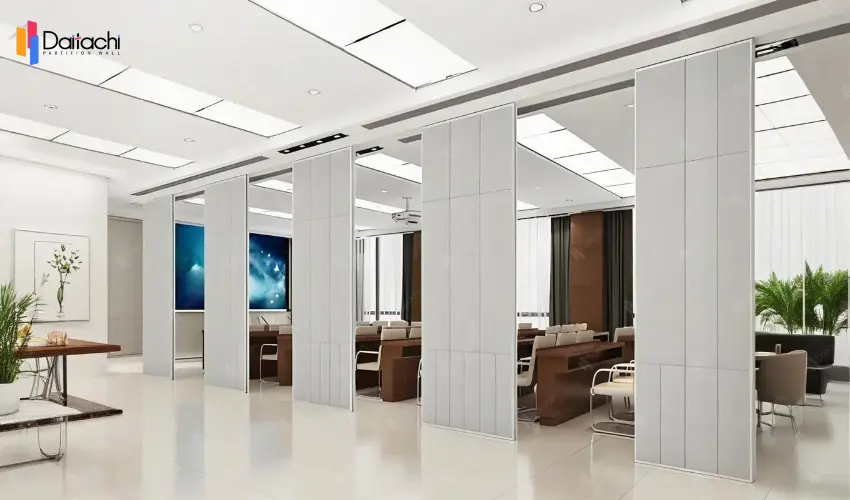
1. Excessive Enclosure Hinders Collaboration
If partitions are too high (e.g., over 1.8 meters) or completely opaque, they can hinder informal communication between teams and diminish the collaborative benefits of an open office.
Solution: Use partitions with adjustable transparency (such as motorized dimming glass) or a combination of low partitions and greenery to balance privacy and openness.
2. Frequent Movement Causes Operational Confusion
If the partition system is complex (e.g., requiring multiple people to dismantle, or track jams), employees may avoid adjusting the space due to the hassle, resulting in wasted resources.
Optimization Suggestions: Choose a lightweight, modular design that can be moved or folded by a single person. Equip it with an intelligent track system that supports one-touch positioning and locking, reducing operation time.
3. Visual Clutter Impacts Psychological Comfort
Low-quality partitions (e.g., clashing colors, cheap materials) can detract from the aesthetics of the office environment and even cause employee irritation. Design Principles: Maintain a consistent partition color palette with your company's branding (e.g., neutral gray or wood grain). Avoid excessive decoration and maintain clean lines and a modern feel.
Materials include non-glass materials (e.g., aluminum alloy + honeycomb panels), sound-absorbing fabrics, and eco-friendly panels (to reduce formaldehyde risk). A low-height height (1.2-1.5 meters) is preferred, balancing privacy and visual transparency. A modular design allows for folding/lifting, enabling quick reconfiguration. Over time, the overall cost of movable partitions is 20%-35% lower than fixed walls (including the benefits of increased space utilization).
Well-designed movable partitions can significantly improve employee efficiency and satisfaction through noise control, spatial adaptability, and psychological optimization. The key is to prioritize employee needs and divide partition areas according to work type. Make every partition a driver of efficiency.
Related Articles: Reshaping Office Paradigms with Movable Partition Walls: Designing Inspiring and Collaborative Works
Flexible Office Space Design: Creating Adaptable Workplaces with Movable Partition Wall Systems
Modular and Sustainable Office Design: Building Flexible Workspaces for the Future