To learn about all aspects related to Movable Partition Walls , you can consult our comprehensive guide on Movable Partition Walls Hub.
Sound insulation is one of the most important performance factors when choosing a movable partition wall. While many people focus only on the materials used, the structural design of the partition system plays an equally important role in determining its acoustic performance.
The thickness, internal layers, sealing system, connection method, and vibration control design all influence how effectively a movable partition wall blocks sound transmission.
In this article, we will explore the key structural factors that affect sound insulation performance and explain how proper engineering design can create quieter and more comfortable spaces.
The thickness and internal structure of a movable partition wall directly influence its ability to reduce sound transmission.
A thicker partition structure generally provides better sound resistance because it increases the barrier between two spaces. However, thickness alone is not enough. A well-designed multi-layer structure can achieve better acoustic performance by combining different materials with different sound control functions.
For example, a composite structure using external panels, sound insulation materials, and internal absorption layers can reduce sound transmission more effectively than a single-layer panel.
For commercial applications such as conference rooms, hotels, and training centers, choosing the correct structural design is essential to achieve the required acoustic performance.
One of the most effective structural methods for improving sound insulation is creating separation between wall layers.
A double-layer movable partition system uses two independent structural layers with an internal cavity. This air space helps reduce direct vibration transfer and weakens sound wave transmission.
The combination of:
Double panel layers
Internal acoustic filling materials
Proper cavity spacing
Creates a more effective sound insulation barrier.
This design principle is commonly used in spaces where privacy is important, such as meeting rooms, VIP rooms, and commercial facilities.
Even a high-quality partition wall can lose acoustic performance if the sealing design is poor.
Sound can easily pass through small gaps around:
Panel connections
Floor and ceiling joints
Vertical edges
Moving mechanisms
Therefore, professional movable partition walls require high-performance sealing systems.
The use of acoustic seals, compression strips, and precise connection systems helps prevent sound leakage and improves overall sound insulation performance.
A complete sealing design is one of the key factors that separates standard partitions from high-performance acoustic partition systems.
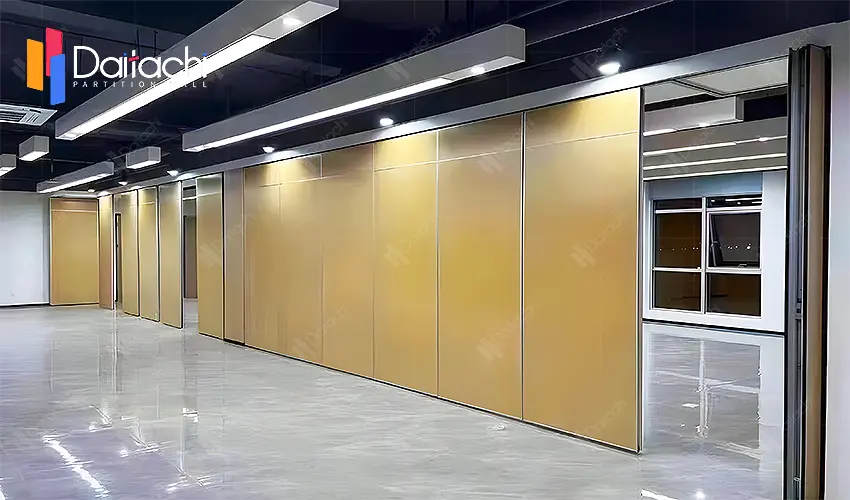
The materials inside the partition wall structure also affect acoustic performance.
Common sound-control materials include:
Rock wool
Glass fiber
Polyester acoustic cotton
Sound insulation felt
These materials work by absorbing sound energy inside the wall cavity and reducing vibration.
A properly designed combination of sound absorption materials and structural layers creates a "blocking + absorbing" acoustic system, improving both sound isolation and room comfort.
Sound is not only transmitted through the air. Vibrations traveling through solid structures can also reduce sound insulation effectiveness.
Flexible connection systems help interrupt vibration paths and reduce structure-borne noise.
Important design elements include:
Elastic sealing materials
Vibration damping layers
Flexible connection components
These features are especially important in high-performance movable partition applications where quiet environments are required.
Even the best-designed movable partition wall cannot achieve expected sound insulation performance without correct installation.
Important installation factors include:
Accurate measurement
Proper track alignment
Correct sealing adjustment
Professional commissioning
Small installation errors may create gaps that reduce acoustic performance.
Therefore, professional installation is an essential part of achieving the designed sound insulation level.
What factors affect the sound insulation performance of movable partition walls?
The main factors include wall thickness, internal structure, sealing design, acoustic materials, vibration control, and installation quality.
Does a thicker movable partition wall always provide better sound insulation?
Not necessarily. A properly designed multi-layer structure with acoustic materials can provide better performance than simply increasing thickness.
Why is sealing important for movable partition walls?
Sealing prevents sound leakage through gaps between panels, floors, ceilings, and connection points.
Can movable partition walls provide privacy for meeting rooms?
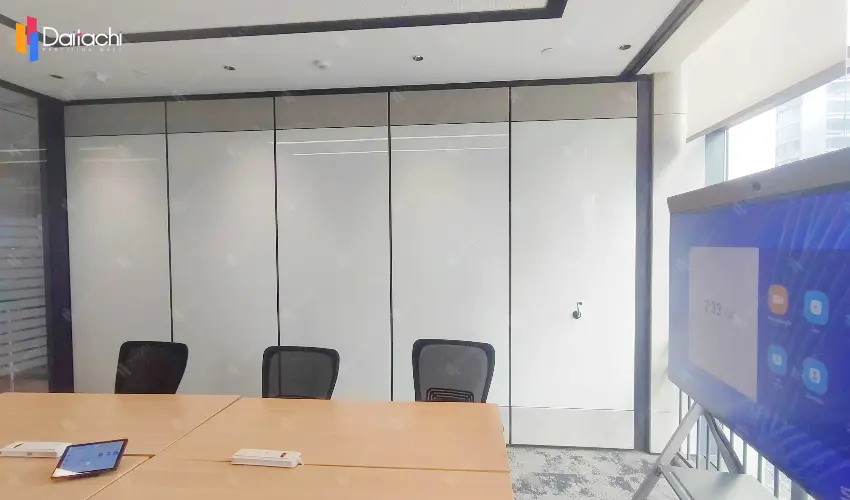
Yes. High-performance movable partition systems are commonly used in meeting rooms, hotels, offices, and other spaces requiring acoustic privacy.
Related Article : Manual Movable Partition Wall Installation Steps and Precautions