An Architectural Mechanism of Privacy, Adaptability, and Acoustic Intention
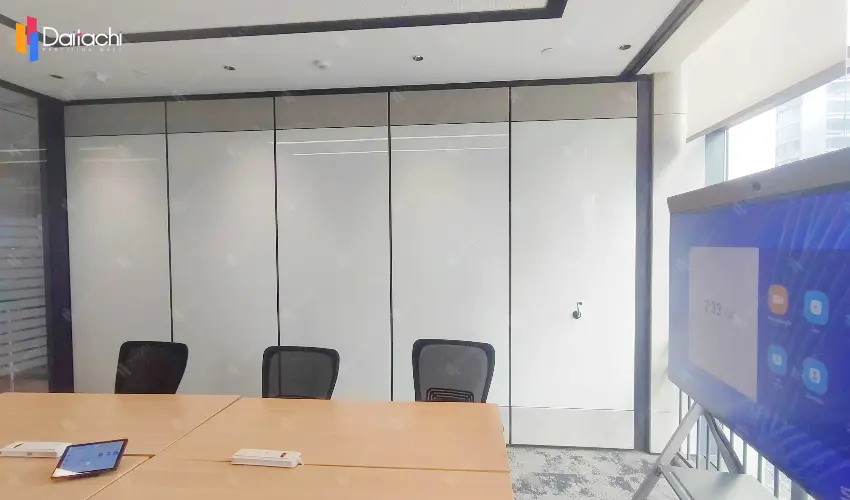
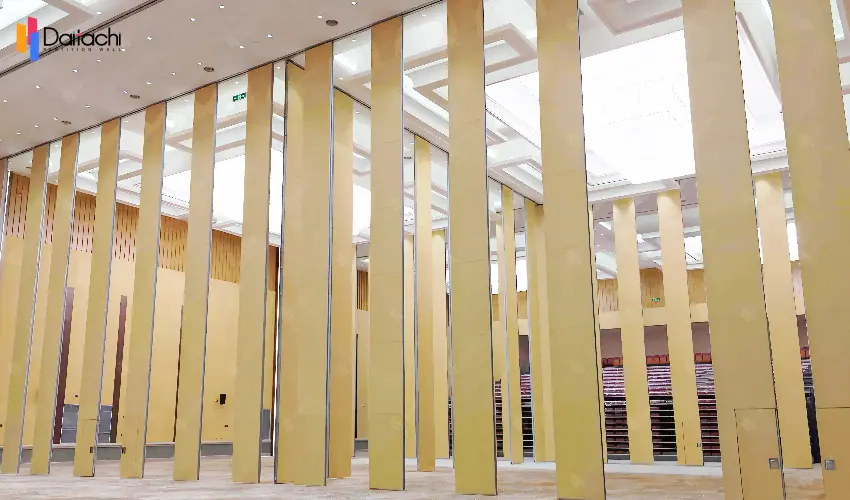
In the evolution of modern office, separation is no longer an act of isolation, but a reconfiguration of possibility. The semi-automatic operable partition wall for office functions as both infrastructure and instrument—a mediator between openness and enclosure, where spatial definitions shift in response to the rhythm of use.
At its core, this electrical movable wall system enables the simultaneity of collaboration and confidentiality: two adjacent meetings, distinct in voice and vision, can unfold without interference. Embedded with high-density acoustic rock wool and an advanced vertical interlocking sealing system, it achieves up to 54dB of sound insulation—effectively shielding human conversation, collaborative discussions, or low-volume background noise.
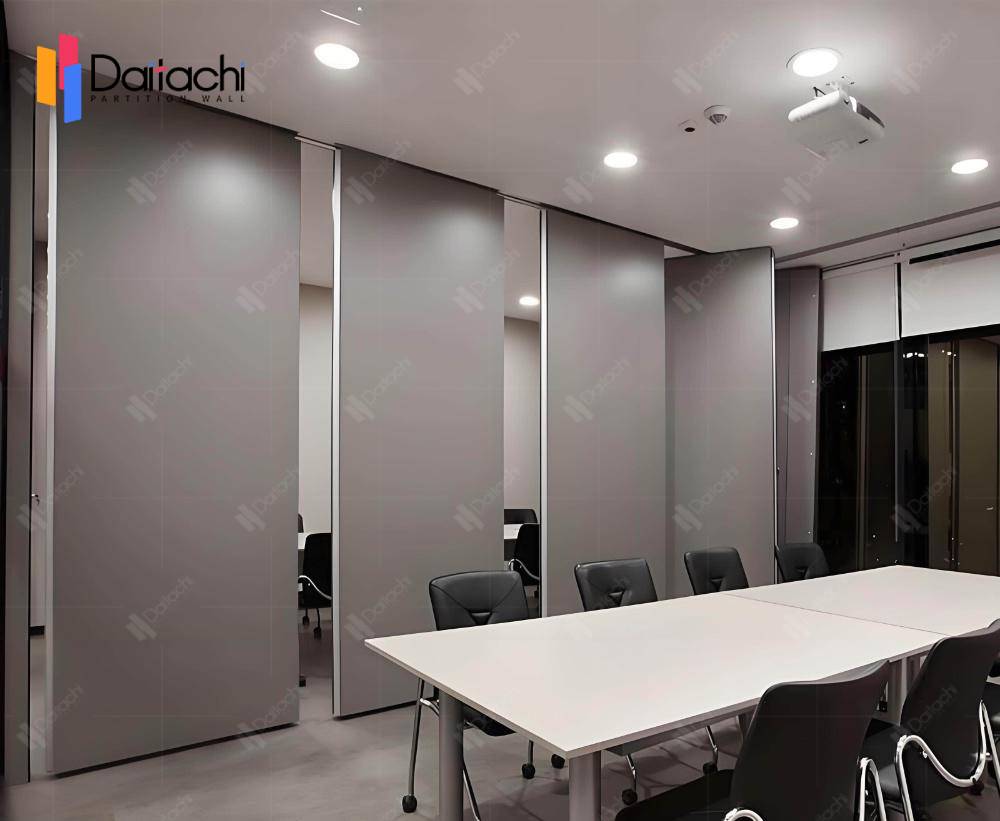
The top and bottom horizontal mechanical seal enhances both mobility and acoustic performance, activating a smooth transition between spatial states. The streamlined panel stacking system allows swift retraction and discreet storage, ensuring uninterrupted spatial transitions.
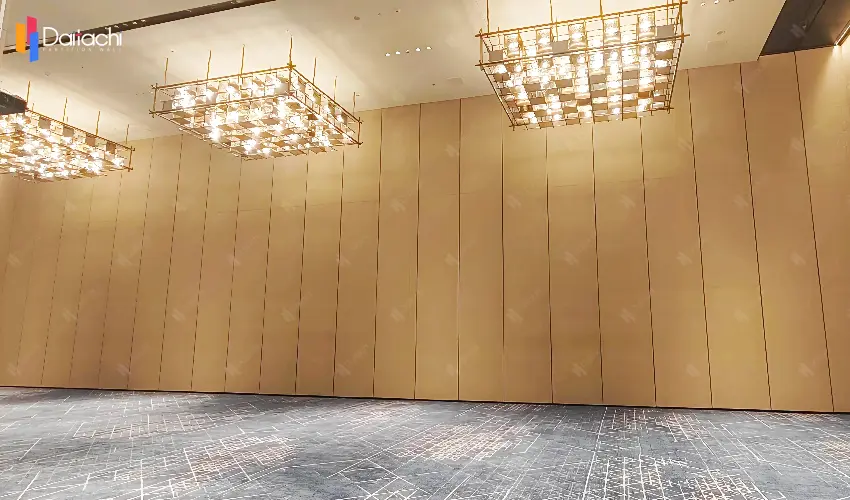
Yet this modern office electric partition wall is more than a tool of division. It is a responsive design element, capable of synchronizing with architectural language and design intent. Through its seamless surface finish and minimalist materiality, it becomes an unobtrusive extension of the interior space—asserting presence only when called upon.
In workplaces where function meets identity, the semi-automatic moving room partition wall becomes a canvas for flexibility. It reflects the duality of focus and flow, of stillness and movement—facilitating closed-door concentration while allowing the spatial infrastructure to adjust, reconfigure, accommodate change with the needs of its users.
This is not just a movable office divider partition wall. It is a manifestation of intelligent spatial agency, engineered for the temporal choreography of modern office life. Its presence affirms that privacy need not compromise openness, and that design—when paired with intention—can be as fluid as thought itself.