To learn about all aspects related to Vertical Folding Partition Wall, you can consult our comprehensive guide on Vertical Folding Partition Wall Hub.
The system for sealing the retractable folding wall achieves effective noise insulation, dust protection and protection of privacy through the use of a multi-layered structure and an intelligent control system. The fundamental mechanisms of the wall could be described as follows:
Technology for dynamic sealing strips: If the vertical lift wall is shut, a perfect fitting is made possible by an automatic sealer device at the end. The strips of high-elasticity are placed along the sides of the wall system creating a continuous seal across the wall's edges. When combined with a pressure-design which ensures an even pressure distribution in closed areas to block airflow and transmission. A few products also come with fin-shaped, co-extruded intermediate seal strips for further the airtightness.
Modular seal groove design: These grooves are placed at the junction between the frame of the wall and ceiling, using the embedded sealing material that is compressible. As the wall is lower and the strip of sealing is stretched, creating the first wall; at simultaneously, a precise connection between the frame the track minimizes gaps, creating a physical wall.
Innovation in material technology enhances the sealing efficiency: Low thermal conductivity material as well as thermal break strip filling technology can be used to decrease energy transfer efficiency. By optimizing the structure of the thermal break zone and preventing the exchange of heat between outdoors and indoor environments as well as reducing condensation, and ensuring longevity of the seal.
Pressure sensing as well as automatic compensation: Pressure sensors integrated into the system are able to monitor the condition of compression in the strip of sealing at a real-time rate. When an unusual pressure is detected it automatically alters the wall's location or triggers the strip of sealing to expand, which ensures that the seal is effective. As an example, for lab applications for medical this technique lets the wall maintain the STC60 rating for sound insulation when it is frequently closed and opened.
Synchronous drive, position and calibration: By using servo motors as well as synchronous chain/belt drive systems, millimeter-level accuracy controlling wall lift can be attained. The drive mechanism comes with sensors for displacement or encoders which continuously transmit the wall's position back to the electronic control system making sure that the frame and the strip that seal are aligned at the time of closure to avoid any sealing problems because of a deviation in position.
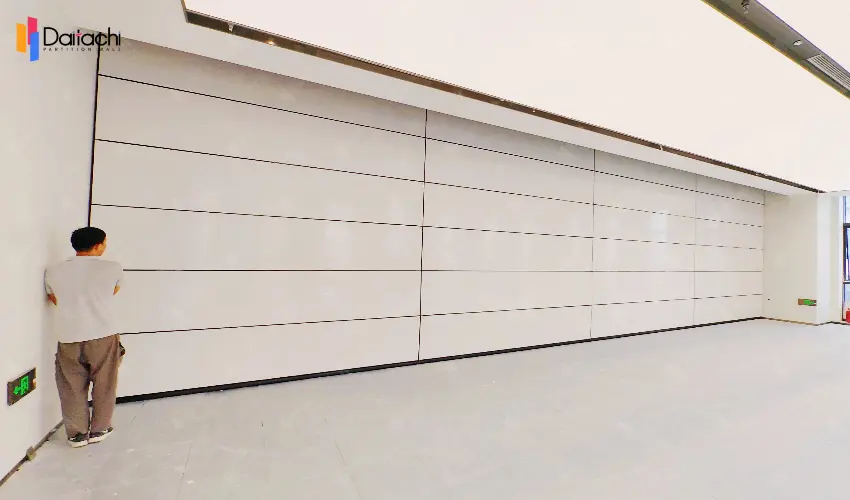
Commercial areas: Acoustic sealing as well as privacy security
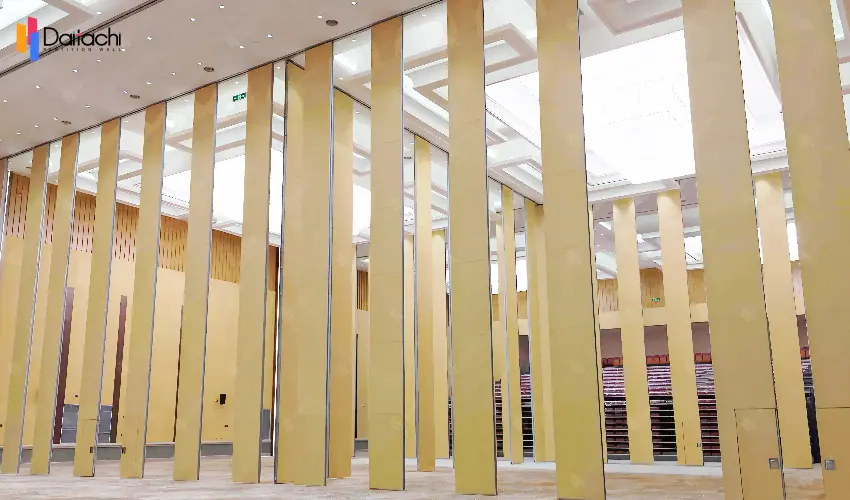
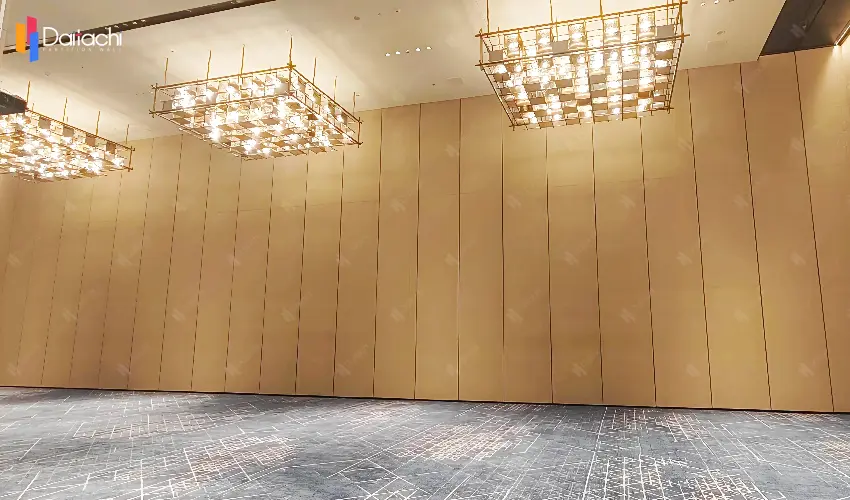
In banquet halls or conference halls, the vertical walls must meet the requirements of sound isolation and quick separation needs. By deploying STC60 soundproofing wall systems inside the convention center, area that is there can be rearranged to provide 48,000 square feet of space that is rentable. The soundproofing system blocks the sound of activity, thereby increasing efficiency of the space.
Healthcare and Wellness: Sterile Sealing and Easy Cleaning Design
The medical field requires sealing solutions which have antibacterial characteristics and ease to maintain. In extremely challenging anatomical labs vertically lifting walls are employed and the strips used for sealing are covered with a nano-silver coating, which inhibits bacterial growth. The modular design permits quick assembly and clean-up, which is in line with health standards in high-frequency usage.
Self-healing sealing substances: The development of Polymer sealing strips that have a the ability to shape-remember, which allows the material to heal itself automatically as small cracks develop while preserving sealing properties.
IoT-Integrated: Monitoring by embedding sensors into the sealing system, it will track information such as sealing strip wear as well as compression cycles in real-time in order to predict maintenance cycles, as well as reducing downtime that is not planned.
Green Sealing Solutions: Using bio-based sealing material (such in plant fibre composites) as well as biodegradable coatings, to minimize the carbon footprint of the product and result in a reduction of 65% in carbon emissions over all stages of the chain, starting from the extraction of raw materials to recycling as compared with traditional solutions.
Related Articles: What Is the Internal Structure of a Vertical Lifting Wall?
How Can Vertical Lifting Walls Improve Sound Insulation?