To learn about all aspects related to Vertical Folding Partition Wall, you can consult our comprehensive guide on Vertical Folding Partition Wall Hub.
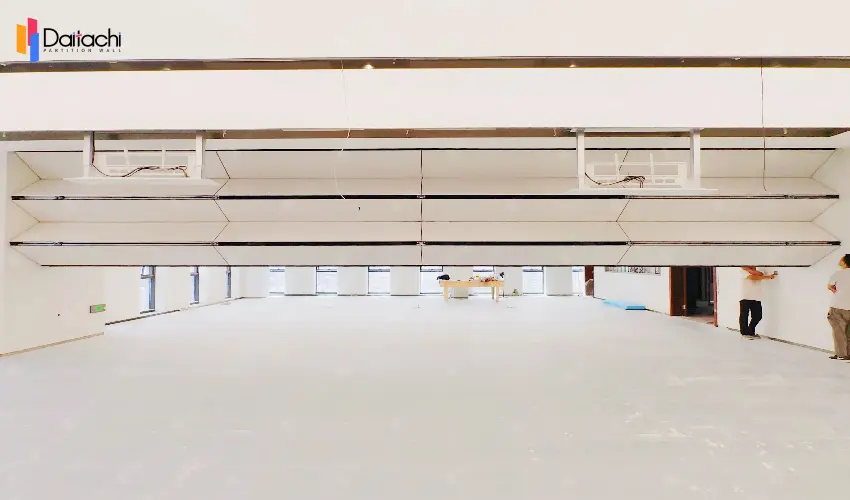
Vertical lifting partition walls, as a core component for achieving flexible space division in modern buildings, have their service life and user experience directly determined by their anti-aging performance. This article presents a systematic anti-aging solution from four key dimensions: material selection, structural design, environmental control, and daily maintenance.
Core Structural Materials
Aluminum Alloy Frame: 6063-T5 aluminum alloy is recommended for its high tensile and yield strength. After anodizing treatment, corrosion resistance increases by more than 3 times, effectively resisting erosion in humid and salt-spray environments.
High-Polymer Composite Panels: Modified PVC or HPL panels with high density and excellent wear resistance are selected. Weathering tests show minimal color difference and no cracking after 500 hours of exposure.
Sealing and Connecting Components
Silicone Sealant: Neutral-curing silicone with high tensile modulus and elongation at break ≥300% is used to accommodate dynamic deformation during lifting while preventing air leakage and water seepage.
Stainless Steel Hardware: 304 stainless steel bolts, hinges, and other fittings are adopted, passing salt spray resistance tests of ≥1000 hours to ensure long-term rust-free performance.
Single Motor Drive System
Optimized Power Distribution: A single motor drives the system via chains or synchronous belts, minimizing synchronization errors common in multi-motor setups and reducing structural distortion and metal fatigue.
Self-Balancing Mechanism: Built-in counterweight devices balance the wall weight, reducing motor load by approximately 60% and extending motor service life to over 10 years.
Modular Design
Removable Panels: Panels are connected to the frame using buckles or bolts, allowing partial replacement and preventing premature scrapping of the entire system.
Hidden Tracks: Tracks are embedded in the ceiling or floor, significantly reducing dust accumulation and lowering track wear by more than 50%.
Temperature and Humidity Management
In humid environments, a hydrophobic coating is applied to the wall surface to prevent moisture penetration. Panel materials with low thermal expansion coefficients are chosen to match the aluminum frame, avoiding cracking caused by temperature differentials.
Light Protection
For light-colored or transparent panels, UV absorbers are added to block over 99% of ultraviolet rays and prevent yellowing. In strong-light environments, integrated sunshades or dark-colored panels are recommended to reduce thermal aging risks.
Cleaning and Inspection
Weekly Cleaning: Wipe panels with a soft cloth; avoid ammonia-based or acidic cleaners to prevent surface corrosion.
Monthly Inspection: Check tracks, pulleys, motors, and other components; remove dust, lubricate moving parts, and ensure smooth operation.
Fault Prevention and Repair
Minor Damage Repair: Scratches on panels can be filled with matching repair paste and sanded smooth after drying. Cracked sealant should be removed and reapplied.
Motor Maintenance: Replace motor lubricant every 2 years and regularly check brake sensitivity to avoid overheating from increased friction.
Usage Guidelines
Avoid overloading (design load is typically 50kg/m²); do not hang heavy objects or impact the panels. Limit daily lifting cycles to no more than 20 operations to minimize mechanical wear.
Laboratory Tests: Under simulated conditions of 85℃ high temperature, 85% humidity, and salt spray, the wall structure showed no deformation and panel color difference remained negligible.
Actual Cases: After 5 years of use in an exhibition center, lifting noise remained ≤50dB, panel surfaces showed no cracks, and sealing performance continued to meet standards.
The anti-aging performance of vertical lifting partition walls results from the synergistic effect of materials, design, environment, and maintenance. By selecting highly weather-resistant materials, optimizing mechanical structures, controlling the operating environment, and implementing scientific maintenance, service life can be significantly extended to over 15 years, reducing total lifecycle costs by more than 30%. For high-end commercial projects, a professional inspection every three years is recommended to maintain optimal performance.
Related Article: Signs That Your Vertical Lifting Wall Needs Maintenance
How to Maintain These Signs to Ensure the Smooth Operation of Vertical Lifting Walls