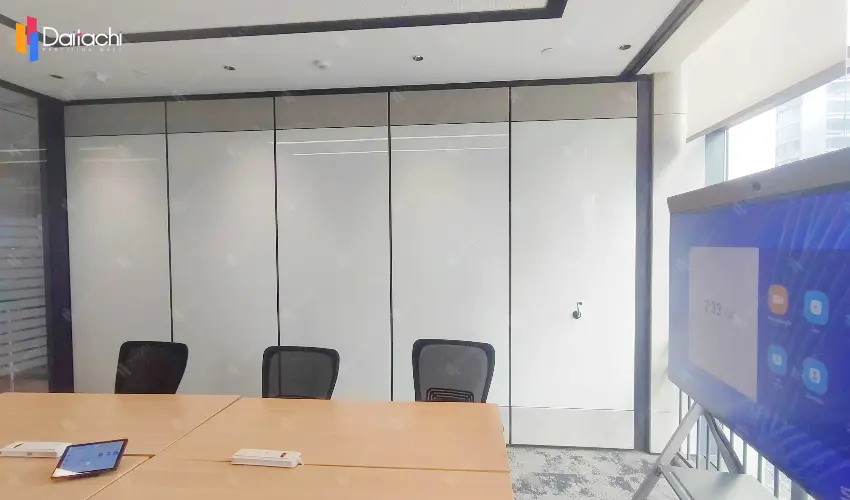
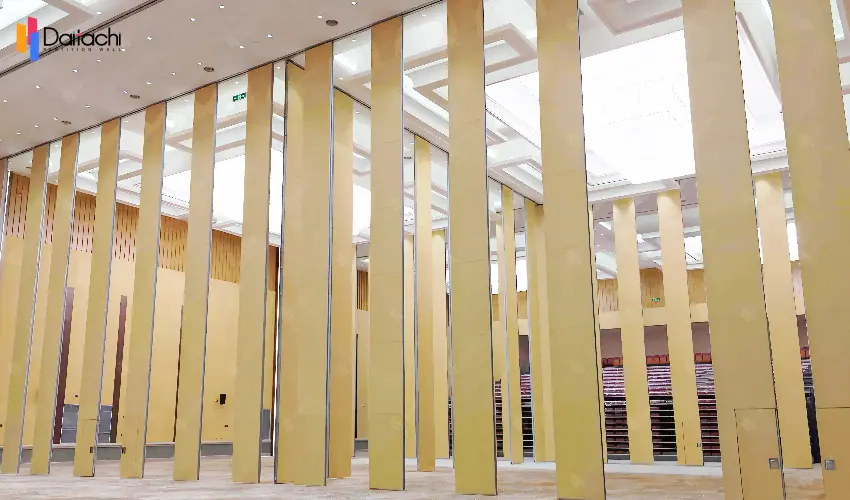
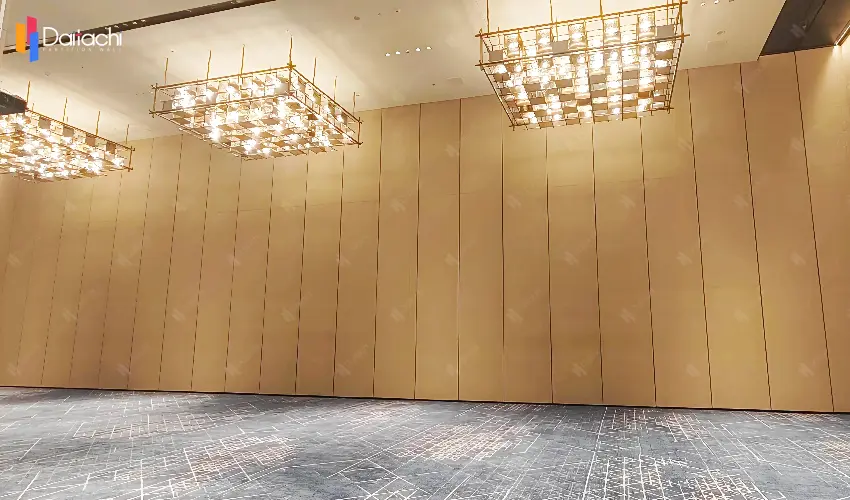
To learn about all aspects related to Movable Partition Wall, you can consult our comprehensive guide on Movable Partition Walls Hub.
HPL (High-Pressure Laminated Lumber):Made from multiple layers of resin-impregnated kraft paper under high temperature and pressure, it achieves high density and a surface hardness of up to 3H (pencil hardness). Its core advantage lies in its surface properties: scratch resistance, heat resistance, and chemical resistance. It is suitable for high-frequency use scenarios, such as restaurant partitions and hospital corridor partitions. Antimicrobial coatings can be integrated on the surface to meet medical-grade cleanliness requirements.
HDF (High-Density Fiberboard):Compressed wood fibers and synthetic resin form a board-like structure, with a slightly lower density than HPL. Its strength lies in its structural load-bearing capacity: it can withstand a uniformly distributed load of 150 kg/m2. When combined with an aluminum alloy frame, it can be constructed into a bookshelf-style partition system. It is suitable for scenarios requiring fixed partitions, such as classroom divisions in educational institutions and workstation separations in co-working spaces. The surface can be coated with a wood grain film to create a natural texture.
HPL Solution: Utilizes E0-grade environmentally friendly resin with a free formaldehyde emission of ≤0.5mg/L, meeting international certifications. The surface wear layer is 0.8-1.2mm thick and has an expected service life of over 15 years. Maintenance is low; daily cleaning requires only a damp cloth, and the integrity of the edge seals should be checked every five years.
HDF Solution: Utilizes a nationally certified wood fiber substrate with a water-based, environmentally friendly adhesive. Moisture-resistant treatment is required; PVDC coating or stainless steel edge banding is recommended. Expected service life in a dry environment is 10 years, requiring re-coating with moisture-resistant paint every two years.
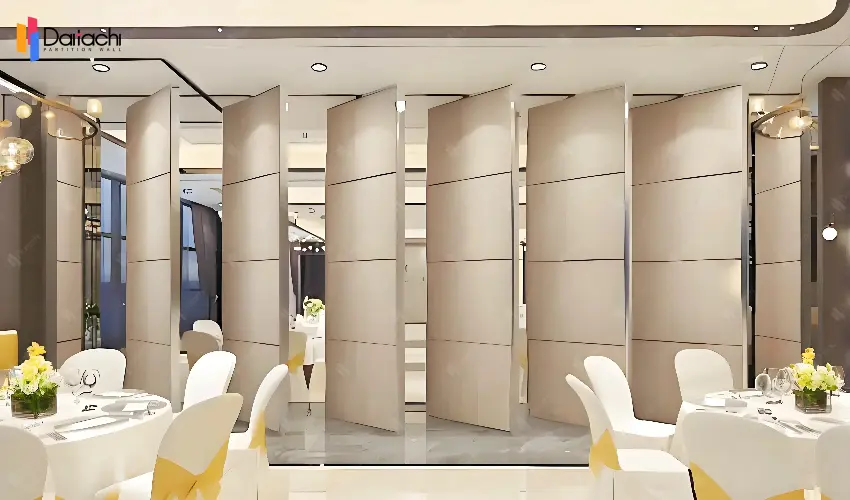
HPL Partition System: Standardly equipped with a 50mm rock wool infill layer, the STC sound insulation rating reaches 54dB, effectively blocking noise from adjacent spaces. The panels themselves are B1 flame retardant and, when combined with steel keels, can create 1-hour fire-resistant partitions.
HDF Partition System: Adjustable panel thickness allows for varying sound insulation, with an STC rating of 48dB at a thickness of 25mm. An additional fire-retardant coating is required to achieve Class B1 standards, making it suitable for use in non-core fire-rated areas.
HPL is preferred when the space requires frequent reconfiguration (such as convention centers and multi-purpose halls), special surface features are required (magnetic writing boards, integrated projection screens), the budget is sufficient, and long-term maintenance is a priority.
HDF is preferred when storage partitions (bookshelf walls, display racks) are needed, the budget is limited and regular maintenance is acceptable, and the decor style prefers natural materials (wood, industrial style).
A composite structure combining HDF frame and HPL veneer ensures structural stability while enhancing surface performance. For example, a hotel lobby partition uses HDF keels (100mm thick) supporting HPL panels (1.5mm thick), achieving a balance between sound insulation and aesthetics.
Through innovative materials science, our partition systems maintain industrial-grade performance while seamlessly integrating into modern spaces. We provide full-cycle technical support and customized services from concept design to implementation.
Related Articles: Differences between Veneer and Density Board
Manually Movable Partition Walls: the Secret Weapon for Creating Efficient Spaces
Related Product: Type 85 Manual Collapsible Partition Wall